AI tools for ad copywriting have gone from “nice-to-have” to essential for performance marketers who need high-volume, on-brand, A/B‑testable ads across Google, Meta, TikTok, and email. Used well, they help you generate more angles, speed up experimentation, and keep messaging consistent without replacing human strategy.
Below are 10 strong options, with a focus on short‑form, performance‑driven ad copy rather than generic long‑form writers.

Jasper is a premium AI copywriting suite with templates for Google Ads, Facebook/Instagram, LinkedIn, and more, plus brand‑voice training and campaign workflows for teams.
What it’s best at:
● Multichannel performance ads (Google, Meta, LinkedIn).
● Maintaining a consistent brand voice across all creatives.
● Combining ad copy with blogs, emails, and landing pages in one platform.
Why marketers love it:
● Rich template library for ads, emails, and web copy.
● Brand‑voice and style‑guide features for teams.
● Integrations with tools like Surfer SEO and project workflows.
Where it falls short:
● Higher price than many alternatives.
● Feature‑rich UI can feel overwhelming for first‑time users.
Pricing (typical range):
● Commonly starts around 39–49 USD/month, with higher tiers for teams and advanced features.
Ideal user:
● Agencies and in‑house growth teams managing multi‑channel campaigns.
● Brands that want one central AI stack for most copy needs.
● Marketers who care about brand governance and collaboration.
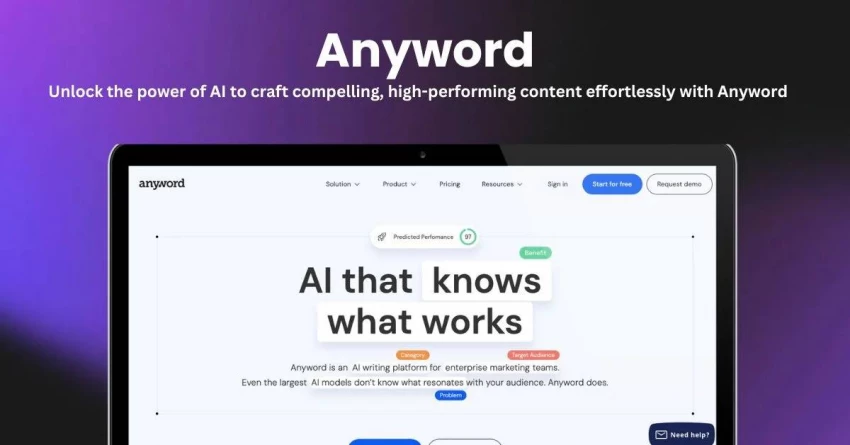
Anyword is a data‑driven copy platform built for performance marketers, known for predictive performance scores on ad variations before you spend media budget.
What it’s best at:
● Paid search and social ads where ROI and CTR matter most.
● Predicting which versions are likely to convert better.
● Landing page and ad copy alignment.
Why marketers love it:
● Predictive performance scoring and conversion‑likelihood metrics.
● Detailed analytics and dashboards for testing.
● Strong set of ad‑specific templates.
Where it falls short:
● Full value shows only if you commit to its scoring and experimentation workflow.
● Advanced features sit in higher‑tier plans.
Pricing (typical range):
● Often starts around 49 USD/month, with more expensive tiers for heavy ad spenders and teams.
Ideal user:
● Performance marketers and paid media buyers.
● Ecommerce and DTC brands that live and die by ROAS.
● Teams with strong testing discipline and analytics habits.
AdCreative.ai generates both visuals and copy for high‑converting ads, focusing on social, display, and performance creatives rather than just text.
What it’s best at:
● Producing ready‑to‑launch ad creatives (images + copy).
● Generating many variants for Meta, Google, and programmatic campaigns.
● Rapid creative testing for conversions.
Why marketers love it:
● Strong performance‑oriented models tuned for ad CTR and CVR.
● Native integrations with major ad platforms.
● Significant time‑savings for creative‑heavy campaigns.
Where it falls short:
● Limited for long‑form content or complex storytelling.
● Outputs can feel templated if you don’t customize brand settings and prompts.
Pricing (typical range):
● Common entry plans around 39 USD/month, scaling with seats and creative volume.
Ideal user:
● DTC and ecommerce brands running many social ads.
● Agencies with multiple accounts needing rapid creative production.
● Marketers who want creative plus copy from one tool.
Writesonic is an all‑round AI writer covering ads, landing pages, and blog posts with specific templates for Google Ads and Facebook Ads.
What it’s best at:
● Generating ads alongside SEO content and landing pages.
● Startups needing a single tool for most copy tasks.
● Fast iteration on ad variations and supporting content.
Why marketers love it:
● Budget‑friendly compared with many premium suites.
● Wide range of templates and tone options.
● API access for teams that want to automate.
Where it falls short:
● Ad‑specific analytics and scoring are basic vs tools like Anyword.
● Output quality depends heavily on prompt detail and settings.
Pricing (typical range):
● Frequently starts around 19 USD/month for lower tiers, with scalable plans for higher usage.
Ideal user:
● Early‑stage companies and solo marketers.
● Content teams that need both performance ads and SEO content.
● Budget‑conscious users seeking versatility.
Copy.ai is a user‑friendly platform designed for short‑form marketing content, including social ads, product promos, and landing page snippets.
What it’s best at:
● Quick generation of ad hooks, headlines, and primary texts.
● Brainstorming creative angles and variations.
● Social media and product‑driven campaigns.
Why marketers love it:
● Clean, beginner‑friendly interface.
● Ad templates for multiple platforms.
● Tone‑of‑voice controls for brand consistency.
Where it falls short:
● Less focused on deep performance analytics.
● Outputs can feel generic if you use very short prompts.
Pricing (typical range):
● Free or trial options exist; paid plans often start around 30–40 USD/month depending on usage.
Ideal user:
● Freelancers and solo creators running lightweight campaigns.
● Small teams that need fast ideation more than hardcore analytics.
● Marketers who want plug‑and‑play ad templates.
Rytr is an affordable AI writing assistant focused on short‑form marketing copy, including ads, emails, and social posts.
What it’s best at:
● Low‑cost ad copy and angle generation.
● Quick, simple outputs for common ad formats.
● Supporting copy (bios, captions, blurbs) around campaigns.
Why marketers love it:
● Very accessible pricing.
● Easy to learn and use.
● Enough templates for most basic ad needs.
Where it falls short:
● Minimal advanced performance or collaboration features.
● Less suitable for large teams and complex workflows.
Pricing (typical range):
● Among the lowest‑priced tools on the market, with usage‑based tiers.
Ideal user:
● Solo founders and small businesses.
● Early‑stage marketers exploring AI without heavy spend.
● Users who prioritize simplicity over depth.

Hypotenuse AI specializes in ecommerce content, generating product descriptions, catalog copy, and performance‑oriented marketing text, including ads.
What it’s best at:
● Product‑driven ads tightly aligned with catalog data.
● Large SKU catalogs that need consistent messaging.
● Combining product detail pages and performance ads.
Why marketers love it:
● Strong product‑catalog workflows.
● Consistent tone across descriptions, emails, and ads.
● Ecommerce‑specific features and templates.
Where it falls short:
● Less useful if you’re not heavily ecommerce‑focused.
● Not as general‑purpose as Jasper or Writesonic.
Pricing (typical range):
● Mid‑market SaaS pricing, scaling with catalog size and volume.
Ideal user:
● Ecommerce brands and marketplaces.
● Retail marketers managing many product categories.
● Teams that want catalog + ad copy in the same stack.

Copymatic covers long‑form content and ad/social copy with a built‑in plagiarism checker and ready‑made generators for Google and Facebook ads.
What it’s best at:
● Generating multiple ad variations plus accompanying articles.
● Content campaigns that mix top‑funnel blogs with retargeting ads.
● Keeping generated content original via plagiarism checks.
Why marketers love it:
● Flexible tone and creativity controls.
● One platform for ads, blogs, and web copy.
● Plagiarism checker built into the workflow.
Where it falls short:
● UI and UX feel less polished versus leading tools.
● Limited advanced analytics for performance marketing.
Pricing (typical range):
● Competitive mid‑range pricing with several word‑count tiers.
Ideal user:
● Content marketers running full‑funnel campaigns.
● Agencies needing volume and basic originality checks.
● Teams mixing paid traffic with organic content.

ChatGPT can act as a flexible ad copy assistant when you provide detailed prompts, helping you design hooks, frameworks, and persona‑specific messaging.
What it’s best at:
● Custom ad strategies and angle brainstorming.
● Persona‑specific messaging for different funnel stages.
● Rewriting and optimizing existing ad copy.
Why marketers love it:
● Extremely flexible prompt‑based control.
● Great for frameworks (AIDA, PAS, FAB, 4P, etc.).
● Doubles as a strategist and copy editor.
Where it falls short:
● No built‑in predictive scoring or native ad templates by default.
● Requires your own systems, prompts, and QA to be effective.
Pricing (typical range):
● Free basic access; paid plans with more capable models at moderate monthly cost.
Ideal user:
● Experienced marketers comfortable engineering prompts.
● Teams who already have analytics and testing infrastructure.
● Power users wanting maximum customizability.
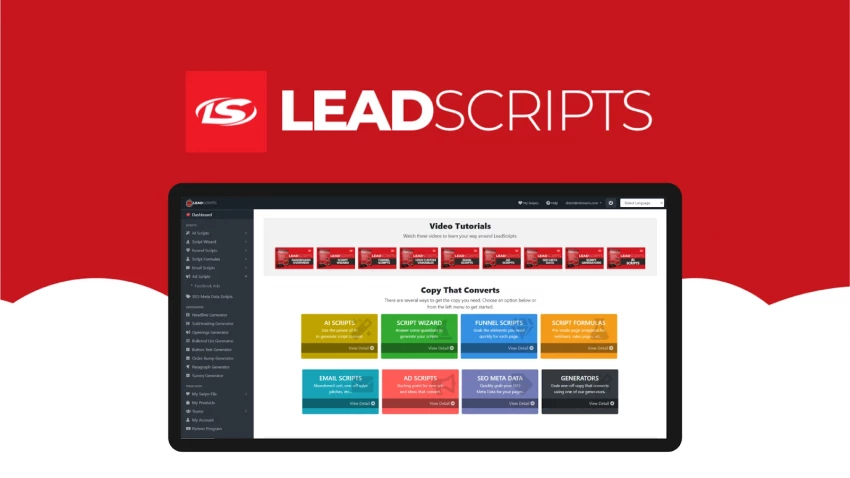
LeadScripts is a funnel‑focused copy platform that uses frameworks and structured questions to generate sales pages, emails, and ad copy.
What it’s best at:
● Framework‑based ad copy (AIDA, PAS, etc.).
● Funnel messaging where structure is as important as wording.
● Sales pages, upsells, email sequences, and ads built from one offer brief.
Why marketers love it:
● Proven, conversion‑centric copy frameworks.
● Upfront questions that clarify the offer and audience.
● Produces marketing‑ready copy with minimal fluff.
Where it falls short:
● Less flexible for non‑funnel or editorial content.
● Does not provide creative media (images or video) generation.
Pricing (typical range):
● SaaS plans like Starter around 24 USD/month, with higher tiers for larger teams and more words.
● Occasional lifetime or one‑time style deals via third‑party marketplaces have existed historically.
Ideal user:
● Funnel builders and direct‑response agencies.
● Course creators and info‑product sellers.
● Marketers who prefer structured, conversion‑centric ads over “creative first” copy.
To get performance (not just words on a screen), treat these tools as amplifiers of a clear strategy.
1. Feed rich inputs, not vague prompts: Include target persona, awareness stage, offer, objections, and platform (e.g., “retargeting carousel for warm leads on Instagram”).
2. Generate many angles, then test ruthlessly: Ask for multiple hooks, CTAs, and formats (short, curiosity, benefit‑driven) and plug them into structured A/B tests.
3. Layer tools with your analytics: Use performance‑focused platforms like Anyword or AdCreative.ai alongside ad platform data to identify winning patterns.
4. Lock in brand voice: Use brand‑voice training (Jasper, Anyword) or custom prompt systems (ChatGPT) so your ads sound consistent across channels.
5. Always human‑edit for risk and nuance: Review for claims, compliance, cultural nuance, and brand fit—AI is prone to over‑promising and generic phrasing.
If you want an all‑rounder for serious marketing teams, Jasper and Anyword stand out for brand voice and performance focus. For creative‑plus‑copy at scale, AdCreative.ai is strong, while Writesonic, Copy.ai, and Rytr serve teams that need a balance of features and affordability. ChatGPT remains the most flexible “power user” option if you’re willing to build your own prompts and processes. Ultimately, the best stack combines a performance‑oriented tool (Anyword/AdCreative.ai), a brand‑voice engine (Jasper or similar), and a flexible assistant (ChatGPT) layered over your own testing discipline and creative judgment.
YouTube Shorts has shifted from a side experiment to one of the fastest ways to...
Samuel Osei1 day ago
Digital advertising has become brutally competitive: users scroll faster, acquis...
Samuel Osei4 days ago
AI image generators have shifted from experimental toys to core creative tools....
Peter Woods5 days ago
AI-powered image editors are now central to modern content creation, marketing,...
Alexander Hughes6 days ago
AI text-to-speech (TTS) has evolved from robotic audio to almost human‑sounding...
Samuel Osei1 week ago
IntroductionGraphic design is no longer limited to people who know Photoshop sho...
Funke Ogunleye1 week ago
Discussion