
Techlokesh.org comes across as a small but steadily growing multi-niche content blog that is at its best when it focuses on simple tech tutorials and mobile photo or video editing templates. Quality becomes more uneven as the site branches into casinos, business, and general lifestyle topics.
After spending time browsing the site directly and comparing it with independent reviews, traffic estimates, and category overviews, Techlokesh.org feels less like a brand-led media publication and more like a practical “how to do X in a few steps” reference site for beginners. It is useful in short bursts, but not positioned as a deep technical or editorial authority.
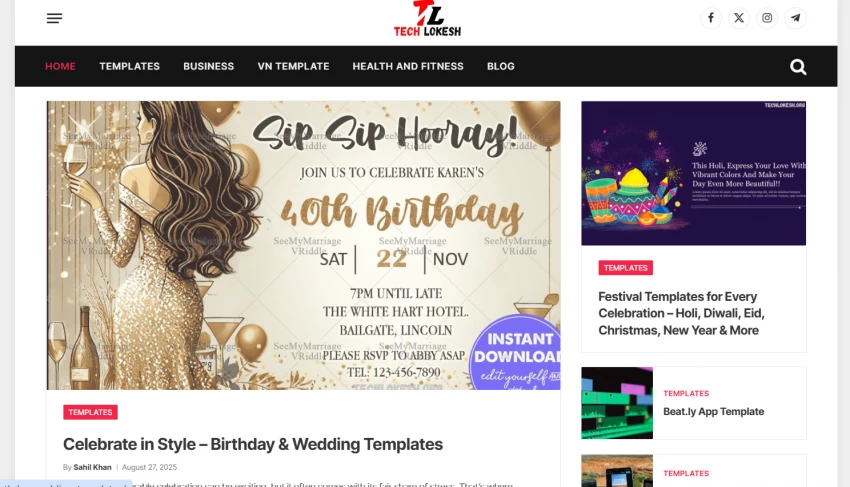
At first glance, Techlokesh.org presents itself as a beginner-friendly tech and creative tips blog. The site’s layout is simple, lightweight, and content-focused, clearly designed for users arriving from Google with a single, specific question rather than readers browsing for long editorial features.
Across independent reviews and third-party category scans, a consistent pattern emerges: Techlokesh.org prioritizes short, task-based tutorials over in-depth explanations or opinion-driven writing. Creative templates act as a central anchor, giving the site a recognisable core even as it expands into unrelated topics.
Key impressions at a glance:
● Strong focus on short, practical “how-to” articles.
● Best performance in mobile editing, templates, and basic app or portal guides.
● More generic and less consistent quality in casino, business, and lifestyle content.
At its core, Techlokesh.org is a blog-style, article-driven website. It does not offer proprietary tools, software, or interactive dashboards. Instead, it relies on standard blog posts with featured images, headings, and step-by-step instructions.
Public-facing descriptions frame the site as a hub for photo editing tips, tools, and templates that simplify tech for everyday users. In practice, it operates as a hybrid:
● A creative-tech tutorial and template hub at its center.
● Surrounded by SEO-oriented content clusters in casinos, gaming, business, and general lifestyle topics.
This hybrid structure broadens the site’s reach but also blurs its topical focus, making it feel more like a practical reference corner of the internet than a tightly curated expert publication.
The most coherent and consistent part of Techlokesh.org lies in its photo and video editing content. Articles covering VN templates, Mast app templates, trending edits such as Black Day AI photos, and similar mobile-friendly creative ideas follow a clear and useful pattern: what the effect is, how to access the template, and how to apply it inside a specific app.
Alongside this creative core is a growing collection of simple tech and portal guides. These include login tutorials, basic usage explainers, and one-task walkthroughs aimed at users who just want to complete a specific action quickly.
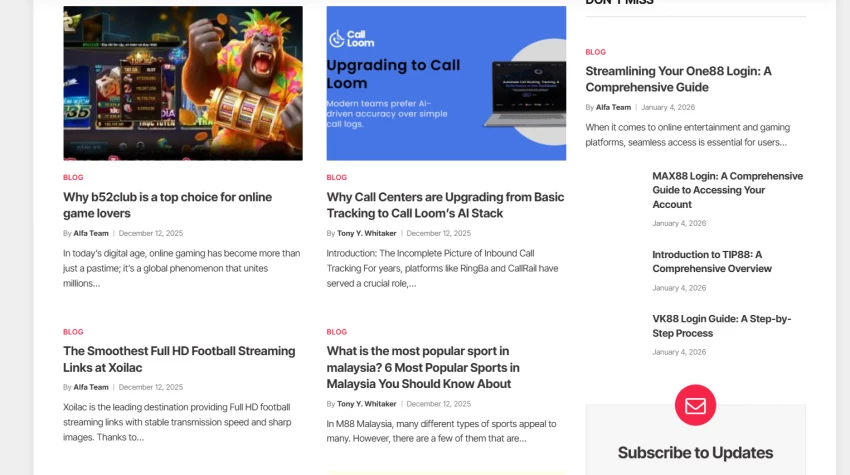
Around the edges, the site expands into online gaming and casino topics, slot-machine basics, business or industrial themes, and general lifestyle or wellbeing posts. This multi-niche sprawl is visible both on the homepage and in third-party summaries.
| Category | Approximate share of visible posts | Role on the site |
| Photo/video editing & templates | ~30–40% | Core creative and trend-led content. |
| Simple tech/app/portal guides | ~15–20% | Core task-completion tutorials. |
| Gaming & casinos/slots | ~20–25% | SEO and monetization-oriented cluster. |
| Business/industry & B2B topics | ~10–15% | Guest/SEO articles for broader traffic. |
| Lifestyle/health/other | ~10–15% | Broad-interest filler for reach. |
Techlokesh.org shows clear signs of an SEO-first publishing approach. Headlines are keyword-focused, long-tail queries are heavily targeted, and many posts follow repeatable content templates. Titles such as portal login guides, trending template names, or casino-related keywords are clearly engineered to capture high-intent search traffic.
Publicly available data places the site in a “growing but still small” tier:
● Domain Authority appears to sit in the low-to-mid 30s range.
● Estimated monthly traffic hovered around a few thousand visits in mid-2025.
● Traffic is dominated by organic search and direct visits, with little to no paid search presence.
Most articles follow a familiar editorial skeleton:
1. Short introduction explaining the topic or problem.
2. Key features or benefits.
3. Step-by-step instructions or numbered guides.
4. Light tips and, occasionally, a short FAQ section.
This structure works well for search visibility and beginner usability, but it can feel formulaic when applied to topics that are not closely aligned with the site’s creative-tech strengths.
Language across the site is simple and direct, clearly written for beginners and non-technical users. For readers who want a quick answer—such as how to apply a template or log into a specific portal—this clarity is a strength.
However, limitations become apparent when it comes to depth and originality:
● Most articles stay at a surface level, explaining what a tool or portal does without exploring edge cases, comparisons, or advanced troubleshooting.
● Casino and business-oriented posts often read like generic SEO content, likely produced by guest contributors and following the same structural template.
In practical terms, this means:
● Highly useful for: quick, one-off tasks and beginners who prefer clear, step-based guidance.
● Less useful for: advanced users, professionals, or readers seeking detailed analysis and expert-level insight.

From a technical safety perspective, Techlokesh.org performs well:
● The site uses HTTPS with a valid SSL certificate.
● There are no widespread reports of malware, phishing, or malicious redirects.
● Independent safety tools generally classify it as a legitimate informational website rather than a scam.
Transparency is more mixed. While branding around “Tech Lokesh” is visible, detailed author bios, editorial policies, or consistent disclosure labels are not prominent across all sampled pages. Public listings on guest-post marketplaces suggest that the domain is actively used for sponsored or backlink-driven content, which helps explain the presence of casino, business, and miscellaneous B2B articles.
For readers, sensible use comes down to context:
● Creative and basic tech tutorials are generally low-risk and practical.
● Financial, gambling, health, or business-related articles should be treated as introductory and cross-checked with more authoritative sources.
Taken as a whole, Techlokesh.org is most naturally suited to beginners, students, casual creators, and non-technical users who want simple, visual, step-based guidance.
The site works best when you:
● Need a quick VN or Mast template or editing idea.
● Want a plain-English walkthrough for using or logging into a specific portal.
● Prefer short, practical instructions over theory or deep analysis.
It is less suitable when you:
● Need expert-level comparisons or technical depth.
● Are making important decisions related to finance, health, gambling, or specialized business topics.
Techlokesh.org stands out as a safe, beginner-friendly, and genuinely useful starting point for quick creative templates and simple tech “how-to” tasks. Its strengths are most visible in mobile photo and video editing content and basic app or portal guides, where clear, step-by-step instructions in plain language add real value.
At the same time, its multi-niche, guest-post-heavy structure limits its ability to function as a focused expert authority. Users looking for deeper insight or making higher-stakes decisions around casinos, finance, health, or specialized business topics should treat its articles as introductory context and verify key information with more authoritative sources.

Late at night, after the usual AI companion ads blur together, PepHop AI shows u...
Funke Ogunleye1 day ago

Imagine you open a new tab, type “opendream.ai”, and instead of being greeted by...
Samuel Osei2 days ago

Grubby AI is one of those tools that only exists because of a very 2025 problem:...
Funke Ogunleye2 days ago
Meet Muke AIMuke AI is an AI‑powered image manipulation suite best known for two...
Sandra Campos3 days ago

If your marketing currently lives in a chaotic mix of ChatGPT, Canva, random sch...
Samuel Osei3 days ago

Janitor AI doesn’t feel like “a chatbot platform.”It feels like walking into a l...
Sandra Campos4 days ago
Discussion