Speech-to-text technology has matured significantly over the past few years. What began as basic dictation software has evolved into intelligent AI systems that not only convert speech into text but also interpret conversations, structure content, and integrate seamlessly into business workflows.
In 2026, transcription tools are no longer standalone utilities. They function as productivity infrastructure. Journalists rely on them to process interviews, executives use them for meeting documentation, content creators streamline production with them, and developers embed them directly into products.
The most effective speech-to-text platforms now offer far more than raw transcription. They include real-time conversion, speaker identification, automatic punctuation, contextual formatting, multilingual support, and AI-powered summaries that extract key insights from long conversations.
Modern tools typically provide:
The real difference between legacy dictation software and current AI platforms lies in adaptability. Today’s systems interpret conversational flow and restructure spoken language into readable, searchable formats.
Otter.ai - https://www.appcritica.com/review/otterai/
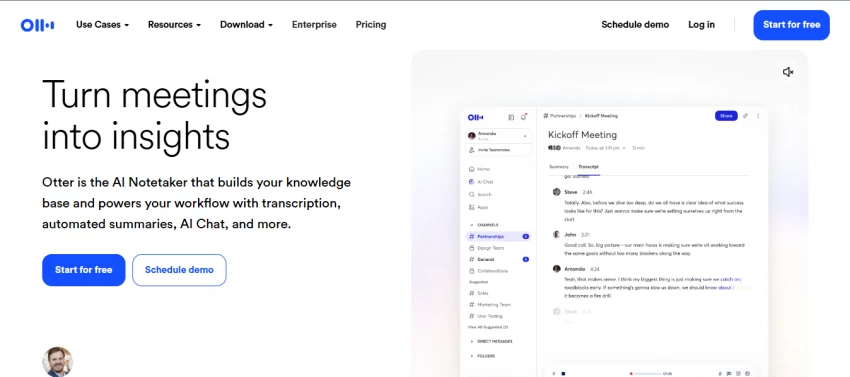
Otter.ai has positioned itself as a meeting intelligence platform rather than just a transcription tool. It is widely adopted in business environments because it captures live conversations from Zoom, Google Meet, and Microsoft Teams, automatically generates structured notes, and allows collaborative annotation inside transcripts.
Instead of simply providing a text file, Otter organizes conversations with timestamps, speaker labels, and AI-generated summaries. Teams can highlight important moments, assign action items, and search past discussions across projects.
Otter works best when transcription is used as shared documentation. Its strength lies in collaboration and meeting capture rather than heavy editing or media production.
Descript - https://www.appcritica.com/review/descript/
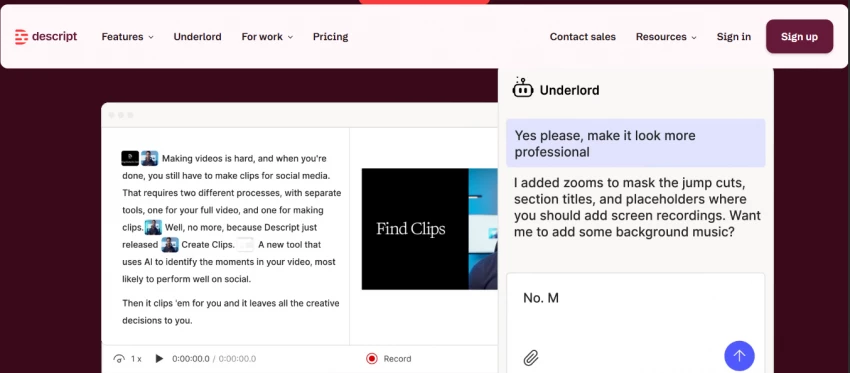
Descript approaches speech-to-text from a creator’s perspective. It integrates transcription directly into audio and video editing workflows, allowing users to edit recordings by editing the transcript itself.
When a sentence is removed from the transcript, the corresponding segment disappears from the audio or video automatically. This text-based editing dramatically simplifies post-production for podcasters, YouTubers, educators, and marketing teams.
Descript also includes filler-word removal, subtitle generation, and voice synthesis tools. It is best suited for creators who view transcription as one part of a larger media workflow rather than a standalone need.
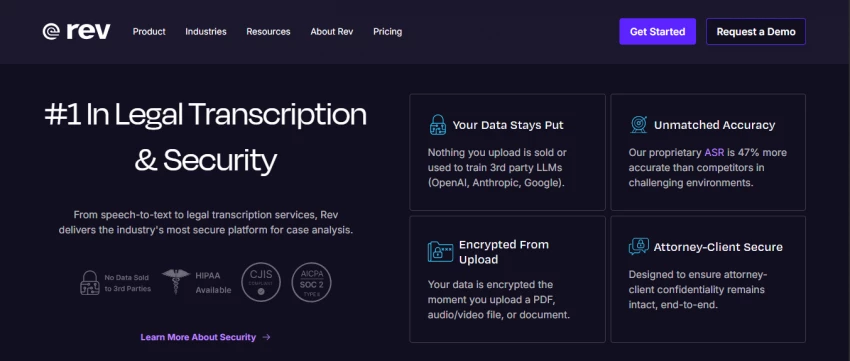
Rev remains relevant because it offers a hybrid approach. While many platforms rely solely on AI, Rev allows users to upgrade to human-reviewed transcripts when accuracy must reach professional standards.
Legal firms, medical professionals, researchers, and compliance-driven industries often choose Rev because minor transcription errors can carry serious consequences. The option for human verification provides assurance where automated tools alone may fall short.
Rev’s core advantage is reliability, not speed or automation innovation.
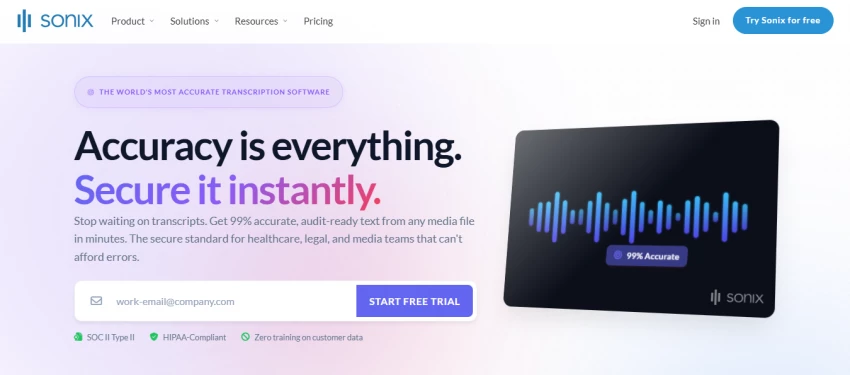
Sonix - https://www.appcritica.com/review/sonix/
Sonix distinguishes itself through its strong multilingual capabilities and enterprise-friendly collaboration tools. Organizations operating across international markets frequently require transcription and translation in multiple languages, and Sonix addresses that need directly.
Its searchable transcript database and speaker detection make it suitable for companies handling large volumes of global audio content. It is particularly useful for teams repurposing content into localized formats.
Sonix is less about flashy features and more about structured scalability.
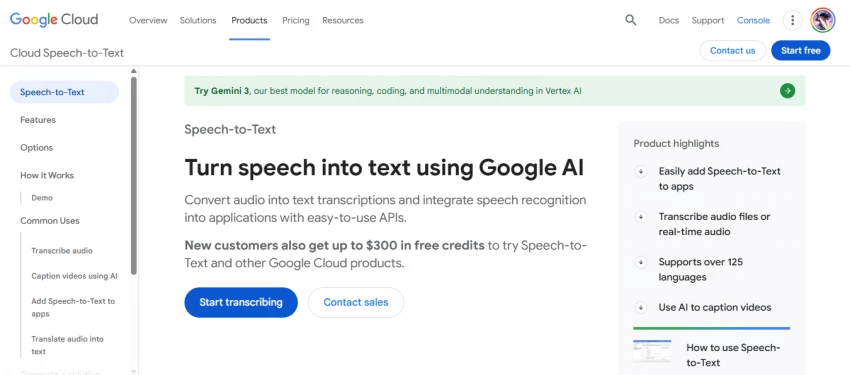
Google’s Speech-to-Text service is primarily an API designed for integration into applications and systems. It supports over 125 languages and offers real-time streaming transcription as well as batch processing.
Rather than being a consumer-facing tool, it functions as infrastructure for voice assistants, call centers, analytics platforms, and embedded speech features in software products.
Its advantage lies in scale and customization. Organizations building voice-enabled systems often choose Google Cloud because of its performance consistency and global infrastructure.
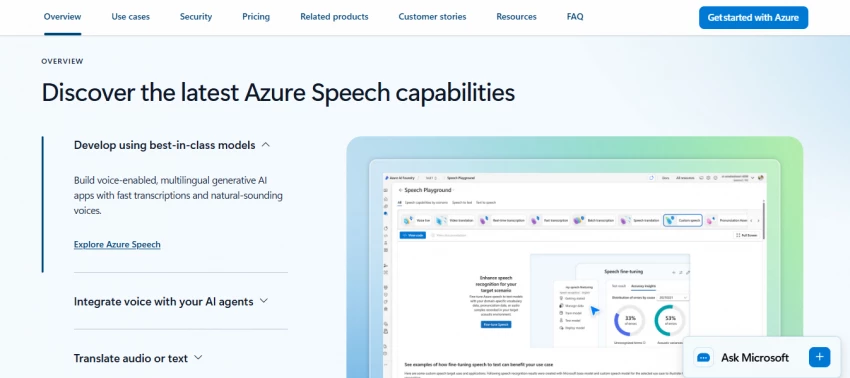
Microsoft Azure Speech Services integrates deeply into enterprise ecosystems. It allows organizations to build custom speech models tailored to industry terminology, making it particularly valuable in specialized sectors such as healthcare, finance, and legal services.
Companies already operating within Microsoft 365 and Azure environments benefit from streamlined integration and governance controls. Azure’s strength lies in security, compliance, and IT alignment rather than consumer simplicity.
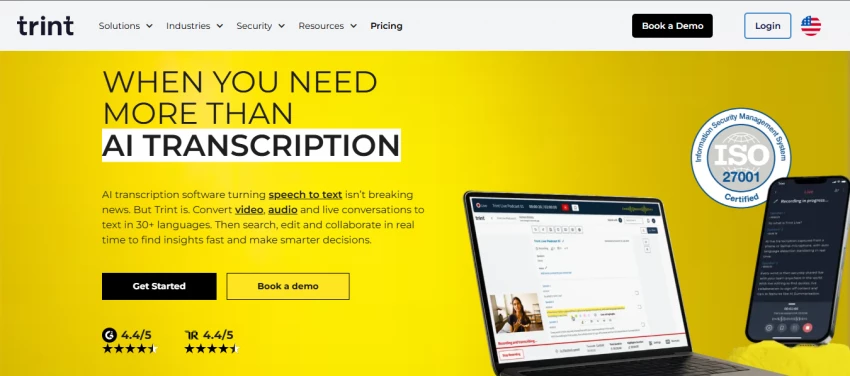
Trint focuses on collaborative editing and transcript management. It is widely used in journalism and research because it allows teams to refine transcripts together, organize interview material, and export content directly into subtitle formats.
For editorial workflows, the ability to annotate, edit collaboratively, and manage transcript archives is often more important than raw transcription speed.
Trint is optimized for structured storytelling and investigative workflows rather than casual dictation.
There is no universal “best” speech-to-text tool because transcription serves different purposes across industries.
If your priority is documenting meetings and sharing structured notes, Otter.ai is a practical choice. If you are producing podcasts or video content, Descript offers unmatched editing integration. If legal-level precision matters, Rev’s hybrid model adds assurance. For global operations, Sonix provides multilingual scalability. Developers building voice-powered applications may gravitate toward Google Cloud or Azure. Media teams focused on structured storytelling often prefer Trint.
The deciding factor should always be how the transcript will be used.
AI speech-to-text tools in 2026 are not experimental conveniences. They are workflow accelerators.
The most powerful platforms do not simply convert speech into text. They transform conversations into structured knowledge, searchable archives, and actionable insights.
Organizations that choose tools based on operational alignment rather than hype will unlock the greatest efficiency gains. In modern digital environments, speech recognition is not just about transcription. It is about turning spoken information into usable intelligence.

Nomi AI isn’t just another chatbot; it’s a full‑blown AI companion platform buil...
Alexander Hughes3 weeks ago

Artificial intelligence was originally built to support human decision-making. E...
Peter Woods4 weeks ago
Anthropic has accused three prominent Chinese AI companies of systematically “mi...
Sandra Campos1 month ago
In what might be the most unexpected AI benchmarking milestone of 2026, Elon Mus...
Peter Woods1 month ago

A powerful new Chinese artificial intelligence video app is igniting alarm acros...
Peter Woods1 month ago

The Legal Industry Didn’t Suddenly “Go AI” — It Was Forced ThereIn 2026, AI in l...
John Nyarko1 month ago
Discussion