Buying AI software is less about picking a “smart” tool and more about reshaping how your organization works, manages data, and measures value. Early adopters didn’t “fail” because AI didn’t work. They failed because they underestimated everything around the model i.e. data quality, workflow change, governance, hidden costs, vendor reality, and the gap between a demo and real operations and overestimated what the tools could do out of the box.
This is the playbook they wish they had and written for people who actually have to ship outcomes.
The Biggest Myth: “The Model Will Save Us”
Many early adopters focused on algorithms and vendors instead of business problems and data foundations.
● Enterprise AI buyers often struggle to define concrete use cases with clear KPIs, leading to impressive demos that never translate into production value.
● Research on generative AI adoption shows a frequent “implementation strategy gap,” where pilots are not tightly linked to business goals or revenue levers.
Early adopters now start from use-case backlogs and process maps, not features and model types. They define “success” in operational terms (fewer hours, higher conversion, lower risk) before looking at any product.
Lesson 1: Data Readiness Makes or Breaks ROI
If there is one universal regret, it is underinvesting in data quality, integration, and infrastructure.
● Common failure causes include disconnected data silos, inconsistent formats, and incomplete records, which directly undermine model accuracy and reliability.
● AI platforms and infrastructure guides stress that scalable AI requires modern data architectures such as data lakes or lakehouses, cloud-native compute, and robust pipelines, not just a good model.
Early adopters wish they had run a “data audit” before buying software, cataloging data sources, quality issues, ownership, and compliance constraints, and budgeting serious time for ETL, labeling, and governance.
Lesson 2: Underestimating Infrastructure and Hidden Costs
Buyers often assume AI can simply “plug in” to existing systems; early adopters learned the hard way that infrastructure is a constraint, not a detail.
● Many organizations run into legacy systems that cannot support real-time analytics, GPU/TPU workloads, or large-scale vector search, slowing or blocking deployments.
● Studies of enterprise AI initiatives show significant unplanned spend on cloud compute, data storage, networking capacity, security tooling, and MLOps/LLMOps platforms.
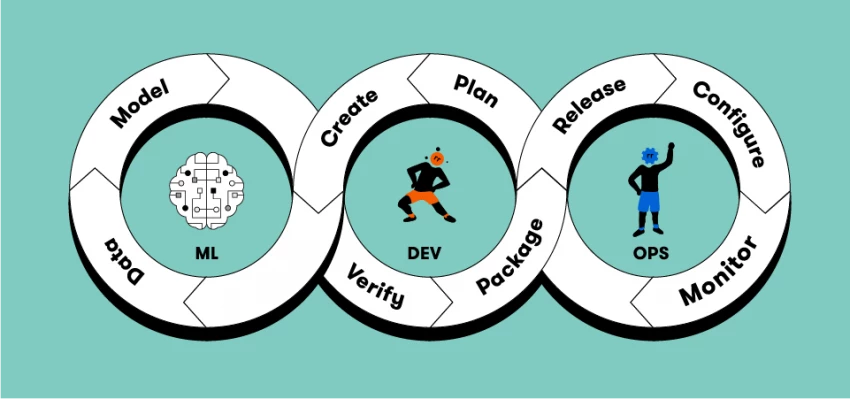
Early adopters now treat infrastructure and MLOps as first-class selection criteria by evaluating deployment models, observability, rollback, and scaling capabilities alongside algorithmic performance.
Lesson 3: AI Is a Change-Management Program
Buying AI software without a structured adoption plan is a major regret. Tools were bought but habits never changed.
● Surveys of generative AI early adopters highlight five success factors beyond technology: visible leadership commitment, skilled personnel, structured training, user-friendly tools, and active change management/communication.
● IT leaders report that even enthusiastic early adopters need time and process support to build new AI habits, and that engagement improves when there are clear process maps, checklists, and internal champions.
Organizations that succeed often create an AI Center of Excellence, nominate “AI champions” in key functions, and embed AI steps directly into existing workflows instead of launching yet another standalone tool.
Lesson 4: Governance, Risk, and Compliance Aren’t Optional
Another recurring “wish we knew” theme is underestimating the regulatory, ethical, and reputational side of AI.
● Early adopters frequently faced surprises around data privacy, model bias, and explainability, especially in regulated sectors, when black-box models could not be justified to auditors or regulators.
● Reports on generative AI adoption show that leaders cite ethical, security, and regulatory issues as major barriers to scaling, alongside skill shortages.
Mature buyers now ask pointed questions about audit logs, data residency, model interpretability (e.g., XAI techniques), consent management, and content filtering before they sign any AI contract.
Lesson 5: Avoiding AI Sprawl and Fragmentation
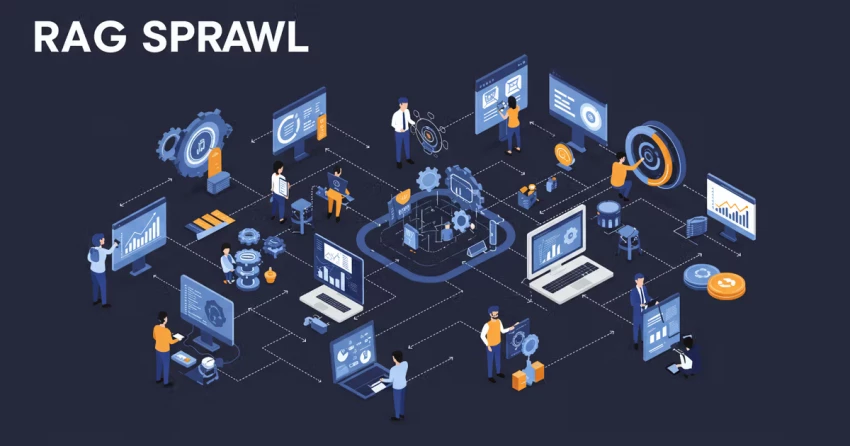
Early adopters often started with scattered pilots and wound up with overlapping tools, redundant models, and inconsistent standards.
● Analysts describe “AI sprawl” as one of the main reasons projects become inefficient and risky—uncoordinated experiments, duplicated tooling, and fragmented governance across business units.
● Enterprise buyers’ guides now emphasize standardizing on a smaller set of platforms that cover data prep, modeling, and MLOps/LLMOps, reducing duplication and integration overhead.
The lesson: design an AI portfolio, not just point solutions. That means shared platforms, reusable components, common policies, and clear guardrails on who can buy what and why.
Features sell demos; integration drives value. Early adopters often discovered that “best-of-breed” tools became “islands of insight.”
● Enterprise AI guides stress evaluating how AI platforms plug into existing CRMs, ERPs, productivity suites, and data warehouses, not just their standalone capabilities.
● A major trend in 2024–2025 is AI being embedded directly into core enterprise software—Microsoft 365, Salesforce, Google Workspace, Atlassian—precisely to reduce integration friction and adoption barriers.
Many early adopters now prefer AI capabilities that augment tools employees already use daily over net-new systems that require behavior change, custom connectors, and parallel workflows.
Lesson 7: The Skills Gap Is Real
Early adopters underestimated the blend of skills needed: data engineering, MLOps, domain expertise, security, legal, and change management.
● Generative AI adoption reports show that over three-quarters of organizations see lack of suitable skills and expertise as their biggest challenge in moving beyond pilots.
● Implementation studies highlight the need for specialized roles (e.g., ML engineers, prompt engineers, AI product owners) and for upskilling existing staff rather than expecting vendors to fill every gap.
Savvy buyers now ask vendors not just “what can your tool do?” but “what skills do we need in-house to run this in production, and what support do you provide over the lifecycle?”
Lesson 8: Measurement and Value Realization Were Afterthoughts
Many early adopters signed contracts based on vague productivity promises and later struggled to prove value.
● Surveys of early AI adopters show strong revenue and experience gains for some (e.g., a significant share reporting 20%+ revenue uplift) but only when use cases were tightly linked to metrics and monitored post-deployment.
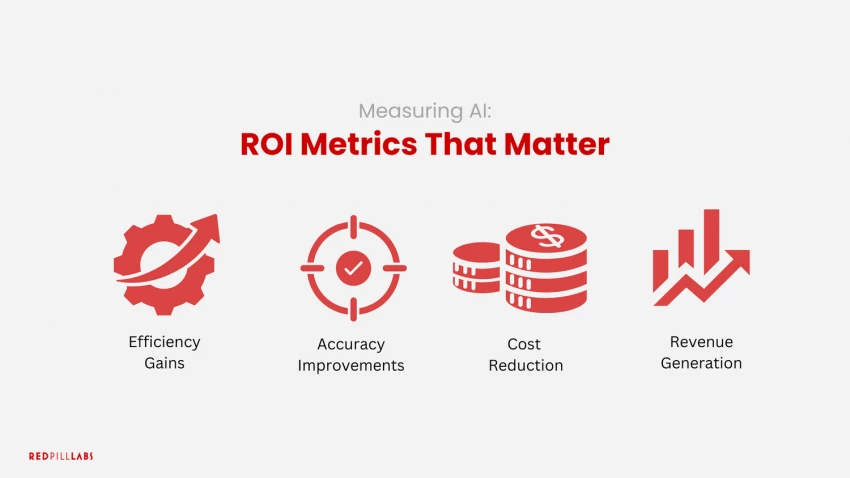
● Buyers’ guides and IT leader interviews now stress creating a value framework: baselines, target improvements, and dashboards that track AI impact on costs, revenue, risk, and customer satisfaction.
The new pattern is to treat AI initiatives like portfolio investments, with staged funding, milestones, and ruthless culling of pilots that do not meet predefined thresholds.
How to Turn Lessons into a Buying Checklist
Translating early adopters’ experience into a practical pre-purchase checklist helps avoid the same missteps.
● Strategy and use case: Define top 3–5 use cases, target KPIs, and success timeframes; ensure executive sponsorship and cross-functional ownership before selecting tools.
● Data and infrastructure: Audit data quality, integration, security, and performance; map required changes to architecture, storage, and compute, and ensure candidate vendors fit your environment.
● Governance and risk: Establish policies on access control, privacy, acceptable use, explainability, and incident response; confirm that vendors support these requirements natively.
● Adoption and skills: Plan training, champions, and role changes; budget for hiring or upskilling in data engineering, MLOps, and AI product management to avoid tool shelfware.
Early adopters’ core message to new buyers is simple: treat AI software not as a “product purchase” but as a long-term capability build that touches data, people, and processes across the enterprise.
Final Thought:
Buying AI software isn’t a shortcut to transformation but a commitment to change. Early adopters learned that the biggest wins didn’t come from flashy demos or bold vendor promises, but from clear problem definition, disciplined implementation, and ongoing ownership after the contract was signed.
AI delivers real value when it’s tightly aligned to a specific business outcome, supported by clean data, and embedded into everyday workflows. When those conditions weren’t met, teams ended up with expensive tools that impressed executives but frustrated users. Many wish they had pushed harder on pilots, demanded transparency around model limits, and budgeted as much for training and change management as for licenses.
Another hard-earned lesson is that AI is not “set it and forget it.” Models drift, costs evolve, regulations tighten, and vendors change direction. Successful adopters treated AI like a living system, one that requires governance, monitoring, and a clear internal owner rather than a static piece of software.
The final takeaway is pragmatic optimism. AI software can absolutely create competitive advantage, but only for buyers who approach it with eyes wide open. Ask sharper questions, start smaller than feels comfortable, invest in people as much as technology, and assume responsibility doesn’t end at go-live.






Discussion