Reviews
8 min read
FurtherBusiness.com Review: An Honest, Experience-Based Look at Its Content, Credibility & Alternatives

After spending time browsing FurtherBusiness.com, it’s clear that this site is designed as a simple business blog rather than a heavy research platform. It mainly shares short guides, quick tips, and introductory articles around business growth topics such as marketing, finance, tools, and productivity.
Instead of long, theory-heavy explanations, the content focuses on quick ideas you can read and apply fast, which makes it suitable for busy founders or people who are just starting out.
From what I’ve seen, FurtherBusiness.com works best as a “quick reference” site, not a deep learning resource.
The website has a very clean and minimal layout, with no clutter or distractions. On the homepage, the content is grouped into four main categories:

● Business Insights
● Finance and Investment
● Marketing and Sales
● Resources and Tools
The platform positions itself as a source of business insights, growth strategies, and tool suggestions, mainly aimed at entrepreneurs, startups, freelancers, and small business owners.
| Section | What you’ll find | Content depth |
| Business Insights | General business advice, leadership ideas, trends, and strategy basics | Light to moderate; mostly high-level ideas |
| Finance and Investment | Budgeting tips, funding basics, and simple finance concepts | Beginner-friendly; avoids complex finance |
| Marketing and Sales | Content marketing, branding, digital marketing, and growth ideas | Practical but brief; good for inspiration |
| Resources and Tools | Reviews and overviews of tools or niche business websites | Introductory reviews with pros & cons |
Overall, the content is easy to understand, but it does not try to compete with in-depth business courses or expert research blogs.
Based on the content style and depth, FurtherBusiness.com seems best suited for:
● New founders or first-time entrepreneurs who want simple explanations
● Solo founders and freelancers looking for quick tips or tool ideas
● Small business owners who prefer short “how-to” style articles
If you already have strong experience in finance, advanced marketing, or strategy, many articles may feel too basic or repetitive.
Using the site feels smooth and distraction-free. The navigation is simple, categories are clearly labeled, and articles are written in short paragraphs with headings and bullet points, making them easy to skim.
The site also works well on mobile, which is helpful if you’re reading on the go.
One noticeable limitation is that the homepage and articles do not strongly highlight author credentials, expert bios, or detailed research sources. For general business tips, this is fine but for serious topics like legal, tax, or investment decisions, readers should be cautious.
What works well:
● Simple language with no heavy jargon
● Action-oriented tips, checklists, and ideas
● Good coverage of modern topics like AI tools, automation, and productivity
Where it falls short:
● Depth varies from article to article
● Limited use of real case studies, data, or long-term testing
● Review articles about tools or websites often feel more like introductions than deep evaluations
In short, the content is helpful for learning basics or getting ideas, but not for advanced decision-making.
FurtherBusiness.com does not show any obvious red flags. The content is free, informational, and the site does not directly sell high-risk products or services.
That said:
● The authority level depends on the article, not the brand as a whole
● Tool and website reviews may carry mild promotional bias, which is common in content-driven blogs
● There’s no strong evidence of independent, hands-on testing for every review
Because of this, it’s best to treat the site as a starting point, not a final authority.
Common positives highlighted across discussions and blog mentions include:
● Easy-to-read articles, even for non-business readers
● Clean layout with skimmable formatting
● Useful exposure to tools, platforms, and new business ideas
● Helpful for quick inspiration or “first steps”
Some genuine limitations are worth noting:
● Many posts stop at surface-level advice
● Reviews may lack side-by-side comparisons or real testing data
● Limited visibility into who is writing the content and their expertise
For readers who value strong research, credentials, or technical depth, this can be disappointing.
Like many business blogs, FurtherBusiness.com likely earns revenue through affiliate links, brand mentions, or sponsored-style content, especially in its tools and review sections.
This doesn’t make the site unreliable but it does mean:
● Reviews may lean more positive
● Recommendations should be cross-checked elsewhere before spending money
While exploring FurtherBusiness.com, I naturally compared it with some of the bigger and more established business websites. Many of these platforms cover similar topics marketing, finance, leadership, and growth but they operate with stronger editorial teams, deeper research, and clearer expert backing.

Entrepreneur.com homepage showing startup and founder stories
Entrepreneur.com stands out for its real-world storytelling. It focuses heavily on founder journeys, startup struggles, failures, and wins. When I read Entrepreneur, I usually walk away with a clear narrative and real examples, not just tips.
The content can feel long and dense at times, but the payoff is deeper insight and structured advice. Compared to FurtherBusiness.com, Entrepreneur is better when you want context, experience-based lessons, and long-form thinking.
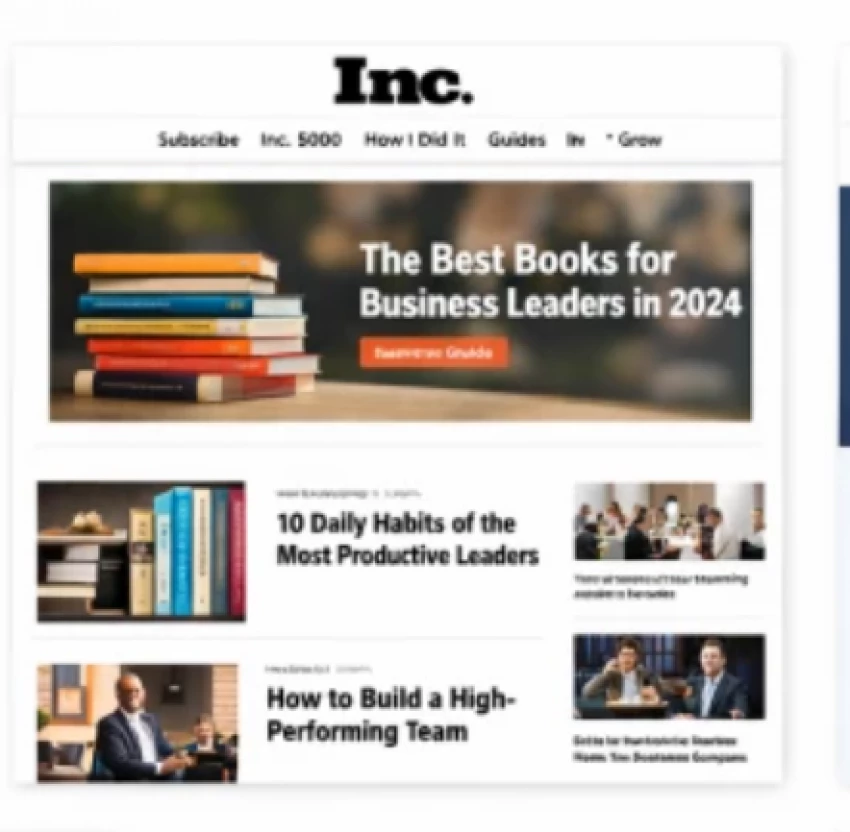
Inc.com article focused on leadership and business growth
Inc.com leans strongly into leadership, management, and scaling businesses. What I personally trust more here is the expert-backed approach many articles reference research, statistics, or experienced contributors.
If FurtherBusiness gives quick ideas, Inc focuses on long-term thinking and decision-making. It’s more serious in tone, but also more reliable when you’re planning growth beyond the basics.
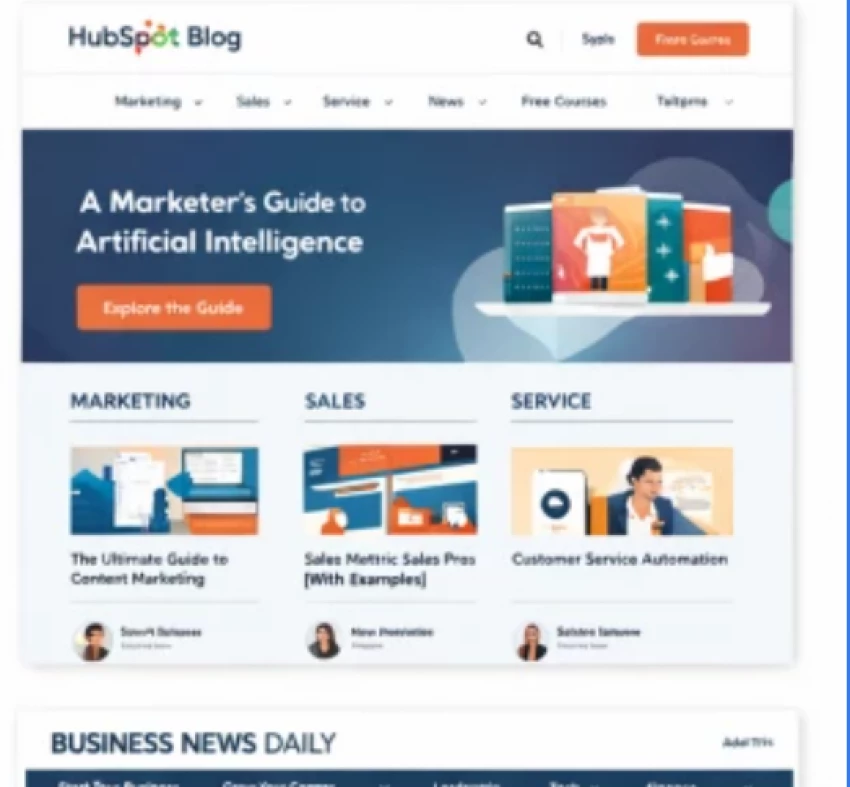
HubSpot Blog marketing and sales resource page
The HubSpot Blog is one of the most detailed resources for marketing and sales. It offers frameworks, templates, tutorials, and step-by-step guides that go far deeper than surface-level advice.
From my experience, it’s ideal if you want to actually learn marketing properly, though the learning curve is higher. A lot of content also leads into HubSpot’s tools, which is helpful but something to be aware of when reading.
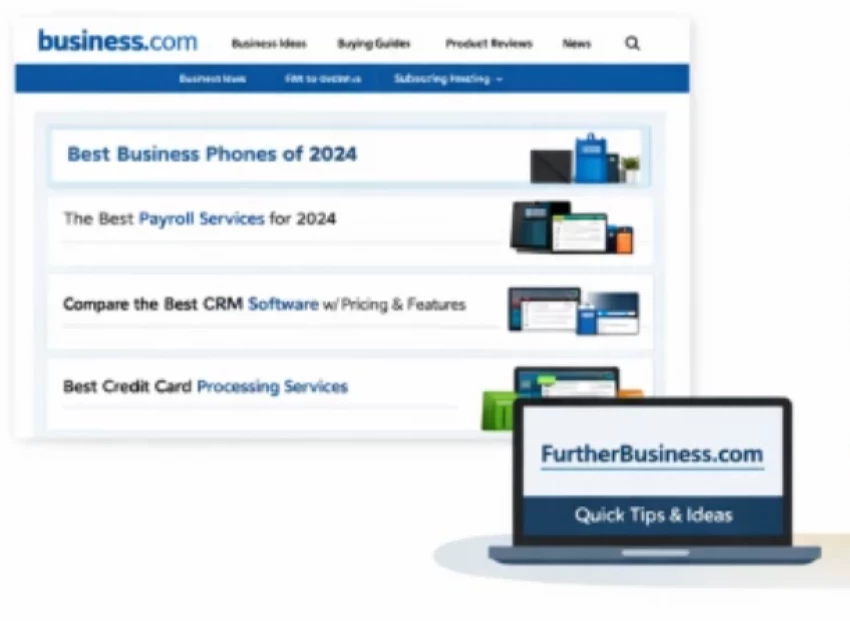
Business.com is especially useful when you’re comparing B2B tools, software, or services. I find it practical when researching options before making a purchase.
However, some sections feel more directory-like, and a few articles could benefit from fresher updates. Still, it offers more structured vendor comparisons than FurtherBusiness.com.
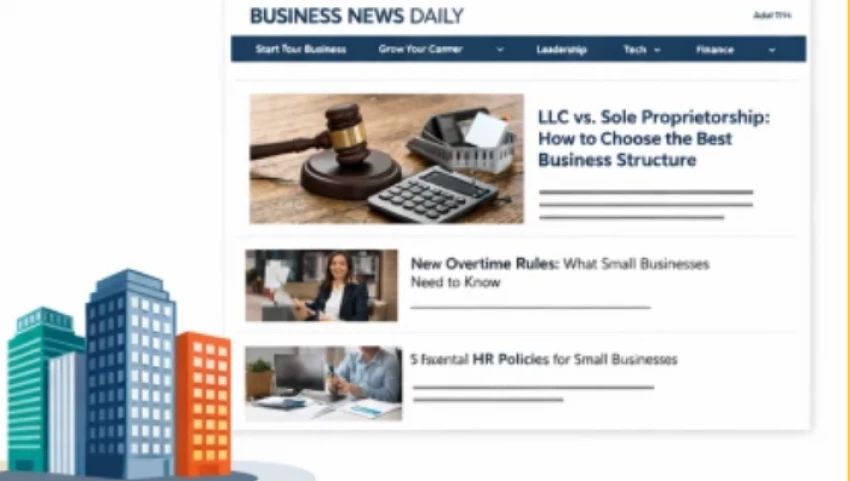
Business News Daily article covering business compliance and operations
Business News Daily takes a more practical and compliance-focused approach. Many articles cover legal basics, HR, finance, and operations in a clear and organized way.
While its scope is narrower, the presentation feels more credible and carefully edited, which makes it a safer choice for essential business topics that require accuracy.

Comparison between FurtherBusiness.com and larger business websites
From my perspective, these larger platforms offer:
● More consistent content quality
● Stronger editorial oversight
● Clearer expert validation and sourcing
FurtherBusiness.com doesn’t compete with them on depth or authority—and that’s okay. It serves a different purpose. I see it as a lightweight, quick-read resource for ideas and introductions. When I need serious detail or confirmation, I turn to the bigger platforms.
Understanding this difference helps set the right expectations and makes FurtherBusiness.com more useful when used as a starting point rather than a final reference.
After spending time reading multiple articles on FurtherBusiness.com, I’d describe it as a useful starting point rather than a complete business solution. I found the site helpful when I needed quick ideas, simple explanations, or a fast overview of topics like marketing, productivity, or business tools especially on days when I didn’t want to go through long, complex guides.
What I personally liked is how easy the content is to read and skim. The articles don’t overwhelm you with jargon, and in many cases, they give you just enough direction to take a first step or explore a tool further. For beginners, solo founders, or small business owners who are still figuring things out, this approach genuinely saves time.
That said, when I looked for deeper insights or detailed analysis, especially around finance, investments, or serious business decisions, the content felt a bit surface-level. The tool and website reviews were useful for discovery, but I wouldn’t rely on them alone before spending money or making important choices. I'd always cross-check elsewhere.
Overall, I don’t see FurtherBusiness.com as a site you blindly follow for final decisions. Instead, I see it as a practical companion, a place to get ideas, understand basics, and identify tools worth researching further. If you use it with the right expectations, it can be genuinely helpful. If you expect expert-level depth or heavy research, it may feel limited.
In short, it works best as a first step, not the final word—and that’s exactly how I’d recommend using it.

Late at night, after the usual AI companion ads blur together, PepHop AI shows u...
Funke Ogunleye1 day ago

Imagine you open a new tab, type “opendream.ai”, and instead of being greeted by...
Samuel Osei2 days ago

Grubby AI is one of those tools that only exists because of a very 2025 problem:...
Funke Ogunleye2 days ago
Meet Muke AIMuke AI is an AI‑powered image manipulation suite best known for two...
Sandra Campos3 days ago

If your marketing currently lives in a chaotic mix of ChatGPT, Canva, random sch...
Samuel Osei3 days ago

Janitor AI doesn’t feel like “a chatbot platform.”It feels like walking into a l...
Sandra Campos4 days ago
Discussion