Apple has officially confirmed that Google’s Gemini models will power the next generation of Siri and a wider suite of “Apple Intelligence” features across iPhone, iPad and Mac, in one of the most dramatic realignments in Silicon Valley’s AI race so far. The multi‑year deal means Apple is effectively outsourcing core generative AI capabilities to its biggest mobile rival, while promising users a smarter, more conversational and deeply integrated Siri experience later this year.
In a joint statement released at the start of the week, the two companies said the next wave of Apple’s in‑house “Foundation Models” will be built on top of Google’s Gemini family and Google Cloud infrastructure. These models will not only power the revamped Siri, but also new Apple Intelligence features such as on‑device writing tools, smarter notifications and context‑aware assistance across apps.
Apple framed the decision as a pragmatic move after months of internal testing. “After careful evaluation, we determined that Google’s technology provides the most capable foundation for Apple Foundation Models and we’re excited about the innovative new experiences it will unlock for our users,” the company said in the joint statement shared with multiple outlets. CNBC reported that the agreement between the companies spans multiple years, underlining that this is not a short‑term experiment but a strategic shift in how Apple plans to deliver AI.
The most visible impact for everyday users will be a Siri that finally behaves like a modern generative AI assistant rather than the brittle voice interface many iPhone owners have tolerated for over a decade. Reports indicate that Gemini‑powered Siri will offer more natural back‑and‑forth conversations, better understanding of context across apps, and the ability to handle complex, multi‑step tasks such as planning trips, drafting documents or summarizing long message threads.
Behind the scenes, Apple Intelligence will decide when to run tasks on device and when to securely tap into Gemini via Apple’s Private Cloud Compute, a system Apple says is designed so that “not even Apple can access user data” processed on its servers. While many details are still emerging, early coverage suggests that Apple will continue to lean on its own smaller models for simple tasks, while delegating more demanding queries to large Gemini models in the cloud.
The seeds of this partnership were visible as early as last year, when Apple CEO Tim Cook openly signaled that the company would not rely on a single AI vendor. “Our intention is to integrate with more people over time,” Cook told CNBC after Apple’s fourth‑quarter earnings in 2025, in remarks widely interpreted as a signal toward Google’s Gemini as a future Siri option. Those comments now read almost like a pre‑announcement of the deal that has just been made public.
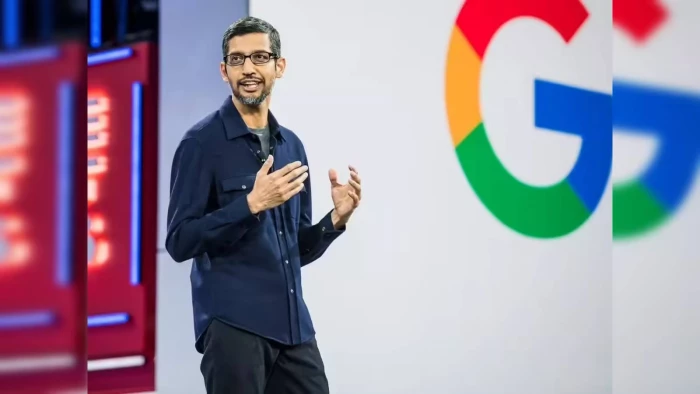
On Google’s side, CEO Sundar Pichai had already acknowledged under oath that the companies were in talks to bring Gemini into Apple’s ecosystem. Asked in a U.S. antitrust trial whether Gemini was expected to be integrated into Apple’s operating systems by mid‑2025, Pichai answered simply: “Correct.” He added in the same testimony that Apple was “looking forward to doing integrations with other models, including Google Gemini, for instance, in the future,” hinting at a multi‑model era on Apple devices that is now beginning to materialize.
The move is widely seen as a major endorsement of Google’s AI capabilities—and a clear warning shot for OpenAI. Apple already struck a high‑profile deal to embed ChatGPT into Apple Intelligence for certain complex tasks, but the new Gemini agreement raises questions about how central OpenAI will remain in Apple’s long‑term plans. Analysts note that while Apple says there are “no changes” to its existing ChatGPT integration for now, the real battle will be over which model users and developers choose by default when Apple Intelligence quietly routes their requests.
For Google, the win goes beyond prestige. Siri’s upgrade and Apple Intelligence will extend Gemini into an installed base of more than two billion active Apple devices worldwide, dramatically expanding Google’s AI footprint beyond Android and Chrome. Not everyone is comfortable with that level of reach: Elon Musk has already called the Apple–Google arrangement “an unreasonable concentration of power for Google,” pointing to the company’s control of Android, Chrome and now core AI services on iOS.
Apple has not given an exact launch date, but the companies say the Gemini‑powered Siri and broader Apple Intelligence enhancements are scheduled to roll out to users “later this year,” starting with supported iPhone models. Early regional coverage describes the first Gemini‑driven Siri builds on test devices as “shockingly” more capable, with more emotional nuance in responses and far greater reliability in handling follow‑up questions.
With WWDC 2026 looming as the likely stage for deeper technical reveals, developers and users now have a clear headline: the next chapter of Siri will be written not just in Cupertino, but in Mountain View as well.
Anthropic has accused three prominent Chinese AI companies of systematically “mi...
Sandra Campos5 days ago
In what might be the most unexpected AI benchmarking milestone of 2026, Elon Mus...
Peter Woods1 week ago
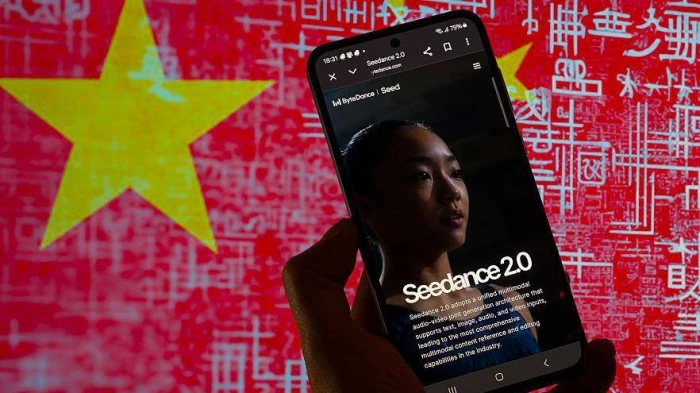
A powerful new Chinese artificial intelligence video app is igniting alarm acros...
Peter Woods1 week ago

The Legal Industry Didn’t Suddenly “Go AI” — It Was Forced ThereIn 2026, AI in l...
John Nyarko1 week ago

AI talking head tools have made it possible to create studio‑style presenter vid...
Ina Gupta2 weeks ago
Leetcode prep is crowded with tools that promise shortcuts, streaks, and “guaran...
Ina Gupta2 weeks ago
Discussion