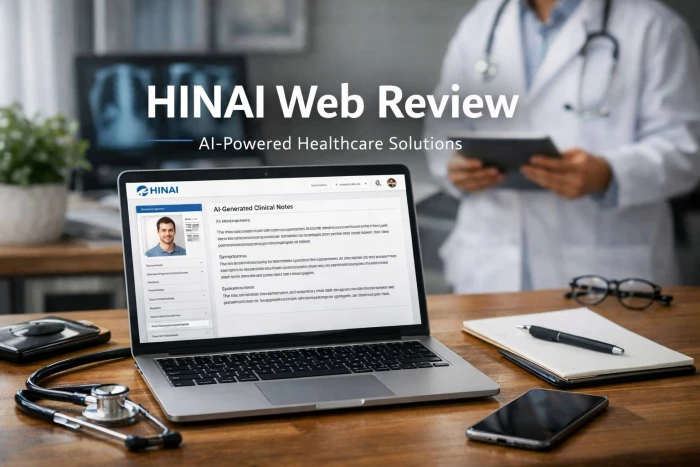
HINAI Web is an enterprise‑grade, web‑based Hospital Information / Health Information Management System (HIS/HIMS) from ICT Health, designed to act as the digital backbone for medium and large hospitals and multi‑hospital networks. It unifies patient administration, clinical care, diagnostics, pharmacy, back‑office operations, and billing into a single, configurable platform accessible through a browser.
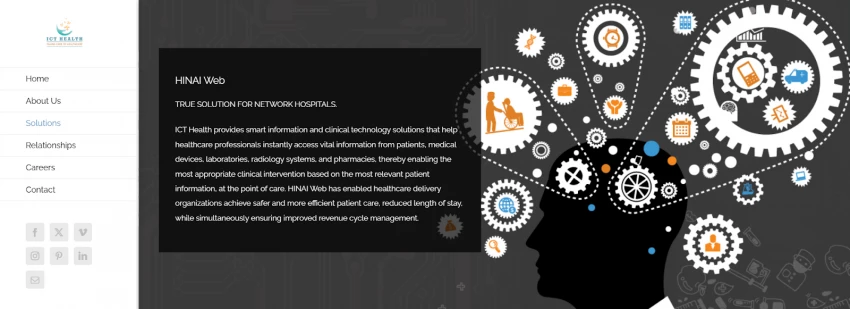
HINAI Web replaces siloed, paper‑driven workflows with an integrated system that spans the entire patient journey from registration and admission to discharge, billing, and reporting. It runs as a centralized application with a browser‑based interface, so users connect via standard web browsers on desktops, tablets, and smartphones. This makes it suitable for complex hospital environments where different teams, locations, and departments need to work off the same source of truth.
ICT Health positions HINAI Web firmly in the enterprise HIS segment, targeting multi‑specialty hospitals, 150+ bed institutions, and healthcare groups that want to standardize processes across sites instead of operating many small, disconnected systems.
ICT Health is a healthcare‑focused software company whose flagship portfolio revolves around the HINAI brand. Within this suite, HINAI PAS is responsible for patient administration, HINAI EHR focuses on clinical documentation and electronic health records, and HINAI Web serves as the hospital‑wide information and management layer that binds these components together.
The product has been present in hospital software directories for many years and is referenced in multiple geographies, including India and the Middle East. That longevity indicates that HINAI Web is not a new or experimental tool but a system that has evolved through real‑world deployments, regulatory environments, and large‑scale rollouts.
HINAI Web is built as a multi‑tier system with application and database layers running on centralized servers. Users connect through a web browser, so there is no need to install heavy client software on every workstation. This approach makes upgrades and maintenance easier and supports heterogeneous desktop environments.
The platform is multilingual and multi‑tenant, which allows healthcare groups to host multiple hospitals and facilities in one logical environment while still controlling access and data separation. At the core of the architecture is a multimedia electronic medical record that stores structured fields, scanned documents, images, and diagnostic results in a longitudinal record for each patient.
Hospitals can deploy HINAI Web in the cloud or in their own data centers.
In a cloud deployment, ICT Health or a hosting partner manages the infrastructure and hospitals access the system securely over the internet. This suits organizations that want predictable infrastructure costs and less internal IT overhead.
In an on‑premise deployment, the application runs within the hospital’s data center, which can be important for institutions with strict data‑sovereignty rules or internal governance requirements. In both models, a central server (or cluster) can support multiple hospitals, campuses, and satellite centers, enabling standardized workflows and centralized governance at scale.
HINAI Web’s patient administration capabilities are powered by its PAS layer. The system manages the full front‑office lifecycle from first contact to discharge.
During registration, staff capture demographics and assign unique patient identifiers that are maintained via a central master patient index. This helps avoid duplicate records and ensures that a patient’s history remains unified even when they visit different facilities within a network.
Outpatient appointment scheduling is handled within the same environment, giving clinics a unified view of available slots, booked visits, and expected load. For inpatient care, admission–discharge–transfer functions manage bed allocation, ward transfers, and discharge planning, with real‑time visibility into occupancy and patient movement.
By digitizing these processes, HINAI Web reduces manual errors, accelerates front‑office work, and builds the base dataset on which clinical, billing, and reporting functions depend.
The clinical core of HINAI Web resides in HINAI EHR, which provides the electronic medical record and care team workspaces.
Each patient’s record aggregates orders, results, vital signs, notes, images, and documents under a single medical record number. Multiple authorized clinicians can view and update the record concurrently, which is critical in busy inpatient settings and multidisciplinary care.
Doctors use Computerized Physician Order Entry (CPOE) to place medication, laboratory, imaging, and procedure orders directly in the system. This reduces transcription errors, standardizes orders, and enables automatic charge capture for revenue cycle purposes. A physician workbench brings together patient lists, clinical summaries, order sets, and results, giving doctors a consolidated view of their workload and cases.
Nurses operate within a dedicated workbench configured for clinical and administrative tasks such as vitals recording, medication administration, task lists, and shift handovers. By keeping these workflows in one environment, HINAI Web supports continuity of care and clearer communication within the care team.
Operating theatre management is also integrated. Pre‑operative assessments, OT scheduling, intra‑operative notes, and post‑operative orders all sit within the same record, giving surgical and anaesthesia teams aligned visibility.
HINAI Web integrates deeply with laboratory and radiology services so that the order‑to‑result cycle is fully digital.
For laboratories, orders placed via CPOE feed into lab workflows, covering sample collection, testing, validation, and result release. Results are then returned to the EMR and can be displayed in context for clinicians. Integration with analyzers and external lab systems can be achieved through healthcare messaging standards.
Radiology departments manage imaging orders, modality scheduling, study tracking, and report generation within HINAI Web. When connected to PACS or RIS, imaging data and reports can be exchanged in a standards‑compliant way and linked directly to the patient’s EMR and billing.
Pharmacy workflows are tightly coupled with clinical orders. Prescriptions flow digitally into pharmacy queues for validation and dispensing, with automatic updates to stock levels, batches, and expiry data. The system can enforce formulary rules and provide drug information and safety checks. Blood bank and transfusion activities are also recorded, ensuring that transfusion history is part of the core clinical record instead of being managed in separate paper logs.
This closed loop between orders, diagnostics, and pharmacy reduces manual transcription, cuts turnaround times, and ensures that all clinical actions are captured in both the medical record and the financial ledger.
HINAI Web is built as a revenue cycle platform rather than just a billing add‑on. Because clinical and diagnostic activities are captured within the system, inpatient and outpatient bills can be assembled automatically from documented orders, procedures, and consumables, reducing missed charges and the need for manual reconciliation.
The system manages insurance and payer relationships, including tariff agreements, corporate contracts, pre‑authorization workflows, and claims processing. This is especially important in markets where third‑party payers and insurance reimbursement drive cash flow. Package billing allows hospitals to define bundled rates for planned procedures and clinical programs.
Financial controls such as discounts, credit limits, and write‑offs are auditable, providing finance teams with clear oversight of concessions and risk. Integration with external ERP and accounting systems enables automatic posting to the general ledger, so finance teams don’t have to re‑enter data from HIS reports into their accounting tools.
By aligning operational and clinical activity with billing and finance, HINAI Web gives hospitals the ability to see where revenue is generated, where it leaks, and how operational decisions affect financial performance.
HINAI Web extends its remit beyond clinical and billing modules into back‑office operations, inventory, and supply chain.
The inventory module tracks stock levels of drugs, consumables, and other materials across central stores and consumption points. It supports stock movements, reordering, and alerts for low or expiring stock, which helps prevent both shortages and wastage.
Procurement workflows cover requisitions, purchase orders, receipts, and vendor records. These processes can be linked to actual consumption and to accounting, giving hospitals a transparent view of what they buy, from whom, and how quickly those items are used.
Asset management features allow hospitals to track equipment, installation dates, maintenance cycles, downtime, and utilization. This is particularly critical for high‑value medical devices that must be managed as strategic assets rather than as simple purchases.
On top of these functions, HINAI Web’s reporting and MIS layers provide management with the ability to analyze supply chain efficiency, consumption trends, and their impact on cost structures.
Because HINAI Web unifies clinical, operational, and financial data, it acts as a natural foundation for hospital analytics.
Standard MIS reports cover metrics such as admission rates, average length of stay, bed occupancy, procedure volumes, revenue streams, and cost categories. These give executives and department heads a clear, consistent view of performance across services and locations.
Operational dashboards allow managers to track key indicators such as laboratory turnaround times, outpatient wait times, theatre utilization, and ward occupancy in near real‑time. This supports proactive intervention instead of relying only on retrospective reports.
On the clinical side, structured data from the EMR can feed clinical quality and performance measures for example, adherence to protocols, readmission rates, and complications. When combined with financial and supply‑chain data, this enables more nuanced discussions about value, not just volume.
Interoperability is a central part of HINAI Web’s strategy. The system is designed to integrate with laboratory systems, radiology systems, medical devices, and external EHRs using established healthcare standards. This allows hospitals to preserve existing investments in specialized systems while still using HINAI Web as the central platform.
In multi‑vendor and multi‑facility environments, this interoperability reduces vendor lock‑in and makes it easier to connect to national health information exchanges or regional networks. For organizations with a digital roadmap that includes connected care, this standards‑driven approach is especially important.
Security and privacy are built into HINAI Web as foundational requirements. The system uses role‑based access control to ensure that users only see and act on data relevant to their roles, across facilities and departments. Access rules are tied to the master patient index and organizational structure so that regulatory boundaries can be respected.
The vendor describes a structured security and privacy risk management approach, including processes to identify, assess, monitor, and mitigate risks over the life of the system. HINAI’s EHR components are aligned with recognized privacy, security, and clinical quality frameworks, which is particularly relevant for hospitals in regulated environments.
For boards and CIOs, this combination of domain‑specific security design and standards alignment is often more reassuring than custom builds on generic platforms.
HINAI Web uses a consistent, browser‑based interface across its modules, which reduces the cognitive burden of switching between different systems. Clinicians and staff do not have to learn separate applications for registration, EMR, billing, and inventory; instead, they work in one shared environment.
The EHR component is designed around a single‑page view of patient information, bringing together the most important data elements without excessive navigation. This helps doctors and nurses quickly orient themselves to a case and act with fewer clicks.
Because the interface is accessible from desktops, tablets, and smartphones, clinicians can review records, place orders, and document care on the move. Structured training programs and live support from the vendor are important in driving adoption, particularly in organizations transitioning from paper or legacy HIS platforms.
Implementing HINAI Web is a structured program rather than a quick, self‑service rollout. Hospitals typically begin with detailed mapping of current workflows and policies, then configure the system’s masters, forms, and rules to align with those realities.
Integration work connects HINAI Web to laboratory equipment, radiology systems, existing ERP platforms, HR systems, and medical devices. This transforms HINAI Web into the central hub of a connected hospital ecosystem rather than a self‑contained system.
Rollouts are often phased. Many hospitals start with patient administration and billing because they offer visible benefits quickly, then move on to clinical documentation, diagnostics, and back‑office modules as staff and processes adapt. The architecture supports thousands of concurrent users and multi‑facility setups, allowing organizations to scale from pilot sites to group‑wide adoption without replacing the core platform.
Ongoing support via phone, email, and remote assistance plus regular upgrades and training for new staff, is part of the long‑term relationship.
HINAI Web follows a quote‑based commercial model. Pricing is not published as a simple per‑user or per‑month rate; instead, it is tailored to each hospital’s context.
Key cost drivers typically include:
● Number of beds and sites in the network
● Range of modules implemented (e.g., core PAS and billing versus full HIS with EMR, diagnostics, and inventory)
● Deployment choice (cloud versus on‑premise)
● Extent of integrations and customizations
● Implementation, training, and support scope
Because these factors vary widely between institutions, most hospitals evaluate HINAI Web using a multi‑year total cost of ownership view. That means considering licenses or subscriptions, infrastructure, project services, internal change‑management effort, and support costs, and comparing that picture against alternative HIS vendors.
HINAI Web is not living alone in the wild; it operates in a crowded ecosystem of HIS and EMR platforms that target similar hospital needs. Framing it alongside real‑world alternatives helps decision‑makers understand whether HINAI Web is “overkill,” “just right,” or not ambitious enough for their context.
| Platform | Ideal customer | Core focus | Deployment | Main strengths | Main limitations |
| HINAI Web | Mid–large hospitals, networks | Full HIS: PAS, EMR, diagnostics, billing, inventory | Cloud / on‑prem | Very broad coverage, configurable, multi‑site ready | Complex, enterprise‑style rollout, quote pricing |
| 75Health | Small clinics, solo practices | Cloud EMR with basic practice management | Cloud (SaaS) | Quick setup, simple use, affordable for small setups | Limited hospital‑wide and multi‑facility features |
| DoctorsApp HMIS | Small–mid hospitals | Cloud HMIS with EMR, billing, telehealth | Cloud (SaaS) | Built for smaller hospitals, good UX, telehealth | Less depth for big networks and ERP‑like back‑office |
| Amrita HIS | Large hospitals, teaching centres | Enterprise HIS for clinical/admin/finance | Mostly on‑prem | Strong for tertiary and academic hospitals | Similar complexity and cost to HINAI Web |
| Epic / Cerner / MEDITECH | Very large health systems | Enterprise EHR/HIS suites at massive scale | Enterprise hosted | Rich ecosystems, proven at national scale | Very expensive, long projects, heavy localisation |
When comparing, focus on how each option handles your core workflows end‑to‑end, how open it is for integration, how it scales with your organization’s growth, and what its total cost of ownership looks like over five or more years.
HINAI Web is best viewed not as a simple software package but as a strategic platform for hospitals that want to standardize and modernize their operations across clinical, administrative, and financial domains. Its strengths are clear: deep functional coverage, strong alignment with hospital workflows, support for multi‑facility networks, and a design philosophy anchored in healthcare standards and security.
For medium‑to‑large hospitals and healthcare groups, especially those operating multiple sites or aiming to build an integrated, data‑driven organization, HINAI Web is a strong contender. It can serve as the central nervous system of the hospital, connecting patients, clinicians, diagnostics, finance, and operations in one coherent environment.
However, it demands a serious commitment. Implementations take time, require executive sponsorship, and benefit from experienced internal IT and clinical champions. For small clinics or organizations seeking quick, low‑touch deployments with simple per‑user pricing, lighter cloud‑only systems may be a better fit.
If your goal is to build a robust, long‑term digital foundation for a hospital or network and you are prepared to invest in a structured implementation, HINAI Web is a platform that deserves a place on your shortlist.
1. Is HINAI Web suitable for small clinics?
It can be used in smaller setups, but its depth and implementation effort make it better suited to mid‑sized and large hospitals rather than solo practices or very small clinics.
2. Does HINAI Web support multi‑hospital networks?
Yes, it is designed for multi‑facility deployments, with a central instance serving multiple hospitals, satellite centers, and departments.
3. Does HINAI Web include an EMR/EHR module?
Yes, it includes a full EMR/EHR layer for clinical documentation, orders, results, and care team workflows, integrated with administration and billing.
4. Can HINAI Web integrate with lab and radiology systems?
HINAI Web is designed to integrate with laboratory, radiology, and device systems and to exchange data with other platforms using healthcare interoperability standards.
5. Does HINAI Web have patient‑facing features?
It can connect with patient apps or portals for sharing reports, bills, and notifications such as appointment reminders.

In recent months, CrossMarket.ai has quietly gained attention across social medi...
Ina Gupta11 hours ago

TL;DRTwelve Labs is a developer‑first video intelligence platform that provides...
Grace Howard1 week ago
FaceCheck ID sits at a strange intersection of online safety, facial recognition...
Funke Ogunleye1 week ago

A student opens their laptop in exam season, looks at the stack of PDFs, s...
Grace Howard1 week ago

ThinkWave is trying to solve a very specific problem: schools drowning in spread...
Noura Belkacem2 weeks ago

Voomixi.com is the kind of site that makes big promises without saying much out...
Noura Belkacem2 weeks ago
Discussion