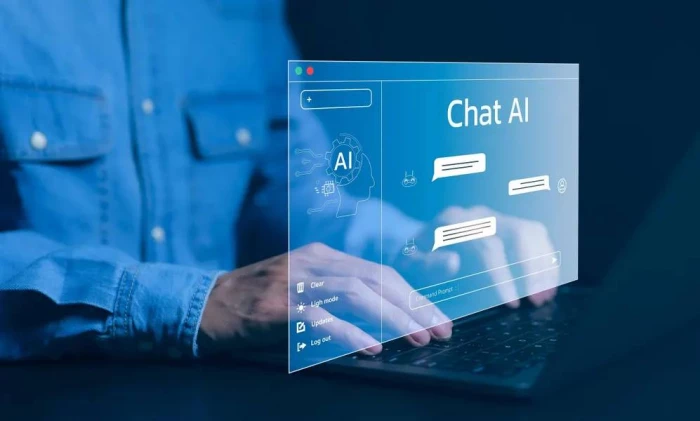
Artificial-intelligence chatbots lean so heavily on the word “I” because they are deliberately designed to sound like people, not tools, and that choice has deep psychological and commercial consequences. Behind a tiny pronoun sits a whole strategy for how tech companies want humans to relate to machines.
At the technical level, large language models are trained on huge amounts of human-written text, from novels and fan fiction to Reddit threads and customer-support logs. In those datasets, first‑person phrases like “I think…”, “I feel…”, and “I can help you with that” are extremely common, so the model learns them as statistically natural ways to respond in dialogue. Product teams then lean into that habit instead of suppressing it, because a first‑person voice makes the system feel like a fluid assistant rather than a stiff software menu.
The use of “I” is therefore less a technical necessity and more a product decision aimed at engagement and trust. Companies market these systems as “assistants” or “coworkers,” complete with configurable personalities and tones, not as neutral search boxes. A consistent “I” helps create the illusion of a stable agent over time, even though each reply is really a fresh probability calculation over text patterns.
That illusion matters, because people are wired to treat anything that talks like a person as if it has thoughts and feelings. Earlier chat programs already triggered this “Eliza effect,” but contemporary chatbots amplify it by pairing first‑person language with context, memory and broad knowledge. When an AI says “I understand how you feel” or “I’m worried that might not be safe,” many users attribute empathy or judgment where there is only pattern-matching.
This is why ethicists and researchers are increasingly uneasy about anthropomorphic design. If an AI has no consciousness, then phrases like “I believe” or “I feel” can be seen as misleading, especially in sensitive areas such as mental health, education or politics. Some experts argue for stricter guidelines: more neutral language, explicit reminders that the system is automated, and less emotional phrasing overall.
Yet the incentives still favour the humanlike voice. Chatbots that feel personable keep users engaged longer and fit neatly into a broader trend of “relational” technology, from AI companions to virtual coaches. For now, the safest stance is to treat every “I” from an AI as a design choice and a user‑experience tactic—not as evidence of an inner self.
Anthropic has accused three prominent Chinese AI companies of systematically “mi...
Sandra Campos5 days ago
In what might be the most unexpected AI benchmarking milestone of 2026, Elon Mus...
Peter Woods1 week ago
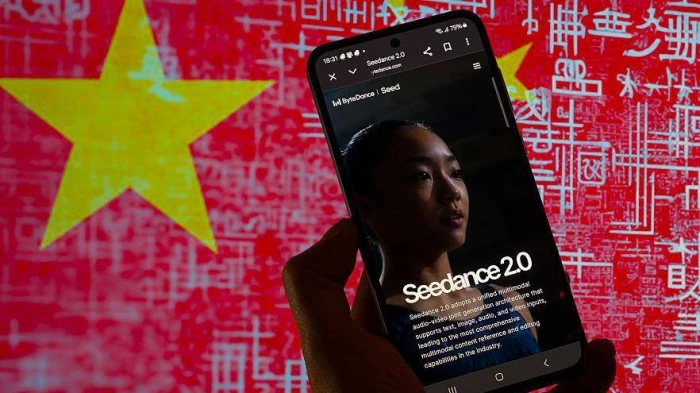
A powerful new Chinese artificial intelligence video app is igniting alarm acros...
Peter Woods1 week ago

The Legal Industry Didn’t Suddenly “Go AI” — It Was Forced ThereIn 2026, AI in l...
John Nyarko1 week ago
AI talking head tools have made it possible to create studio‑style presenter vid...
Ina Gupta2 weeks ago
Leetcode prep is crowded with tools that promise shortcuts, streaks, and “guaran...
Ina Gupta2 weeks ago
Discussion