
Moneydisquantified.org operates as an entry‑level personal finance content site within the broader Disquantified network, mixing basic money explainers with SEO‑driven topics like AI tools and lifestyle pieces. It is functionally closer to a general content/guest‑post finance blog than a regulated advisory platform, offering quick overviews rather than expert, deeply sourced guidance.

Moneydisquantified.org presents itself under the “Finance Made Clear – Banking & More” tagline, with a focus on simplifying banking, saving, and everyday money decisions for general readers. The tone across the network is beginner‑friendly, avoiding heavy jargon and aiming at users who are early in their personal finance journey rather than advanced investors.
From an identity perspective, it sits inside a multi‑domain brand cluster that includes Disquantified.org and Disquantified.com, which all publish overlapping finance, tech, and lifestyle content. This places Moneydisquantified.org in the category of informational blogs designed for search discovery, not as a licensed financial planning firm or regulated advice provider.
The broader Disquantified ecosystem shows a clear emphasis on personal finance fundamentals including
● Budgeting basics
● Simple saving strategies
● Cash‑flow management
● Introductory investing, often in “how to” or “beginner’s guide” formats
Around this core, the network regularly publishes on banking and credit topics, such as:
● VA home loans
● General banking tips
● Loan‑related explainers
It also covers insurance and risk themes aimed at a mass‑market audience, including Car or general insurance topics and Fraud awareness and prevention content.
Alongside finance, the ecosystem includes side, trend‑driven topics like AI companions and digital assistants, NSFW AI tools, Crypto‑related content, Sports betting and similar speculative themes.
This creates a dual identity: one part basic money education, one part topical SEO hub for tech‑and‑money themes that may feel only loosely connected to everyday personal finance.
| Theme | Typical focus examples | Likely user intent |
| Personal budgeting & saving | Daily budgeting, cash‑flow tips, saving habits | Learn basics, fix small money problems |
| Debt, loans & banking | VA loans, banking tips, loan selection, cash‑flow for SMEs | Pre‑transaction research and orientation |
| Investing & wealth basics | Beginner crypto, long‑term planning, simple investment ideas | Explore investing without technical detail |
| Insurance & risk | Car insurance, fraud awareness, risk tips | Understand options and pitfalls |
| Tech / AI & money | AI companions, NSFW AI tools, digital finance tools | Curiosity, exploration, trend following |
| General financial literacy | Credit scores, financial terms, mutual fund basics | Build foundational knowledge |
Across the network, most articles fall into evergreen “how‑to” and explanatory buckets—budgeting, saving, credit, loans, and insurance—that can remain relevant over time with minimal updating. They are short‑to‑mid‑length explainers that answer a specific question (for example, how to manage cash flow) in a few minutes of reading, suitable for searchers who just need a quick orientation.
A smaller but meaningful slice of the output leans on topical hooks like AI tools, NSFW AI, and crypto or betting‑related themes, which are more dependent on current interest cycles and algorithmic trends. For visualization, the pattern can be interpreted roughly as a majority evergreen foundation, with a sizable layer of trend‑chasing content added on top to widen keyword reach and attract spikes of search traffic.
Evidence from the core Disquantified.org domain points to a dense posting calendar in 2025, with multiple finance and tech‑related articles appearing in close succession, suggesting an operation geared toward sustained content volume. Titles consistently follow SEO‑standard formulations “How to…,” “Importance of…,” “Beginner Guide to…,” and “Comprehensive Guide to…” which align with generic high‑volume query patterns rather than niche specialism.
Guest‑post marketplaces explicitly list moneydisquantified.org as an available site where paid articles with backlinks can be published, framing it as part of the broader link‑driven SEO ecosystem. This monetization model implies that some proportion of content is shaped by client keywords and backlink goals, which can reduce topical coherence and blur the line between editorial priorities and external SEO demand.
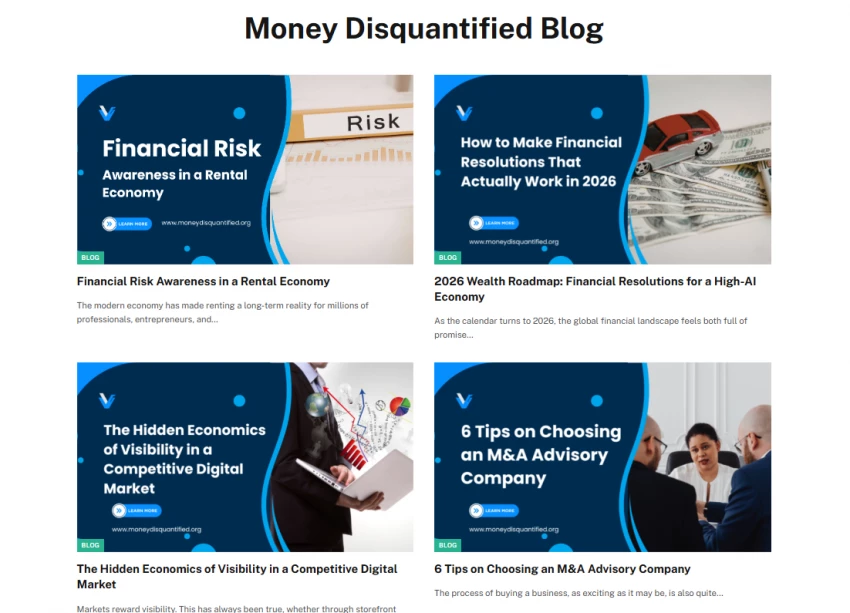
Disquantified‑network articles are basically overviews and listicles that repurpose widely known financial advice in a streamlined, readable format. Typical pieces are estimated at four‑to‑seven‑minute reads, often framed with intros, numbered tips, and FAQ sections, aimed at giving the reader enough clarity to act at a simple level but not enough detail for high‑stakes decisions.
On the quality side, there is limited citation of primary data, sparse quantitative analysis, and minimal expert commentary, which differentiates the site from research‑heavy finance platforms. Layout and usability are generally described as clean and low on intrusive pop‑ups, leaving readers with a straightforward, text‑first experience that is easy to skim but light on charts, tools, or interactive components.
| Dimension | Observed pattern |
| Typical depth | Short to mid‑length explainers, basic overviews |
| Structure | Listicles, “how‑to” guides, repeating FAQ sections |
| Originality | Mixed; common topics, some cross‑domain repackaging |
| Use of sources | Limited visible citations, few data‑heavy breakdowns |
| Visual elements | Mostly text; occasional images, few advanced tools/graphics |
Most visitors are likely to arrive from Google or other search engines on specific questions how to manage cash flow for a growing business, for example—rather than by browsing the homepage as a destination brand. The design and navigation appear to support single‑article consumption, where a user takes in one explainer and leaves, rather than encouraging deep exploration or account‑based engagement.
Third‑party analyses note little visible emphasis on community features such as forums, robust comments sections, or interactive Q&A, which naturally limits the sense of an ongoing learning community. Instead, user value comes from quick, self‑served reads that close small knowledge gaps which is helpful for early learners but less compelling for users who want long‑term, two‑way engagement around their finances.
External trust‑check tools and independent reviewers tend to place Disquantified.org in a “legitimate but questionable authority” zone: technically safe to visit, but not strongly validated as an expert financial institution.
Security basics like HTTPS and a public privacy policy are present, yet author bios, formal credentials, and editorial policies are either minimal or missing, which weakens conventional EEAT (Expertise, Experience, Authoritativeness, Trustworthiness) signals.
For readers, this means any advice especially around complex topics like investing, loans, or insurance—should be cross‑checked against more authoritative sources, official regulations, and, where relevant, licensed professionals before making significant decisions.
● Use Moneydisquantified.org as a starting point for learning simple concepts, getting definitions, and understanding the overall shape of a topic like budgeting or basic loans.
● Do not treat it as a sole or final authority for major financial moves, since expert credentials, deep data analysis, and transparent sourcing are not consistent strengths of the network.
After stepping back from the network’s positioning, publishing habits, and external reviews, Moneydisquantified.org fits best as a lightweight, early‑stage learning stop rather than a primary financial planning partner. It can be useful for demystifying jargon, seeing common‑sense tips laid out in plain language, and exploring how money topics intersect with technology and everyday life, especially if you prefer quick reads over dense whitepapers.
At the same time, the site’s mixed topical scope, guest‑post monetization, and limited expert transparency mean it should be approached with calibrated expectations: a handy explainer resource, not a deeply vetted, data‑driven authority. For most users, the healthiest way to use it is alongside more specialized and regulated sources—treating it as a way to get oriented, then moving to official documents, established finance brands, or professional advisors when real money is on the line.

What Is GoMyFinance.com?GoMyFinance.com is a financial content and tools platfor...
John Nyarko15 hours ago
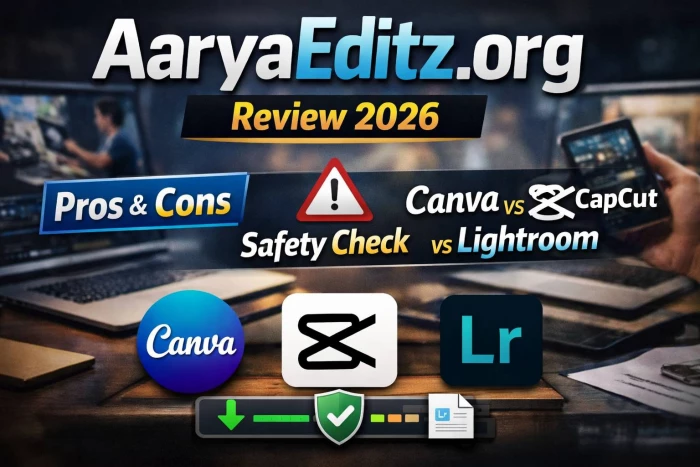
What exactly is AaryaEditz.org? AaryaEditz.org is a resource-focused websit...
Ina Gupta1 day ago

1) Are “Gramhir AI” and “Gramhir Pro” the same thing?Best-supported conclusion-T...
Ina Gupta5 days ago
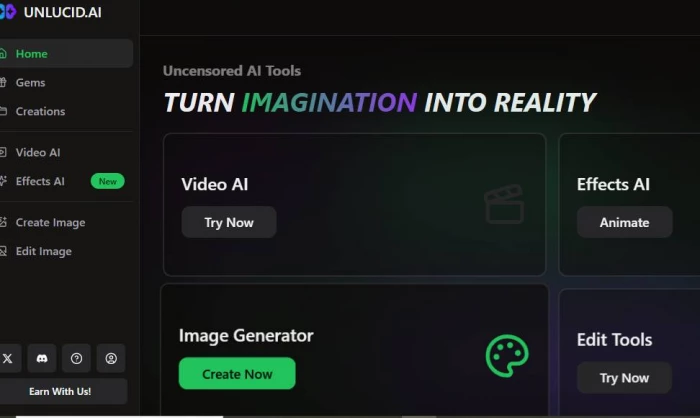
What Is Unlucid.ai?Unlucid.ai is a website that helps you create pictures a...
Ina Gupta1 week ago

Noblu glasses are marketed as blue light blocking, “auto-adjusting” smart glasse...
John Nyarko1 week ago

Blooket is a browser‑based, game‑style quiz platform that lets teachers turn que...
Ina Gupta2 weeks ago
Discussion