Autodraft AI entered the writing tools space with a straightforward promise: structured drafting and automated content creation. On paper, that sounds efficient. In practice, however, real drafting rarely follows a neat, linear path. Writers jump between outlining, expanding sections, refining tone, optimizing for SEO, and reshaping arguments. Drafting is not one action. It is an evolving process.
This is where Autodraft AI can begin to feel restrictive.
The platform is capable of generating content, but modern workflows demand more than automation alone. Writers increasingly need flexibility, contextual awareness, and alignment with SEO and brand guidelines. That is why many professionals are actively exploring Autodraft AI alternatives that better match how content is actually created today.
Rather than labeling Autodraft AI as good or bad, the smarter question is this: what kind of drafting workflow are you running?
Many writers do not work inside rigid structures. They test ideas, rewrite sections repeatedly, experiment with tone, and gradually refine their message. In these environments, strict templates can feel limiting.
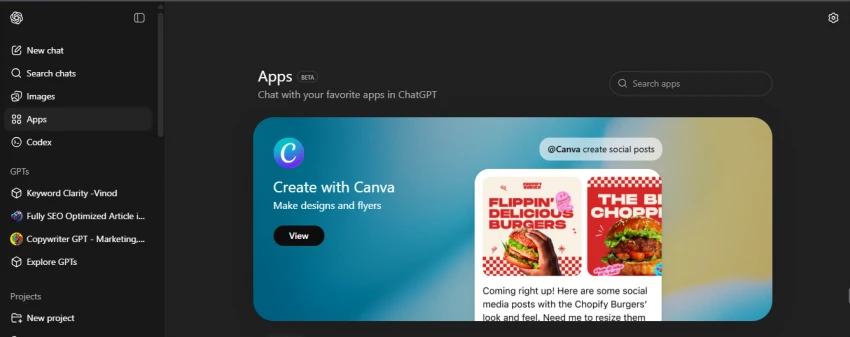
This is why many creators turn to ChatGPT as an Autodraft AI alternative. It behaves less like a fixed drafting template and more like a flexible drafting partner. Instead of forcing structure, it adapts to whatever structure the writer needs.
Writers commonly use it to brainstorm outlines, expand sections, simplify complex topics, and adjust tone without switching tools. Its conversational workflow supports continuous refinement, which is especially valuable for long-form blogs, reports, scripts, and technical documentation.
Why ChatGPT often replaces Autodraft AI
In exploratory writing workflows, adaptability typically matters more than rigid automation.

Not every team wants open-ended flexibility. Marketing departments and content teams often prioritize consistency. Their drafts must follow brand tone, repeatable templates, and standardized formats.
In these cases, Jasper frequently becomes the preferred alternative.
Jasper is designed around structured workflows and brand voice control. Rather than free-form drafting, it guides users through predefined frameworks that help maintain consistency across campaigns and teams.
Where Jasper competes strongly
When predictability and scale matter most, Jasper often outperforms more open-ended tools.

One of the biggest differentiators between AI writing platforms is SEO intelligence. A draft can read well but still fail in search if it lacks topical depth or alignment with user intent.
This is where Frase typically replaces Autodraft AI.
Frase anchors the writing process directly to search data. Instead of focusing only on text generation, it integrates SERP analysis, competitor comparisons, and topic coverage scoring into the drafting workflow.
Why Frase stands out
When the primary goal is search visibility, SEO intelligence often outweighs pure writing flow.
Some content teams prioritize velocity over deep refinement. Agencies, affiliate marketers, and large publishing operations often need multiple drafts produced quickly.
In these high-output environments, Writesonic frequently replaces Autodraft AI.
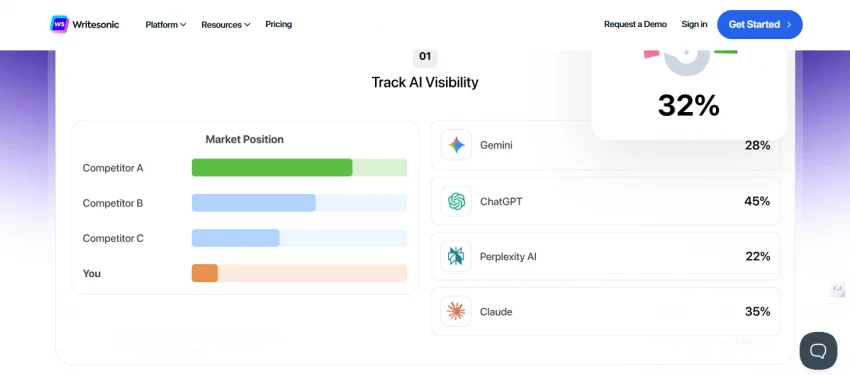
Writesonic is optimized for speed. It allows teams to generate multiple content variations rapidly. While the depth may not always match slower tools, the productivity advantage is clear for volume-driven workflows.
Where Writesonic excels
When scale and speed are the priority, efficiency becomes the deciding factor.

In many workflows, the biggest bottleneck is not writing the full article. It is coming up with angles, hooks, and starting points.
This is where Copy.ai often enters the stack.
Copy.ai is particularly strong at generating marketing hooks, subject lines, ad variations, and short-form copy. While it is not built primarily for deep long-form drafting, it removes the creative friction that slows teams at the beginning.
Why Copy.ai fits ideation workflows
It does not replace full drafting, but it often accelerates the hardest step: getting started.
Cost sensitivity remains a real factor for many teams.
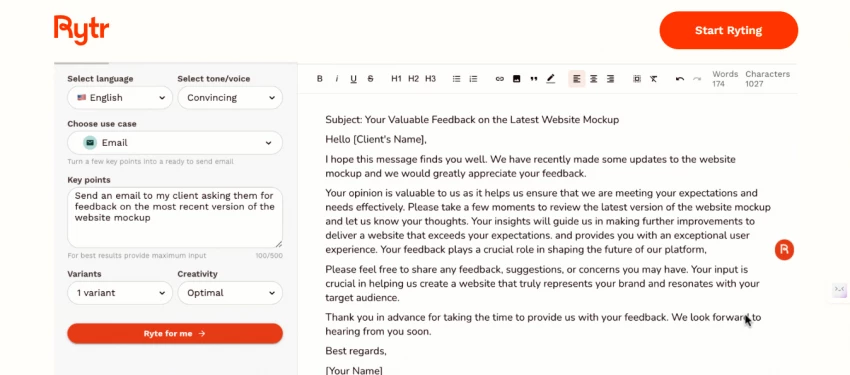
Rytr frequently becomes the fallback Autodraft AI alternative when affordability is the main concern. It offers basic drafting functionality at a lower price point. While it may not match the sophistication of premium platforms, it delivers functional value for lighter content needs.
Where Rytr competes
For budget-focused users, cost efficiency often outweighs advanced capabilities.
The growing interest in Autodraft AI alternatives reflects a broader evolution in the AI writing market. Tools are no longer judged purely on their ability to generate text. They are judged on contextual fit.
Modern teams are asking deeper questions:
Does the tool align with our SEO strategy?
Autodraft AI still occupies a middle position. It automates drafting but does not deeply specialize in flexibility, SEO intelligence, high-volume scaling, or extreme budget efficiency.
Autodraft AI is not obsolete. It still serves writers who prefer structured drafting within a contained workflow.
However, in 2026, the real decision comes down to workflow alignment.
The competitive landscape is no longer about which AI writes the most words.
It is about which AI understands why the draft exists in the first place.
That shift from simple automation to contextual alignment is exactly why Autodraft AI alternatives are seeing stronger adoption across modern content teams.

AI character chat platforms have expanded far beyond simple chatbot conversation...
Peter Woods1 day ago
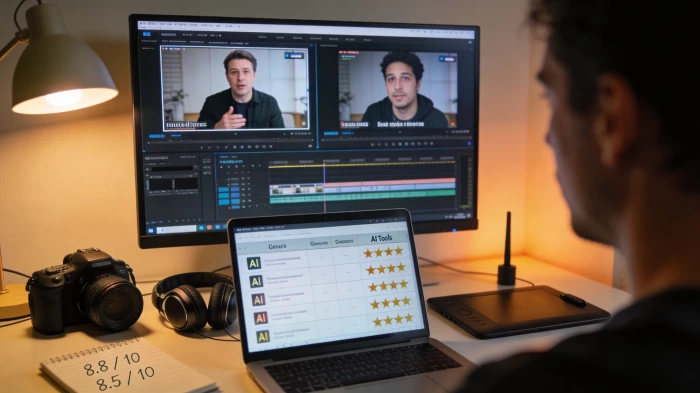
Artificial intelligence has dramatically changed how visual content is produced...
Peter Woods3 days ago

Artificial intelligence has dramatically changed how visuals are created. Only a...
Alexander Hughes5 days ago
AI video creation has shifted from curiosity to competitive advantage. What used...
Peter Woods1 week ago

As video continues to dominate online engagement, AI-powered talking head tools...
Noura Belkacem1 week ago
There are two kinds of presentation makers in the world. One group genuinely enj...
Alexander Hughes1 week ago
Discussion