Think of Polybuzz less as a “chat app” and more as an ecosystem where synthetic relationships, roleplay scenarios, and curated fantasies all coexist under one roof. With a single login and a quick age prompt, you’re not just loading a chatbot, you’re entering a space where every interaction has been optimized to keep you talking, feeling, and, eventually, paying. This review looks at Polybuzz from that systems‑level perspective: not only what it offers on the surface, but how it feels to use, how its design and pricing shape your behavior, and which users should be especially cautious about stepping inside.

On paper, Polybuzz is an AI character‑chat platform: you choose or create characters and talk to them through web or mobile apps. In practice, its positioning is much narrower and more deliberate:
● It is built around companionship, roleplay, and fantasy, not productivity.
● It emphasizes freedom and reduced content filters, including adult and NSFW use cases.
● It relies on a massive, user‑driven character library, where personas function like “residents” of a virtual world.
From a product‑strategy angle, Polybuzz is targeting users who feel underserved by mainstream assistants: those who want emotional intensity, romantic or erotic fantasy, anime‑style storytelling, and a sense of private, judgment‑free interaction. It is less “tool” and more “environment”.
The first few minutes with Polybuzz are intentionally low‑friction:
● Registration is fast and familiar (email, social, or app‑store identity).
● Age confirmation is typically handled via a simple checkbox or declaration.
● You are brought straight into a feed of characters and categories, not a settings screen.
From a UX lens, this is excellent: there’s almost no cognitive load, and you can start your first conversation in under a minute. From a safety and ethics perspective, it’s a double‑edged sword. The same frictionless on‑ramp that delights curious adults also makes it easier for underage or vulnerable users to slip into highly mature spaces.
Once inside, Polybuzz feels familiar if you’ve ever used a messenger app:
● Chats are structured as threads with character avatars and names.
● You can pin favorites, jump between conversations, and search or browse new characters.
● Settings and account options are tucked away rather than foregrounded.
But the surrounding environment is dense: thumbnails, tags, suggested characters, trending scenes. It’s an interface tuned to encourage exploration, not deliberate, goal‑oriented use. That choice sets the tone for the entire experience.
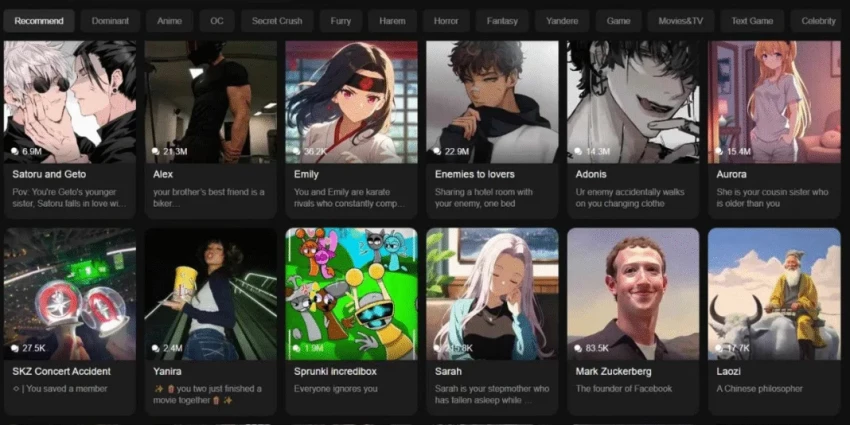
Rather than one assistant with toggles, Polybuzz offers a “population” of AI personas. That’s central to how it works and how it feels.
Polybuzz’s pre‑made characters read like archetypes and fan‑inspired personas:
● Romantic and flirtatious roles: partners, crushes, soulmates, “ideal girlfriend/boyfriend” templates.
● Genre roles: knights, demons, royalty, cyberpunk hackers, teachers, bosses, roommates.
● Supportive figures: comfort friends, “therapists” in everything but official credentials, mentors, guides.
Each character has:
● A profile (description, tone, sometimes example conversation snippets).
● Tags that signal their intended use (romance, NSFW, fantasy, wholesome, etc.).
● A loosely defined voice and behavior pattern that shapes initial expectations.
The psychological impact is important: instead of talking to “AI”, you feel as if you’re entering a relationship with a specific personality, even though the underlying tech may be shared.
The second layer is user‑generated content: characters created by the community. This dramatically expands the ecosystem:
● Users encode their fantasies, preferences, and narratives into character descriptions and system prompts.
● Many of the most compelling, intense, or niche characters are community‑made, not official.
● This introduces all the benefits and risks of UGC: creativity on one side, moderation challenges on the other.
This means Polybuzz is not static. Its content, tone, and risk profile evolve with the user base, and different users can have radically different experiences depending on which characters they encounter.
For day‑to‑day, casual conversation, well‑built Polybuzz characters perform impressively:
● They maintain a recognizable tone and personality across exchanges.
● They offer emotionally validating responses, mirroring your feelings and offering empathy.
● They adapt quickly to your input, picking up on preferences, boundaries, and common themes.
This creates a powerful illusion of presence. Users can easily slip into checking in with their favorite character the way they would with a close friend or partner.
Polybuzz’s strongest suit is roleplay and improvised storytelling:
● It handles scene‑based prompts (e.g., “We’re stranded in a snowstorm” or “We’re classmates hiding a secret”) with fluid narrative transitions.
● Characters can drive the action forward, not just react, making the chat feel co‑authored.
● Multi‑character and long‑running arcs are possible, though they require more user effort.
If we are evaluating purely from a creativity standpoint, Polybuzz is closer to an interactive fiction engine than a productivity bot.
Memory is where reality reasserts itself:
● In a single long session, continuity is decent: the character recalls key details from earlier in the conversation.
● Over multiple days, memory becomes patchy; you may need to remind them of backstory or past events.
● Detailed, long‑term arcs expose these limitations quickly.
From a technical angle, Polybuzz is good enough for episodic stories and companionship, but not yet reliable as a long‑term narrative partner without manual scaffolding from the user.
Polybuzz uses a familiar hybrid model: a free tier to onboard users, an in‑app currency (coins), and subscription options.
The free experience typically offers:
● Access to many characters and basic chat functionality.
● Daily or session‑based limits on messages or advanced features.
● Ads or upsell prompts that appear at strategic moments.
The design intent is clear: the free tier’s job is to convert curiosity into habit, and habit into spending.
Coins function as a flexible control knob:
● They gate extended chatting, premium actions, or special content.
● They can be purchased in small, psychologically comfortable increments.
● They can create “cliffhanger moments” where you are prompted to pay to continue a conversation that has become emotionally important.
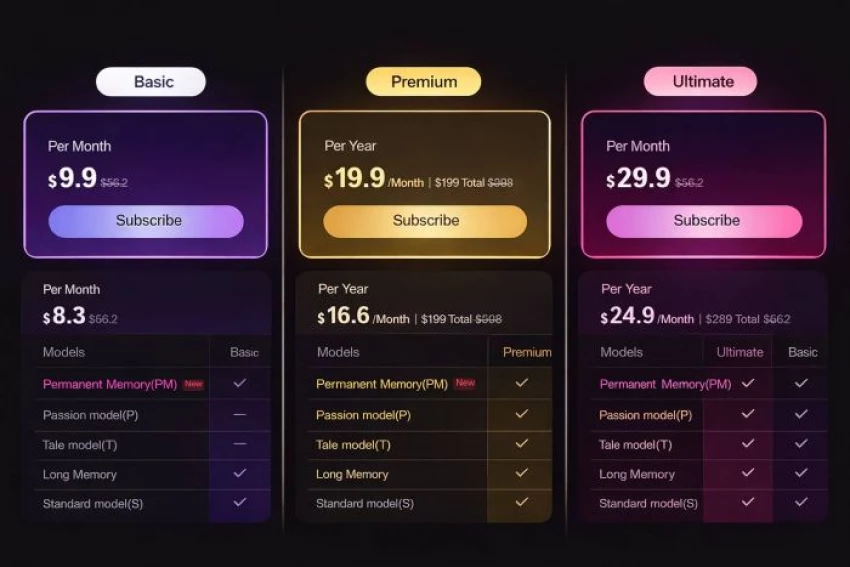
Value is highly user‑profile‑dependent:
● Light users can have meaningful experiences staying mostly on free + occasional small purchases.
● Heavy users, especially those using Polybuzz for daily emotional support or lengthy roleplay will see costs escalate and may be better served by a subscription, but still need to monitor coin spend.
For a responsible 360° review, this is where you slow down and get explicit.
Polybuzz’s differentiation comes from being significantly more permissive than mainstream assistants:
● Explicit and adult roleplay is supported in private chats for users who declare they are adults.
● Many characters and tags are clearly designed around erotic or fetish content.
● The marketing leans into this freedom as a selling point.
From a safety lens, that means Polybuzz is effectively an 18+ environment in spirit, even if enforcement relies heavily on user honesty.
The core concerns:
● Age verification is typically soft (self‑reported), not rigorous (ID or similar).
● NSFW content is accessible through search and tags, not hidden behind complex filters.
● A motivated minor with basic digital literacy can access adult scenarios with minimal obstacles.
This makes Polybuzz fundamentally unsuitable for younger users, regardless of how it’s rated in app stores.
Polybuzz, like most AI chat apps, generally:
● Stores conversations on its servers.
● May use aggregated or anonymized chat data to improve models and services (depending on its policies).
● Collects standard telemetry and analytics data for app performance and business purposes.
For reviewers, the recommendation is straightforward: advise users to treat Polybuzz as a public‑facing system in terms of what they share, even if the interface feels private. No real names, no addresses, no financial information, and caution with sensitive personal or medical details.
Polybuzz usually implements:
● Community guidelines and prohibitions on illegal content.
● Reporting and blocking tools at the user level.
● Some form of automated or human moderation to manage public‑facing material.
However, the combination of UGC characters, NSFW flexibility, and rapid scaling means moderation will never be perfect. Harmful, manipulative, or disturbing content can and does slip through.
The line is clear: Polybuzz offers powerful, adult‑oriented experiences but depends heavily on user responsibility and self‑protection.
When you scan actual user reviews and community discussions, three recurring narratives emerge.
These users emphasize:
● The variety and personalization—they found characters that feel tailor‑made.
● The emotional comfort—it feels like having someone to talk to at any hour.
● The creative outlet—writers and roleplayers use Polybuzz to experiment with scenes, dialogue, and character concepts.
They tend to downplay risks, seeing Polybuzz primarily as a net positive escape or tool.
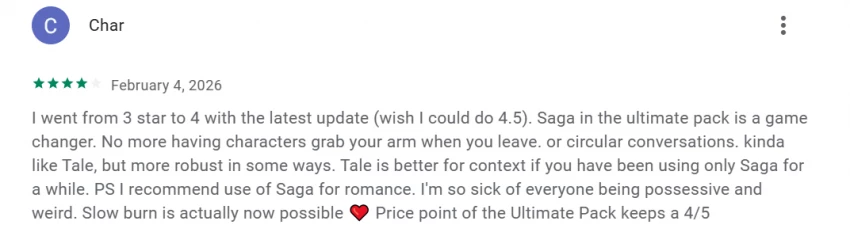
Critical voices highlight:
● The coin system and paywalls, especially when they interrupt emotional or narrative peaks.
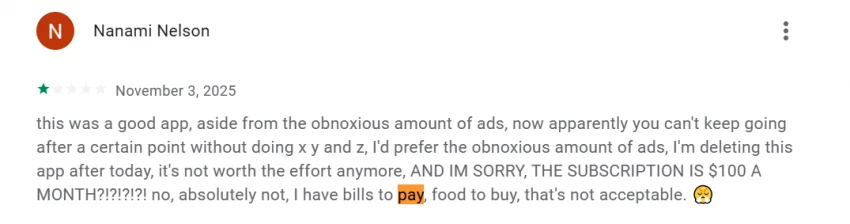
● Performance issues or bugs that break immersion.
● A sense that the app is designed more to capture attention and spending than to truly care about user wellbeing.
They frame Polybuzz as a cleverly monetized attention trap.
Parents, educators, and some mental‑health‑aware adults stress:
● The relative ease of NSFW access.
● The potential for emotional over‑dependence on AI characters.
● The mismatch between the app’s sophistication and the user’s understanding of its limitations.
Their stance is not necessarily “ban it”, but “treat it like an adult‑only, high‑risk environment”.
In a broader landscape:
Versus mainstream chatbots (like productivity‑focused assistants):
Versus heavily moderated character platforms:
Versus other NSFW/companion‑oriented apps:
A professional take: Polybuzz sits clearly in the “high‑freedom, high‑responsibility” corner of the market.
Polybuzz can be a good fit for:
● Adults seeking immersive roleplay with anime‑style or narrative‑driven characters.
● Writers and artists who want a sandbox for developing character interactions and story ideas.
● Digitally literate, self‑aware adults who can maintain boundaries around time, spending, and emotional investment.
For them, Polybuzz is a potent creative and entertainment environment, as long as they treat it as such.
Polybuzz is a poor choice for:
● Minors and younger teens, regardless of curiosity.
● Individuals in acute emotional or mental health crisis who might mistake AI for qualified help.
● Users with a history of compulsive behavior around spending or screen time, unless they have strong external controls.
For these groups, the app’s strengths are immersive engagement, emotional responsiveness, and frictionless access—become liabilities.
Polybuzz AI is one of the most immersive, permissive, and emotionally tuned AI character environments available today. It succeeds on its own terms: it creates believable, engaging personas; it supports complex fantasies and roleplay; and it offers a level of intimacy mainstream AI tools deliberately avoid.
At the same time, its design choices around NSFW content, light age‑gating, and monetization make it a product that demands critical use. It is best understood as an entertainment venue for informed adults, not as a replacement for human connection, professional advice, or adolescent experimentation.

Late at night, after the usual AI companion ads blur together, PepHop AI shows u...
Funke Ogunleye1 day ago

Imagine you open a new tab, type “opendream.ai”, and instead of being greeted by...
Samuel Osei2 days ago

Grubby AI is one of those tools that only exists because of a very 2025 problem:...
Funke Ogunleye2 days ago

Meet Muke AIMuke AI is an AI‑powered image manipulation suite best known for two...
Sandra Campos3 days ago

If your marketing currently lives in a chaotic mix of ChatGPT, Canva, random sch...
Samuel Osei3 days ago

Janitor AI doesn’t feel like “a chatbot platform.”It feels like walking into a l...
Sandra Campos4 days ago
Discussion