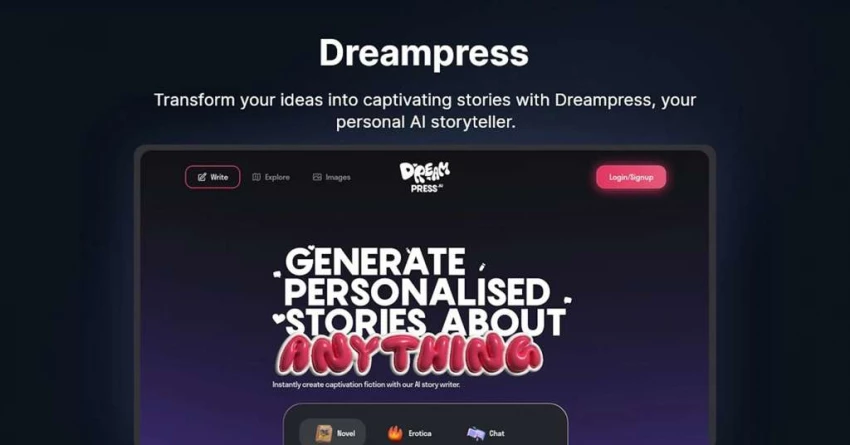
DreamPress AI markets itself as a personalized AI story generator capable of producing fiction, erotica, fan-made universes, and scene-based writing with visuals. It promises speed, creative freedom, and a platform that “lets your imagination run wild.”
But user feedback across Trustpilot, Reddit, and third-party AI review hubs paints a far more complicated picture. Instead of treating DreamPress AI like a typical software review, this article focuses on what real users consistently experience, where the platform excels, and where it breaks down. The goal is simple: help readers decide, based on evidence, whether DreamPress is worth trying or avoiding.
Overview
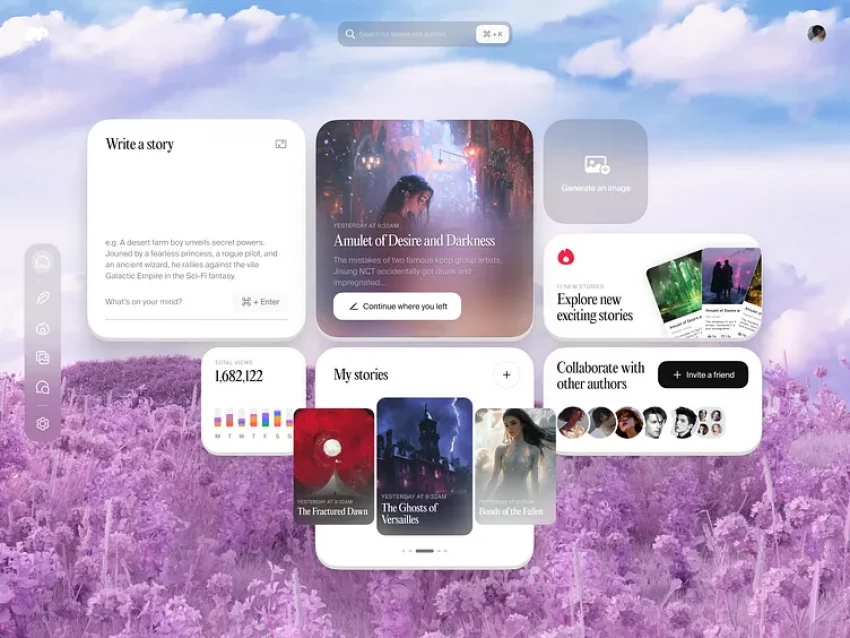
DreamPress AI describes itself as a fiction studio powered by AI, offering the ability to generate stories directly from prompts and manage them in a chapter-based structure. It includes an integrated image generator, allows uncensored writing, and hosts a community space where users can explore or remix each other’s creations. Founded in 2021 in London by Anuj Nayyar, the tool primarily attracts fanfic writers, NSFW creators, and casual storytellers who want fast, flexible output without the guardrails of mainstream AI models.
Pricing Plans
DreamPress uses a token-based free tier and provides paid plans with higher limits.
Works for testing, but too limited for real writing sessions
Unlimited Monthly ($14.39 discounted)
Unlimited stories, 2,000 images
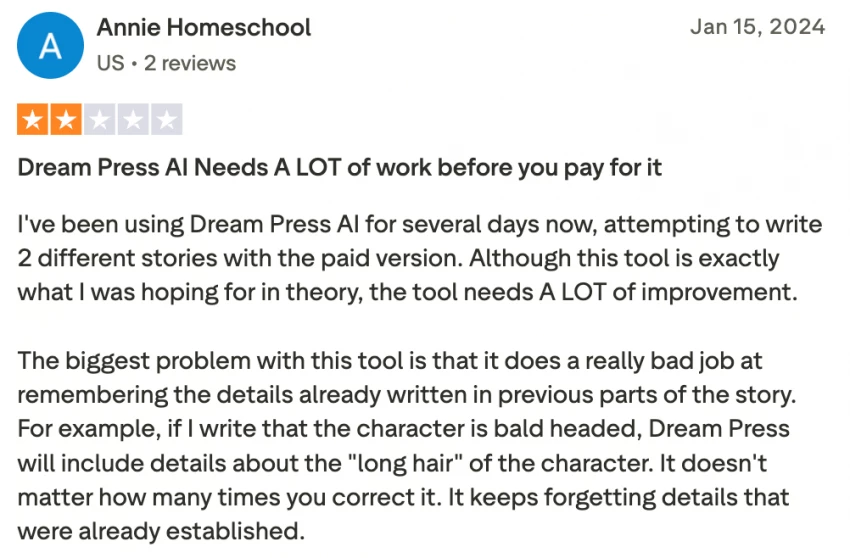
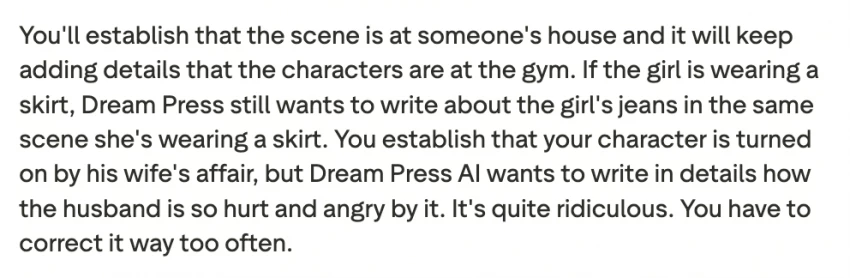
Many users say the model still struggles with consistency
Annual ($84/year)
Ownership rights + unlimited features
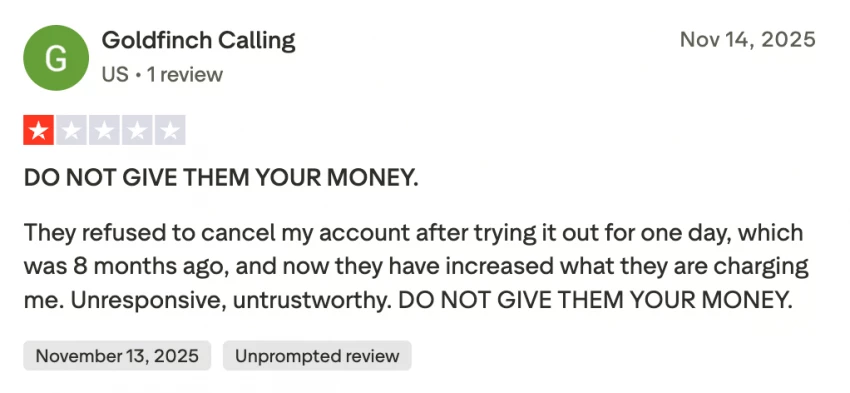
The biggest complaints come from annual users
The biggest question isn't whether the pricing is cheap — it's whether the paid plans behave as advertised. User reviews suggest that pricing itself is not the issue. Billing transparency is.
User Feedback: What 50+ Reviews Reveal
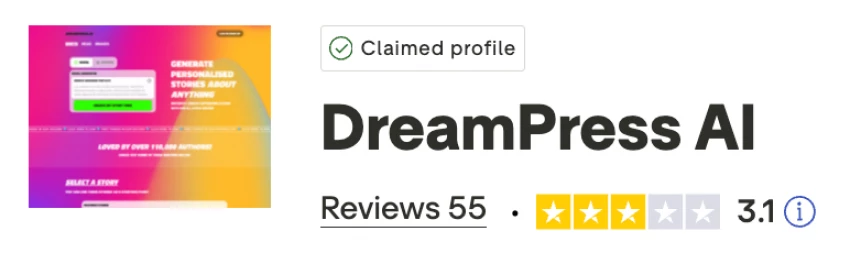
DreamPress AI’s 3.1/5 TrustScore looks average, but the distribution is lopsided. There are glowing 5-star reviews praising creativity — and severe 1-star warnings about billing and broken features.
To make sense of this conflict, here is a breakdown table summarizing common themes:
Table: Real User Reviews (Condensed & Categorized)
Positive Reviews (4–5 Stars)
What Users Liked
Frequency
Example Sentiment
Great for writer’s block
Common
“Helps me continue scenes I get stuck on.”
High creativity for erotica
Frequent
“Lets me write without worrying about filters.”
Easy to use
Common
“A simple UI that doesn’t get in the way.”
Fun for casual fiction
Very common
“I can continue my novel without overthinking.”
Neutral / Mixed Reviews (2–3 Stars)
What Users Mentioned
Frequency
Example Sentiment
Repetitive wording
Very common
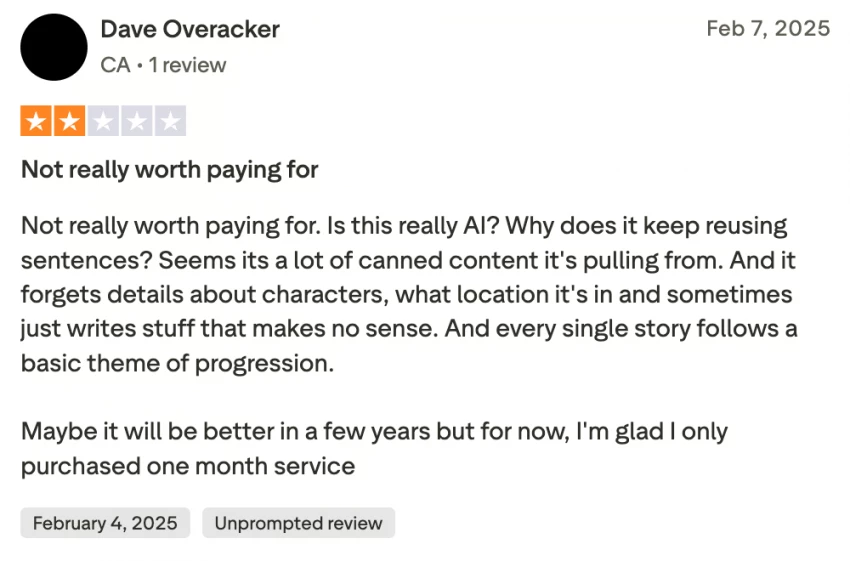
“Every story follows the same progression.”
Poor memory
Widespread
“It forgets everything: hair, clothes, location…”
Slow updates / buggy features
Increasing
“Director mode barely works.”
Negative Reviews (1 Star)
Complaint
Severity
Details
Refusal to cancel subscriptions
Severe
“Charged for 8 months after cancel attempt.”
Hidden or duplicate charges
Severe
“Extra $20 added monthly without explanation.”
Unresponsive support
Very severe
“Emails and Discord messages ignored.”
Broken features
Moderate–High
“Platform updates break the writing flow.”
The strongest pattern? DreamPress AI is loved for creativity but distrusted for reliability.
What DreamPress AI Claims to Be
DreamPress AI positions itself as a platform that blends fast storytelling, AI creativity, and user-driven control. Its design focuses on giving writers a way to explore ideas without being slowed down by world-building, character development, or plot structuring. The addition of image generation and a community hub reinforces its goal of being more than a writing assistant. Ultimately, DreamPress claims to offer freedom: freedom from filters, from writer’s block, and from the rigidness of traditional AI models.
Analyzing Actual User Pain Points (Not the Surface-Level Ones)
Most AI writing tools get predictable complaints: repetition, limited context, or model quirks. DreamPress AI has deeper structural issues worth understanding.
1. Consistency Problems Aren’t Just Annoying — They Break Stories
Users report:
● Character traits changing randomly
● Locations switching mid-scene
These aren’t just minor LLM mistakes. They disrupt continuity so frequently that long-form storytelling becomes nearly impossible without heavy editing.
2. Repetition Is Not a Bug — It’s a Model Limitation
Multiple reviews mention that the model reuses the same:
● Phrases
● Progression arcs
This suggests a small or heavily compressed language model, not an optimized narrative engine.
3. The Update Problem: “Daily Changes with No Warning”
DreamPress AI reportedly pushes updates at random times, resulting in story loss, unstable sessions, or broken tools. This is not common in competing writing platforms and is especially damaging for long chapters.
4. Billing Complaints Are Too Frequent to Ignore
Reports of double billing, failed cancellations, and nonexistent support responses appear too consistently to dismiss as isolated incidents. Financial reliability is a genuine concern for subscription users.
Is DreamPress AI Safe? What Reddit Says
Across Reddit discussions, users generally agree that DreamPress AI is technically safe — there are no reports of malware, phishing, or data leaks tied to the platform. Concerns instead revolve around its subscription model and platform reliability, especially when it comes to canceling accounts or recovering work during unexpected updates. Some users also note that the tool restricts certain dark themes despite being marketed as “uncensored,” creating confusion about what is actually allowed. Overall, the safety issue is less about security and more about trust in the service itself.
Where DreamPress AI Actually Excels
Despite its weaknesses, DreamPress does succeed in areas that many casual writers value. It is one of the fastest erotica-oriented generators, capable of producing usable scenes in seconds. Its interface is straightforward, making it approachable even for people unfamiliar with AI tools. The spontaneity of its writing style can be creatively stimulating, particularly for short-form content where continuity matters less. For users seeking quick experimentation or light storytelling, DreamPress can genuinely feel fun.
Who Should Use DreamPress AI — and Who Should Avoid It
DreamPress AI tends to benefit people who value speed, simplicity, and uncensored creativity. Casual users searching for playful fiction, NSFW content, or spontaneous story ideas are likely to enjoy it because it supports rapid exploration with minimal setup. However, writers who need structured narrative control, accurate long-term memory, or stable platform behavior often find it frustrating. Those who care deeply about billing transparency or customer support responsiveness should approach with caution, given how frequently these issues appear in user reviews.
Nearest alternatives to DreamPress AI
Alternative
Best For
Key Strength
DreamGen
Creative storytelling & role play
Strong narrative control & flexibility
NovelAI
Unfiltered story creation
Deep customization & world building
SmittenStories
Budget-friendly AI fiction
Simple, personalized story generation
RedQuill
Community & shared stories
Big story library & user engagement
Conclusion: Should You Use DreamPress AI?
DreamPress AI is a contradictory tool: impressively creative yet erratic, fun to experiment with yet unreliable for serious narratives, and accessible to beginners while also burdened by support and billing issues. The split in user sentiment reflects this duality—some see it as a brilliant creative partner, others view it as a risky or unstable investment.
The answer comes down to your writing style and expectations. If you want an AI that can spark ideas, generate spicy content, or help you move past writer’s block, DreamPress AI can be enjoyable and surprisingly effective. If you need dependable long-format storytelling or a platform with consistent performance, it may fall short of your needs.
For most people, the safest approach is straightforward: use the free tier long enough to understand its quirks before committing financially. That simple step will reveal whether DreamPress feels like a fun companion—or a tool that doesn’t align with your writing goals.





Discussion