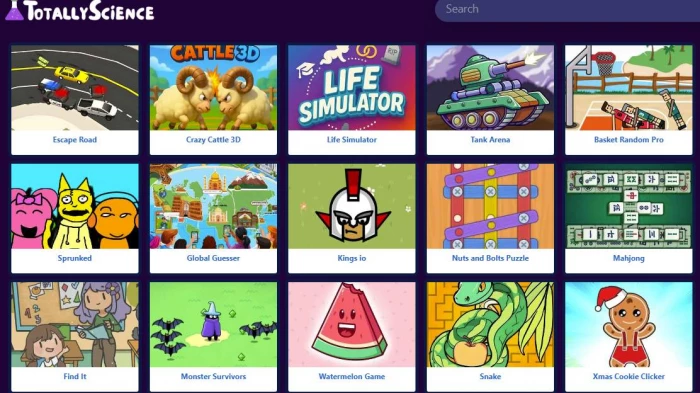
Totally Science feels like a site that was named in the staff room and discovered in the computer lab. It looks serious in your tab bar, behaves like a low‑key arcade, and lives in that grey area between “harmless downtime” and “why weren’t you paying attention in class?”. It’s not just another unblocked games sit, it’s a snapshot of how students actually use the web when they’re squeezed between filters, exams, and boredom.
There’s something delightfully mischievous about a site called “Totally Science” that immediately throws you into F1 Drift Racer, Rogue Soul 2, or Soccer Random Pro. The name promises STEM, lab coats, maybe virtual circuits. The homepage delivers:
● scrollable lists of games
● big genre blocks (Car, Action, 2‑Player, IO)
● a “Continue playing” strip for hopping back into yesterday’s distraction
The irony is the entire brand. It looks like something that might host simulations of gravity; instead, it’s hosting Monster Truck Booster. The effect is subtle but powerful: it’s the kind of title you can leave open on a school computer without instantly broadcasting “I’m playing games”. That pseudo‑academic camouflage is half the social appeal.
You don’t “learn” Totally Science; you just land there and you’re already one click from playing.
● The page is light, fast, and mostly text + tiles.
● Categories sit right in front of you—no maze of menus, no splashy tutorial.
● Every game opens in‑browser, with no accounts, downloads, or launchers getting in the way.
It’s built for micro‑sessions: ten minutes of tower defense while your friend finishes their assignment, a couple of penalty shootouts between classes, or a few races while your system pretends to update. There’s no profile, no feed, no achievements dashboard yelling at you. You close the tab, and the relationship ends there—until you inevitably type the URL again.
Instead of thinking in “Car / Action / 2‑Player / IO” buckets, it’s easier to think in moods. Totally Science has a game for almost every student mood you’re likely to be in.
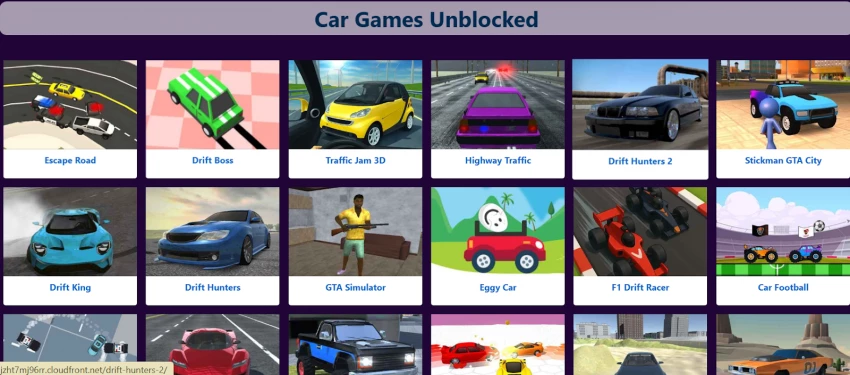
This is where the racing and driving cluster lives. Think:
● F1 Drift Racer, Super Mini Racing, Drag Racing
● Traffic Jam 3D, Escape Road
● Egg Car Racing, Draw The Bridge
● Mafia Getaway Cars, Monster Truck Booster, Stickman GTA City
These games are built for:
● quick reflexes and short races
● light physics chaos (balancing an egg, drawing improvised bridges)
● that “just one more run” loop
If your brain is fried from notes and you only have five minutes, these are the default.
When you want more than pure reflex, the action/strategy cluster kicks in:
● Conquer Kingdoms and Fantasy Tower Defense for thinking in waves and paths
● Rogue Soul 2 and Swords and Souls for side‑scrolling progression and upgrades
● Xtreme Paintball Wars and Pixel Battle Royale for quick combat rounds
● Jacksmith, Neighborhood Defense, Monster Survivors for build‑and‑defend style play
These games:
● stretch into longer sessions
● reward you for learning systems, not just controls
● scratch that “I want progress” itch without a full‑blown account system
They’re dangerously good at turning a short break into “whoops, the bell rang”.
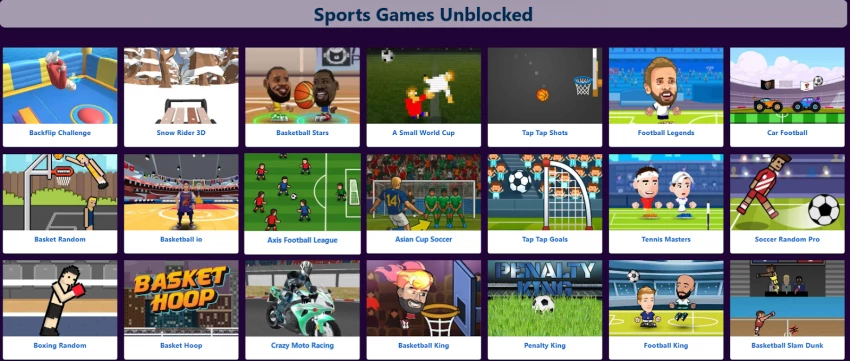
This is where Totally Science quietly becomes social infrastructure in a classroom.
You’ve got:
● Soccer Random Pro, Football Legends, Football King, Car Football
● Basketball King, Tennis Masters
● Fire and Water, SpartaHoppers
● Steal Brainrot Duel, Drunken Duel, Tank Arena
● plus simple staples like Snake and Tic Tac Toe
These games are:
● built for a single keyboard / screen
● chaotic enough that skill isn’t the only deciding factor
● fast enough that no one waits long to get a turn
This is the category that spreads the link around a classroom faster than any SEO strategy ever could.
The IO‑style cluster tends to serve that mood: drop‑in, play, drop‑out. Short‑round, competitive, lightweight titles that don’t care who you are—only how long you survive this round. Even without listing every title, you can safely assume:
● simple controls
● small maps or arenas
● minimal “story”, maximum “just play”
If racing is sugar and action games are carbs, IO‑style stuff is pure caffeine.
| Category | Example games | Typical session length | Player type best served |
| Car Games | F1 Drift Racer, Traffic Jam 3D, Egg Car Racing, Mafia Getaway Cars | 5–15 minutes | Racing fans, casual drivers |
| Action Games | Conquer Kingdoms, Rogue Soul 2, Swords and Souls, Fantasy Tower Defense | 10–30 minutes | Strategy and combat players |
| 2 Player Games | Soccer Random Pro, Fire and Water, Football Legends, Drunken Duel | 5–20 minutes | Friends sharing one device |
| IO Games | Various (fast, browser-based IO titles) | 5–10 minutes | Quick competitive play seekers |
There’s a pattern behind Totally Science’s popularity. It’s not an accident.
● Zero setup friction: no logins, no clients, no “verify your email.” You click, you play.
● Works on weak hardware: it’s built around browser‑friendly titles that run fine on Chromebooks and old lab PCs.
● Feels “small” and casual: you’re not joining a giant ecosystem; you’re just opening a game.
● Perfectly tuned for short bursts: almost everything on the site respects the 5–20‑minute window.
● Social by design: the 2‑player category quietly turns one bored student into two laughing ones.
Combine all that with the almost‑educational name and you’ve got a site that spreads on whispered recommendations and shared bookmarks.
If you’re going to use it, you might as well do it in a way that doesn’t wreck your device, your grades, or your trust with teachers.
Before you even think about the homepage:
● Read your school’s acceptable use policy (AUP).
● If gaming sites are explicitly banned, don’t try to tunnel around it with VPNs or sketchy proxies.
● When you’re unsure, ask a teacher or IT person instead of assuming silence means “yes”.
Your browser is your only real line of defense in this situation.
● Keep it updated so security patches are in place.
● Don’t stay logged in to personal email or social media while you’re gaming on a shared or school machine.
● Close extra tabs; fewer distractions, less chance of clicking something you didn’t intend.
On any free game site, the game isn’t usually the problem. The random stuff around it is.
● Ignore ads that say things like “Download now”, “Boost your PC”, or “Install this to play faster”.
● If a game page suddenly opens a new tab or window that looks unrelated, close it immediately.
● Never type passwords, real names, or payment details into any form that appears while you’re trying to play.
Totally Science’s real danger isn’t malware—it’s minutes.
● Decide before you start how many matches or levels you’ll play.
● Keep it to breaks, lunch, or after‑school time, not mid‑lesson.
● When someone in authority tells you to close it, just close it; the game will still exist later.
Your school account is valuable—treat it like one.
● Don’t give your login to a friend “just so they can use your device to play.”
● When you’re done with serious work, log out of school portals before you switch into gaming.
● After playing, close the tab and reset your workspace so the next thing you see is your actual task, not a list of games.
That way, you get the fun without the panic, the warnings, or the awkward meetings with IT.
Technically, Totally Science isn’t trying to be clever; it’s trying to be compatible.
● Games run inside the browser, using the kind of tech that’s happy on low‑spec machines.
● No native clients or big downloads means it’s less likely to be blocked at the installation level.
● The site doesn’t lean on heavy social systems or big dashboards, which keeps pages snappy.
The trade‑off: you don’t get cross‑device saves, an integrated friend list, or a fancy profile system. You’re swapping long‑term identity and progress for instant access and simplicity. For a break‑time arcade, that’s usually a fair deal.
Totally Science competes with a wide field of unblocked game websites and casual portals. Many of these sites share core traits: they host browser games, avoid heavy client installs, and try to stay accessible on school networks.
| Aspect | Totally Science | Typical edutainment site |
| Main focus | Car, action, 2‑player, IO games | Puzzles, math, logic |
| Branding | “Science” name, gaming content | Explicitly educational |
| Access model | Browser-based, no login required for basic play | Often optional or required accounts |
| Social experience | Strong local 2‑player options | Usually single-player |
| Best suited for | Casual fun and quick breaks | Light educational engagement |
Totally Science isn’t for everyone, and that’s fine.
● students who handle their responsibilities and then want a quick, harmless break
● friends who want to compete on the same device without creating accounts
● people with low‑spec machines who still want variety beyond a single offline game
● anyone using it to escape every task in front of them
● schools that have a clear “no games, period” stance
● learners genuinely looking for science tools, simulations, or structured practice
If you go in expecting a lab, you’ll be disappointed; if you go in expecting a low‑friction arcade, you’ll get exactly what you came for.
Totally Science isn’t really about science it’s a cultural workaround. It exists at the intersection of limited school hardware, aggressive content filters, and student ingenuity, using an innocent name as cover for what is effectively a casual game hub.
Used intentionally, it’s a harmless way to decompress between more demanding tasks. Used without restraint, it becomes just another time sink that lingers longer than it should.
The real challenge isn’t accessing Totally Science, that part is easy. The challenge is knowing when to close the tab and get back to what actually matters.

Late at night, after the usual AI companion ads blur together, PepHop AI shows u...
Funke Ogunleye1 day ago

Imagine you open a new tab, type “opendream.ai”, and instead of being greeted by...
Samuel Osei2 days ago

Grubby AI is one of those tools that only exists because of a very 2025 problem:...
Funke Ogunleye2 days ago

Meet Muke AIMuke AI is an AI‑powered image manipulation suite best known for two...
Sandra Campos3 days ago

If your marketing currently lives in a chaotic mix of ChatGPT, Canva, random sch...
Samuel Osei3 days ago

Janitor AI doesn’t feel like “a chatbot platform.”It feels like walking into a l...
Sandra Campos4 days ago
Discussion