Triips.com positions itself as a “flight deals club”—a paid membership service that monitors airfare prices and sends you 2–3 discounted flight alerts per week (primarily for departures from the US & Canada). The pitch is simple: stop hunting for deals manually; Triips will surface rare price drops and “underpriced” fares and email you the booking details.
If you’ve ever used Google Flights tracking or Skyscanner and thought, “This is useful, but I don’t have time to watch prices every day,” Triips is basically selling you convenience + curated alerts.
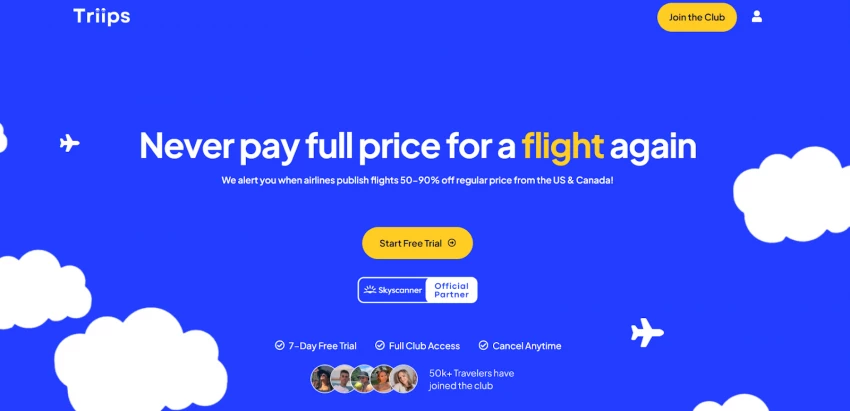
Based on Triips’ own on-site description, the workflow looks like this:
● You join and choose a departure city (US/Canada-focused).
● Their system (they call it “AI”) scans many date combinations and tracks fare movement to spot steep drops.
● You get an email alert with dates, a link, and instructions so you can book quickly (they emphasize deals can expire fast).
● Triips says you can book directly with the airline or via a “trusted travel agency” link; they frame themselves as an alerts layer, not the booking engine.
They also claim to include “practical travel guides” and community recommendations inside deal emails (nice-to-have, but not the core value).
1) “You’ll get deals without searching.”
That’s the most consistent theme in user experiences: the value is inbox delivery rather than manual hunting.
2) “We don’t book; you book.”
Multiple discussions repeat the idea that Triips doesn’t process bookings and instead routes you to book elsewhere.
1) Flexibility is not optional—it’s the whole game.
If your dates, destination, or departure airport are rigid, any flight-deal club (including Triips) will feel underwhelming. Triips itself hints at this (“Flexibility is key”), and community commentary echoes it.
2) Deal availability is time-sensitive.
Triips says many deals last under 48 hours (sometimes just hours). That’s realistic for fare anomalies but it also means the service rewards people who can act fast.
3) “Looks too good to be true” skepticism is part of the brand.
There are Reddit threads explicitly questioning legitimacy or calling out “rebranding” concerns, useful context if you’re evaluating trust.
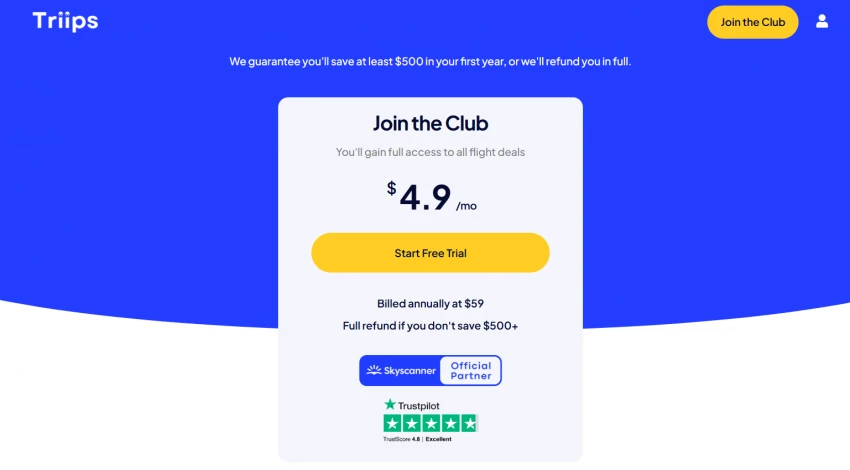
Triips promotes a 7-day free trial and paid membership afterward.
Triips markets eye-catching examples (e.g., $108 New York–Paris, $187 Miami–Tokyo) to show the best-case upside.
In practice, performance depends on:
● Your departure city (major hubs tend to see more deal volume)
● Your date flexibility
● Whether you’re comfortable booking through an external link (airline or OTA)
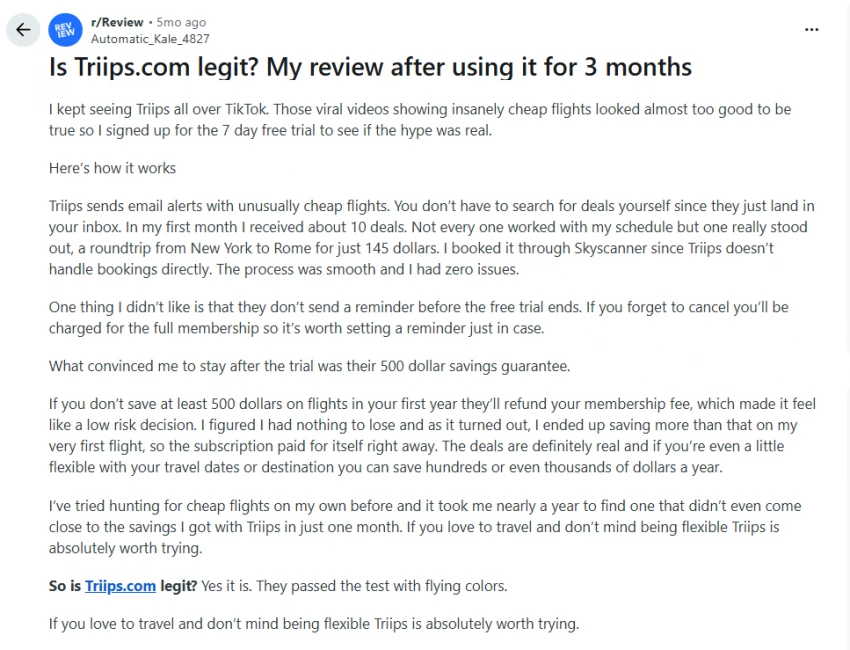
A positive user review on Reddit described a smooth booking experience via Skyscanner and one standout fare that “paid for itself.”
But you should treat any deal club like this: expect a mix—some irrelevant alerts + occasional “wow” fares.
● Triips repeatedly says you remain in control of booking and can book directly with the airline.
● There is a large volume of public feedback on Trustpilot, including both positive and negative reviews (not just a handful).
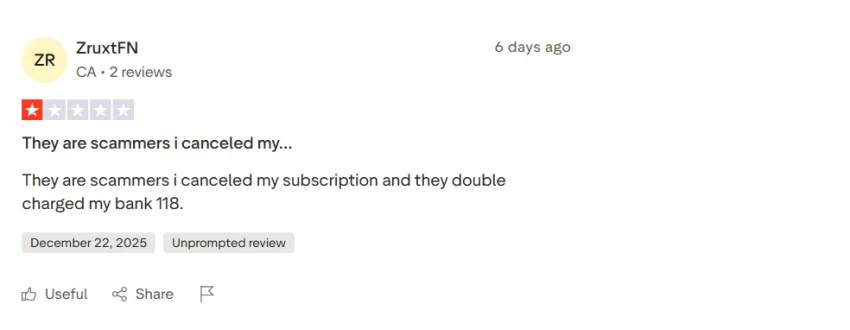
● Billing/cancellation complaints exist. Recent Trustpilot reviews include accusations like membership not cancelling properly and double-charging (even alongside many 5-star ratings).
● Review authenticity questions come up in communities. Some Reddit comments suggest the positive review pattern “seems fake” (not proof—just a recurring concern you should factor into your trust assessment).
● Use a virtual card or a card with good dispute support.
● Set a calendar reminder for day 5–6 of the free trial (don’t rely on emails).
● Screenshot your cancellation confirmation (if you cancel).
● Prefer booking direct with airlines when possible (easier changes/refunds).
User sentiment is generally positive with pockets of strong criticism, which is typical for subscription travel products. Trust‑style platforms and social discussions provide useful nuance.
From aggregated reviews:
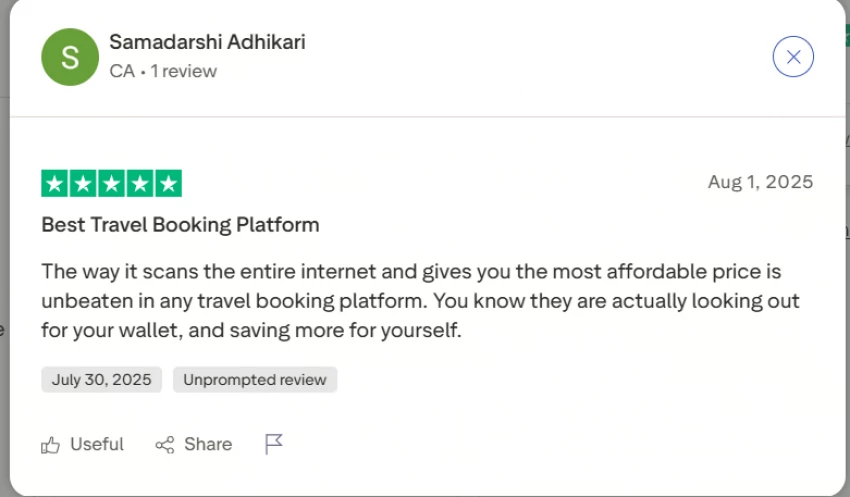
● Many users describe Triips as a “game changer” or “life hack” for traveling more often on a budget, praising the user‑friendly site and regular alerts.
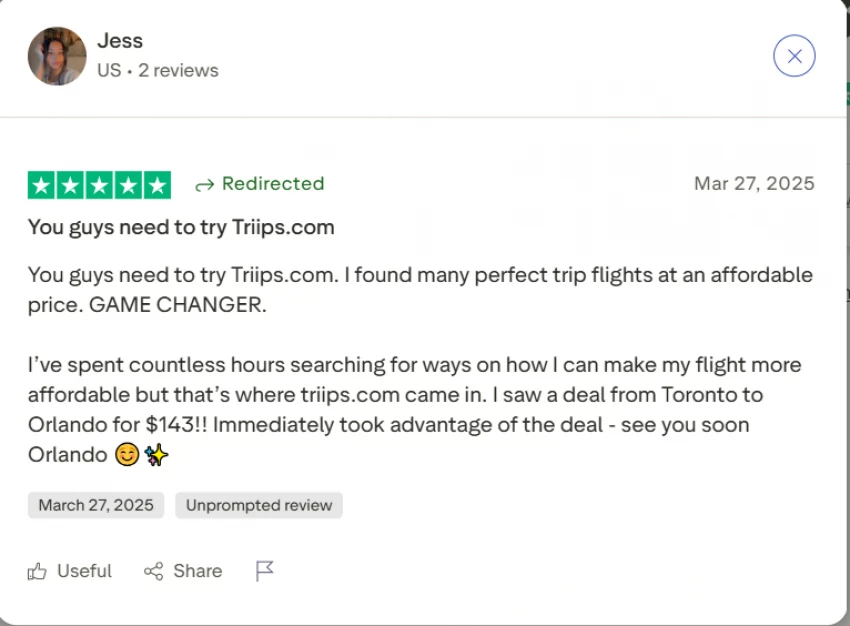
● Enthusiastic reviewers emphasize accessible holidays, significant savings and simple navigation, often mentioning family trips made possible by lower fares.
Critical reviews:
● A visible minority call it a “scam” because they received few or no deals, or could not secure a refund after an unsatisfactory trial.
● Some users feel that the value proposition is oversold relative to the number and quality of deals they actually get, especially outside major hubs.
Overall rating patterns on large review sites skew positive but not perfect, reflecting a strong experience for the right customer segment but clear mismatch for others.
Triips competes in the premium flight deal alert and “mistake fare” niche rather than in generic travel search. Several well‑known services target similar needs.
Commonly compared alternatives:
● Scott’s Cheap Flights / Going – Long‑standing subscription email alerts for cheap international and domestic flights, with tiered plans and strong brand recognition.

● Dollar Flight Club – Membership service that sends curated deal alerts, including an emphasis on economy and premium cabin discounts.

● FareDrop and similar AI‑alert tools – Apps that monitor routes you choose and push notifications when fares fall below your target thresholds

Triips.com is a high‑risk, niche‑use flight deals membership that can deliver real savings for very flexible travelers near major hubs, but its aggressive marketing and contentious billing practices make it unsuitable as a “set‑and‑forget” tool for most people. The platform’s core value is simple: pay an annual fee and get curated alerts on unusually cheap international fares, yet many of these prices mirror publicly available sales that experienced travelers could track with free tools, which weakens the uniqueness of its proposition.
User sentiment is sharply divided, with some praising big wins on long‑haul tickets and others reporting difficulty canceling trials, non‑refunded charges, and deals that do not match the advertised examples, so any potential member should read the fine print carefully, treat the savings claims as marketing rather than guarantees, and compare it against better‑established competitors like Going, Dollar Flight Club, and Thrifty Traveler before entering card details.

Late at night, after the usual AI companion ads blur together, PepHop AI shows u...
Funke Ogunleye1 day ago

Imagine you open a new tab, type “opendream.ai”, and instead of being greeted by...
Samuel Osei2 days ago
Grubby AI is one of those tools that only exists because of a very 2025 problem:...
Funke Ogunleye2 days ago
Meet Muke AIMuke AI is an AI‑powered image manipulation suite best known for two...
Sandra Campos3 days ago

If your marketing currently lives in a chaotic mix of ChatGPT, Canva, random sch...
Samuel Osei3 days ago

Janitor AI doesn’t feel like “a chatbot platform.”It feels like walking into a l...
Sandra Campos4 days ago
Discussion