Most software companies think conversion problems live on their website.
They tweak headlines, rewrite value propositions, redesign pricing pages, and A/B test buttons — all while ignoring the place where buyers are already deciding whether the product is worth trusting at all.
That place isn’t your homepage.
It’s review platforms.
For B2B software especially, listing on review platforms doesn’t just increase visibility. It fundamentally changes how buyers perceive risk, credibility, and readiness to buy. That shift is why conversion rates improve — often without touching the product or the funnel itself.
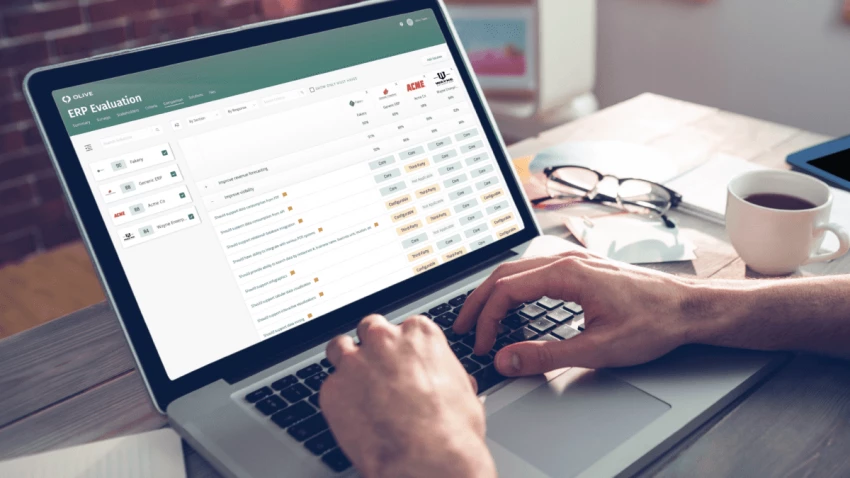
Modern software buyers don’t explore broadly. They narrow aggressively.
Research over the last few years shows a consistent pattern: most B2B buyers now seriously evaluate only one to three products before making a decision. That’s a sharp change from earlier buying behavior, where longer lists and extended comparisons were common.
This matters because it means exclusion happens early. If a product isn’t visible or credible during the shortlisting phase, it rarely gets a second look later — no matter how good the sales pitch is.
Review platforms sit directly inside that early decision window. Buyers use them to understand what a category looks like, which tools are credible enough to consider, and which ones can be safely ignored.
By the time someone visits a vendor’s website, the real decision is often already half-made.
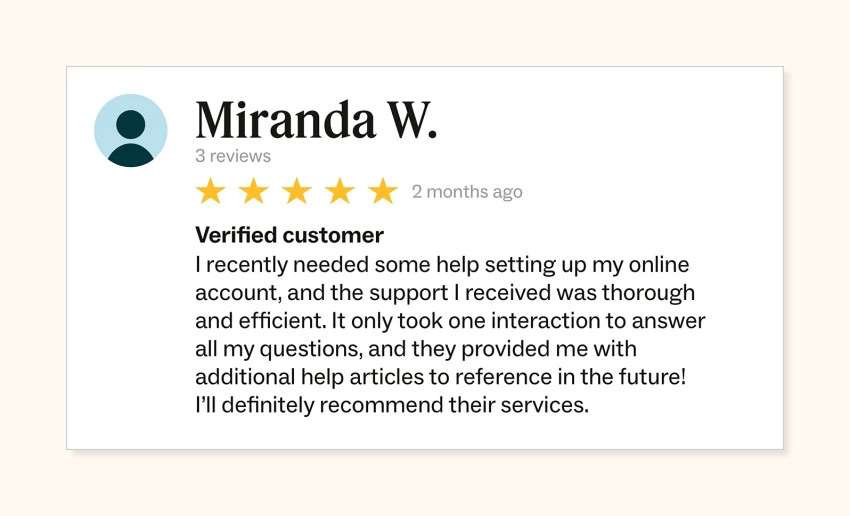
There’s a simple reason buyers trust review platforms more than company websites: they don’t belong to the company.
No matter how honest your copy is, buyers know it was written to persuade. Review platforms remove that assumption. They replace it with something buyers value far more — peer experience.
Multiple studies show that a large majority of B2B buyers rely on third-party reviews when making purchase decisions, and that peer feedback increases confidence more than sales conversations do. This isn’t because buyers dislike salespeople. It’s because sales conversations are expected to be biased.
Reviews aren’t neutral, but they’re distributed. When dozens or hundreds of users repeat similar themes — both positive and negative — patterns emerge. Buyers trust patterns more than promises.
This is also why perfect scores don’t help as much as companies expect. A product with a few flawless reviews often feels less credible than one with many detailed, mixed experiences. Buyers aren’t looking for perfection. They’re looking for predictability.
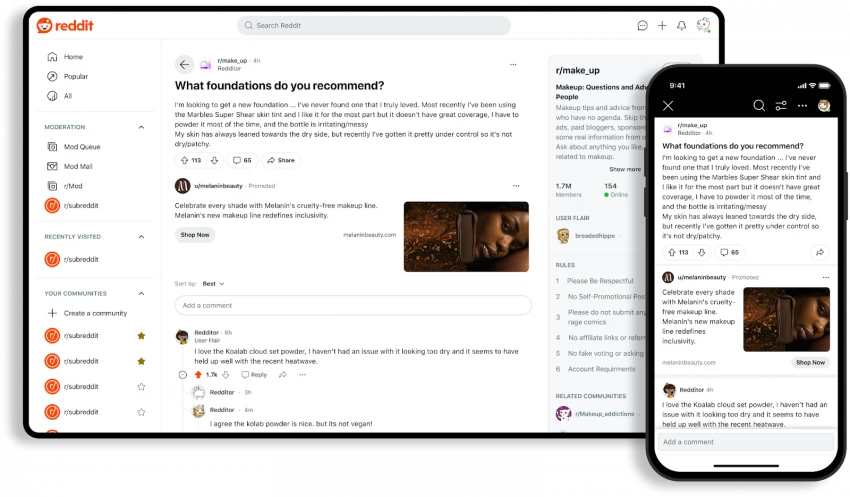
The impact of review platforms isn’t abstract. It shows up clearly in conversion behavior.
Products with visible, high-volume reviews consistently see higher conversion rates than those without. In some datasets, displaying reviews increases conversion rates by over 200%. Even more interestingly, products with strong review volume can maintain — or even increase — conversion rates at higher price points.
The reason is friction removal.
Reviews answer questions buyers don’t want to ask sales directly:
Is implementation painful?
Does support actually respond?
Where does this tool break down?
When those answers are available before a demo or trial, buyers enter the funnel with fewer objections. That shortens sales cycles and reduces drop-off, because uncertainty has already been addressed by people who’ve lived with the product.
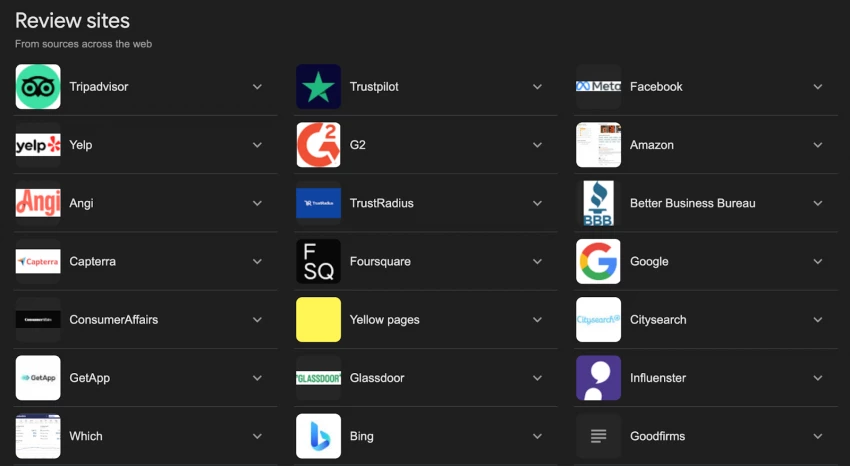
Another reason review platforms boost conversions is simple mechanics: they rank extremely well in search.
Category queries, “best software” searches, and comparison terms frequently surface review platforms above vendor websites. These pages are dense with user-generated content, regularly updated, and closely aligned with buyer intent — exactly what search engines reward.
As a result, many buyers encounter a product for the first time through a review platform, not the company’s own site. That traffic behaves differently. It’s later-stage, more comparative, and far more likely to convert once it moves downstream.
Being absent from these platforms doesn’t just reduce exposure. It hands that exposure — and the narrative around your product — entirely to competitors.
Beyond visibility and trust, review platforms also capture something most marketing channels can’t: real purchase intent.
Only a small percentage of buyers are actively shopping at any moment. Review platforms can identify those buyers based on behavior — repeated category views, comparison activity, and return visits.
Companies that use this intent data to prioritize outreach consistently report higher conversion rates, lower cost per lead, and larger deal sizes. Not because the messaging is better, but because the timing is right.
Reaching a buyer while they’re actively evaluating tools changes the dynamic completely. You’re no longer trying to create interest. You’re helping them finalize a decision they’ve already decided to make.
One of the most overlooked conversion levers on review platforms is response behavior.
Buyers pay close attention to how companies handle feedback, especially criticism. A thoughtful response to a negative review often increases trust more than another positive rating. It signals accountability, maturity, and what post-sale reality actually looks like.
Data consistently shows that buyers are more likely to purchase from companies that engage with reviews than from those that ignore them. Silence reads as indifference. Engagement reads as reliability.
In other words, review platforms don’t just show how your product performs. They show how your company behaves.
Listing on review platforms works when it’s intentional.
Companies that see real conversion impact don’t treat these platforms like directories or SEO backlinks. They treat them as extensions of the buying experience. They actively collect reviews from real users, integrate review content into sales conversations, and use platform data to adjust priorities.
Those that treat listings as a one-time setup rarely see results — not because the platforms don’t work, but because credibility compounds over time.
At the core, review platforms convert because they align with how people make decisions under uncertainty.
Buyers don’t want to be convinced. They want to avoid regret.
They want evidence they can justify internally.
They want reassurance that others like them made the same choice — and survived it.
Review platforms provide that reassurance in a way no landing page ever can.
Most software doesn’t lose deals because it’s inferior.
It loses because buyers don’t feel confident choosing it.
Review platforms don’t magically increase demand. They remove doubt at the exact moment doubt kills conversions. By letting real users speak, they turn risk into something visible and manageable.
In a market where buyers consider fewer options and decide faster, that credibility isn’t a nice-to-have.
It’s the difference between being shortlisted — and being ignored.

YouTube Shorts has shifted from a side experiment to one of the fastest ways to...
Samuel Osei1 day ago

Digital advertising has become brutally competitive: users scroll faster, acquis...
Samuel Osei4 days ago

AI image generators have shifted from experimental toys to core creative tools....
Peter Woods5 days ago

AI-powered image editors are now central to modern content creation, marketing,...
Alexander Hughes6 days ago

AI text-to-speech (TTS) has evolved from robotic audio to almost human‑sounding...
Samuel Osei1 week ago

IntroductionGraphic design is no longer limited to people who know Photoshop sho...
Funke Ogunleye1 week ago
Discussion