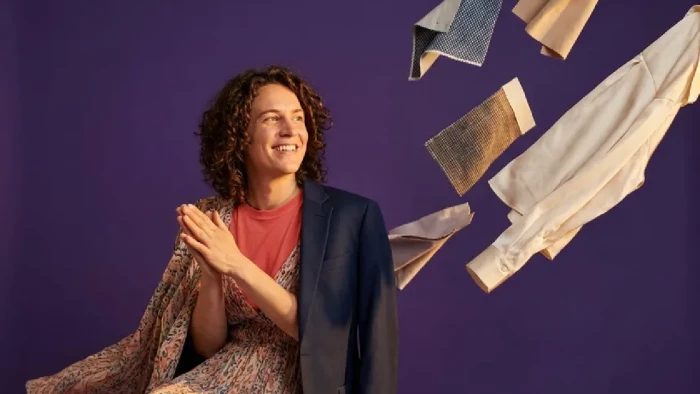
I've sat through enough "AI replaces your photoshoot" pitches to be skeptical by default. Most of them show you one flawless hero image and quietly skip over how the tool handles anything slightly off-script — a different pose, a busy background, a garment with an actual pattern on it. So when I came across a tool promising to turn a single model photo into a full set of lookbook images, different poses, different scenes, same model and same garment, I figured it was worth actually running through a real test instead of taking the landing page's word for it.
The quick verdict: it's genuinely useful for the specific job it's built for — generating a spread of styled variations from one source photo — and noticeably weaker the further you push it from that job. That's not really a criticism. It's a tool that knows what it's for.
_1784632352.webp)
A lot of small fashion brands and online stores have the same content gap: they can afford one clean shoot per product, maybe two looks if they're lucky, but a real campaign needs more than that. It needs a lifestyle shot, a studio shot, a couple of pose variations, maybe a seasonal background swap for a different market. That usually means either booking a second session or just not having that content at all.
The tool I tested, an AI Fashion Lookbook Generator built into a platform called Fashion Diffusion, is aimed squarely at that gap. The pitch is simple: upload one model photo, and it generates a set of additional images, new poses, new backgrounds, new scene types, while keeping the same model and the same garment consistent across all of them.
I uploaded a single photo of a model wearing a plain jacket over a t-shirt, shot against a neutral studio background, nothing fancy. From there, the AI Lookbook tool gave me a handful of output options: a couple of alternate poses, a different studio backdrop, and an outdoor scene variant.
The first thing I checked, because it's the thing that usually breaks, was whether the garment stayed consistent across the outputs. It mostly did. The jacket's silhouette, color, and general proportions held up across every variation I generated. The stitching detail and a small logo on the sleeve were a little softer in two of the four outputs, close enough to pass at thumbnail size, but I'd want to zoom in before using one of those as a hero image on a product page.
The model's face and body proportions stayed recognizably consistent as well, which is the part that's historically been hardest for this category of tool to nail. I've tested generators before where "the same model in a new pose" quietly turns into a slightly different-looking person by the third image. That didn't happen here in any way I'd call disqualifying.
The background and scene changes were the strongest part of the output. Swapping a plain studio shot for an outdoor scene looked genuinely usable, not obviously composited, and the lighting on the garment adjusted along with the new setting instead of looking pasted in.
Fine texture is still the weak point. A close-up crop on the jacket's zipper hardware showed some softness that a retoucher would want to fix before it went anywhere near a product listing. And when I tried pushing it with a more heavily patterned piece from a different upload, a striped shirt, the pattern stayed recognizable but wasn't pixel-consistent across every generated angle. For a hero product shot where exact pattern alignment matters, I'd still trust a real photo. For a supporting lifestyle image in a lookbook or an ad set, it's more than good enough.
Speed was the other clear win. What would normally mean re-booking a model and a studio slot took a few minutes per output. That's not a subtle difference in cost or turnaround, that's a different category of decision entirely: instead of "should we spend the budget on a second shoot," it becomes "let's just try three more variations and see what performs."
_1784632356.webp)
This isn't a replacement for your primary product photography, and it doesn't try to be. Where it earns its keep is in the secondary content: the lookbook page, the ad variations, the seasonal refresh you'd otherwise skip because booking a shoot for it isn't worth the cost. Small brands and solo sellers who currently can't justify a second shoot for every campaign angle are the obvious fit. Bigger teams with an in-house studio will get less marginal value out of it, though even they might use it to test a styling direction before committing a real shoot to it.
I went in expecting the usual gap between demo and reality, and mostly didn't find one. The core promise, one photo in, a consistent set of styled variations out, held up under a real test, with the expected softness around fine detail that I'd flag for any AI-generated image used at full resolution. If your content bottleneck is "we don't have enough campaign images per product," this closes more of that gap than most tools in this category manage to.
I started exploring Redeepseek.io because the name itself creates curiosity. At...
Grace Howard4 months ago
Nomi AI isn’t just another chatbot; it’s a full‑blown AI companion platform buil...
Alexander Hughes7 months ago
Artificial intelligence was originally built to support human decision-making. E...
Peter Woods7 months ago
Speech-to-text technology has matured significantly over the past few years. Wha...
Grace Howard7 months ago
Anthropic has accused three prominent Chinese AI companies of systematically “mi...
Sandra Campos7 months ago
In what might be the most unexpected AI benchmarking milestone of 2026, Elon Mus...
Peter Woods7 months ago
Discussion