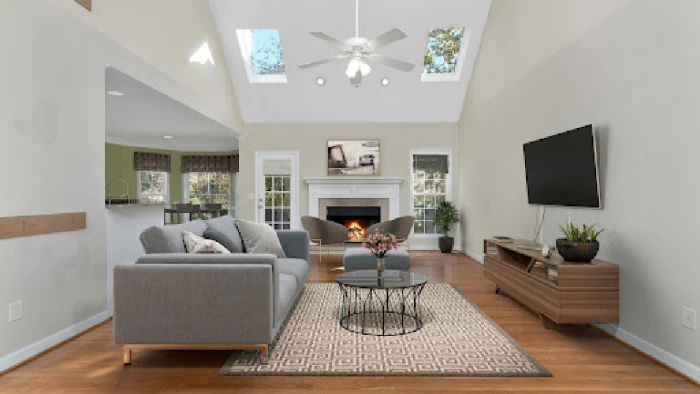
Buyers scroll through hundreds of listings, and a photo of a bare room is almost guaranteed to be swiped away in a second. Generative design technologies have learned to solve this problem faster and cheaper than classic staging with furniture rental. In this article, we will explain how AI-based virtual home staging works, how much it costs, and what to look for when choosing a tool.
According to the National Association of Realtors, 96 percent of prospective buyers initiate their property hunt online; therefore, photos of the listing will be the only form of introduction. In addition, 83 percent of buyers' agents agree that staging is useful because it makes buyers picture themselves in that property. An empty room cannot achieve this because most people have difficulty picturing furniture in an unknown setting.
This gap between the property's actual condition and its potential is bridged by tools such as AI virtual staging from Zolak. The platform lets you upload a photo of a real room, clear it of old furniture and unnecessary items, set a layout scheme, and generate a photorealistic interior in several styles, from Scandinavian to modern classic. The key difference from typical image generators lies in the control: room geometry, windows, and natural light remain untouched.
The results are evident in the numbers. 49% of listing agents note that staged homes spend less time on the market, while a Sotheby's International Realty study recorded a 6-10% increase in sale price for virtually staged properties.
Workflow is usually pretty simple. The first step involves uploading a picture of the area shot with a phone at an open house. Then comes the stage when the algorithm gets rid of all the furniture and clutter but keeps the architectural features like the floor, window, and door frame. After that, the person places the 3D schematics of where the couch/table should go.
This approach solves the main pain point of early generators: random placement and distorted proportions. Advanced platforms also produce several style variations from a single photo, turning a showing into an interactive presentation: the agent can switch from a Scandinavian interior to a Mediterranean one right in front of the client. And while the technology does not replace a live viewing, it significantly increases the chances that a viewing will actually take place.
Physical staging remains an expensive pleasure. Furniture rental, delivery, setup, and removal costs on average from $1,500 to $5,000 per house, and preparation takes one to two weeks. The virtual alternative costs orders of magnitude less and is completed in hours, or in the case of AI services, in seconds.
The price range on the market looks as follows:
For clarity, we have compiled the rates of several well-known services into one table:
| Service | Pricing model | Approximate cost | Turnaround |
| Collov AI | Per image | $3–7 | Minutes |
| AI HomeDesign | Photo bundle | $19 for 30 photos | Minutes |
| Styldod | Per image | $16–23 | 24–48 hours |
| Zolak | Per photo bundle | $390 per 1000 photo | Seconds |
| VirtualStaging.com | Flat rate | $24 per image | 8–24 hours |
| RoomLift | Per room | $39 median | Seconds |
Even when choosing the most expensive option on the list, the savings compared to physical staging exceed 90%, and the difference in listing preparation time is measured not in days, but in minutes. It is no surprise that agencies are shifting listing marketing to digital tools at scale, leaving real furniture rentals mainly for luxury properties where the effect of physical presence matters.
The difference between services lies in the details, which becomes especially noticeable in complex spaces. The first selection criterion is realism: correct furniture scale, believable shadows, and matching light direction. A sofa that looks fake can undermine trust in the entire listing, and the buyer will start doubting not the furniture but the property itself.
The second criterion is control over the result. Tools where the layout is set before generation deliver predictable output, while fully automatic solutions are better suited for inspiration. Equally important are the rights for commercial use of images in MLS and marketing materials, considering the strict rules of listing platforms.
A separate point concerns ethics. Responsible virtual staging does not alter structural elements and does not hide defects; otherwise, the very first in-person showing will turn into disappointment. By the way, NAR names the living room, primary bedroom, and kitchen as the most important rooms for staging, which is why it makes sense to test any service on them.
Virtual staging has stopped being an experiment and has become a working standard in real estate marketing. Next-generation tools give agents speed and pricing that physical staging cannot even dream of. Thus, the question today is not whether the technology makes sense, but which service to choose for specific tasks.

I started exploring Redeepseek.io because the name itself creates curiosity. At...
Grace Howard4 months ago

Nomi AI isn’t just another chatbot; it’s a full‑blown AI companion platform buil...
Alexander Hughes7 months ago

Artificial intelligence was originally built to support human decision-making. E...
Peter Woods7 months ago

Speech-to-text technology has matured significantly over the past few years. Wha...
Grace Howard7 months ago

Anthropic has accused three prominent Chinese AI companies of systematically “mi...
Sandra Campos7 months ago

In what might be the most unexpected AI benchmarking milestone of 2026, Elon Mus...
Peter Woods7 months ago
Discussion