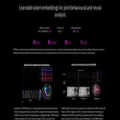
Cebra
CEBRA is a machine-learning method that can be used to compress time series in a way that reveals otherwise hidden structures in the variability of the data.
CEBRA is a machine-learning method that can be used to compress time series in a way that reveals otherwise hidden structures in the variability of the data.
Cebra compresses time series to reveal hidden structures in data variability. It excels on behavioural and neural data recorded simultaneously. The method jointly uses behavioural and neural data in a supervised hypothesis-driven or self-supervised discovery-driven manner to produce consistent and high-performance latent spaces. These latents uncover meaningful differences and support decoding tasks. Cebra handles calcium and electrophysiology datasets across sensory and motor tasks in simple or complex behaviors across species. It works with single and multi-session datasets for hypothesis testing or label-free use. Applications include space mapping, kinematic feature analysis, decoding natural movies from visual cortex, and reconstructing viewed videos from mouse brain activity.
Creates consistent latent spaces across sessions and datasets
Handles high-dimensional calcium and electrophysiology data
Reveals hidden behavioral correlates in neural activity
Supports decoding of natural movies from visual cortex
Open source code available on GitHub
Limited to time series data common in neuroscience
Requires simultaneous behavioral and neural recordings for optimal use
Primary validation on biological datasets across specific species