Seedance 2.5, MiniMax H3, and Wan 3 all promise something bigger than the old prompt-in, short-video-out workflow. But after trying the three across different kinds of content, I found that their similarities disappear fairly quickly once you start directing an actual scene.
Seedance 2.5 gave me more room to think in references, connected shots, and longer sequences. MiniMax H3 worked particularly well when sound, movement, and visuals needed to operate together inside a shorter piece. Wan 3 became more interesting when the starting material was structured rather than simply a text prompt.
I did not come away with one clear winner. I came away with three models that solve different parts of the video-generation problem.
On a feature sheet, these models can look surprisingly similar.
All three move well beyond basic text-to-video generation. They accept richer forms of context, give creators more ways to constrain a scene, and treat sound or reference material as part of the creative process rather than something that necessarily has to be added later.
Using them made the differences much easier to see.
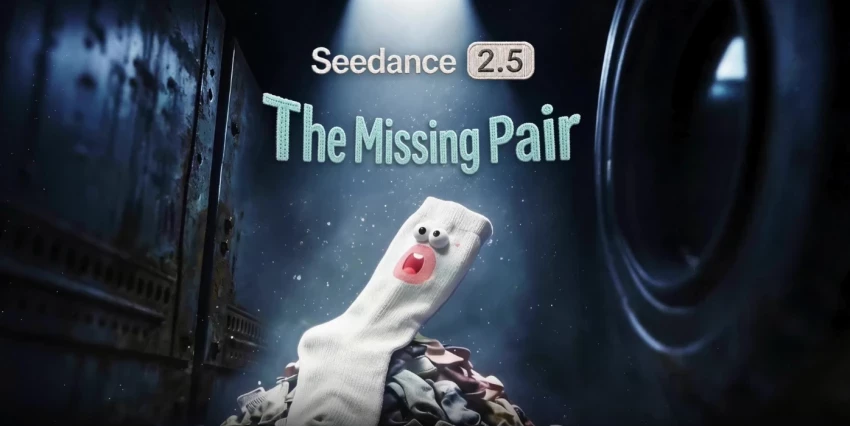
Seedance 2.5 felt the most like a model designed around directing a sequence. Its workflow encourages the use of visual, motion, and audio references, while its longer generation window makes it possible to ask for more than one simple action. ByteDance describes support for audiovisual generation up to 30 seconds, multiple forms of reference material, extension, and targeted editing.
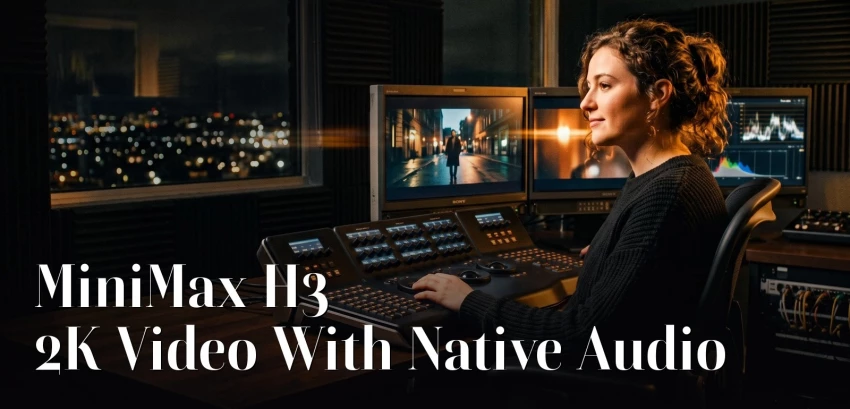
MiniMax H3 felt more concentrated. Its 15-second ceiling is shorter, but MiniMax combines text, images, video, and audio in one multimodal context, with native stereo sound and output reaching up to 2K. In practice, I found that especially useful for clips where the visual and audio idea were supposed to arrive together.
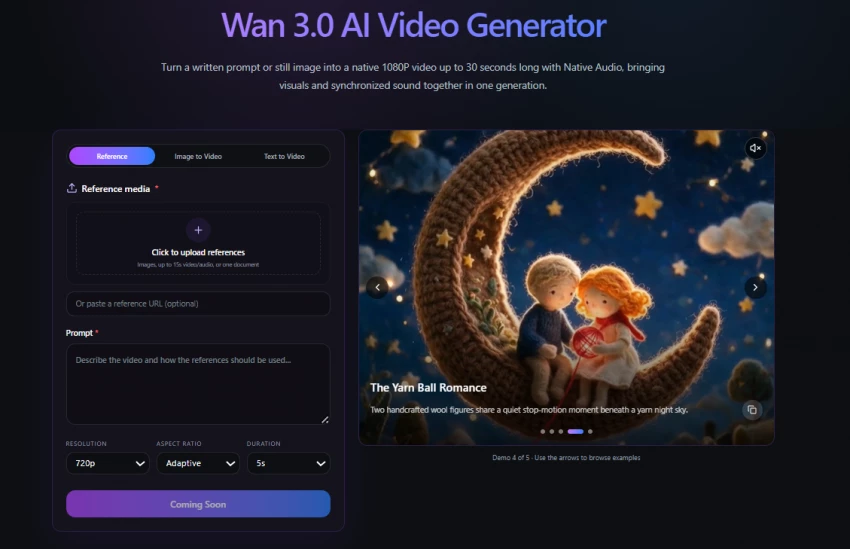
Wan 3 took another route. It supports several ways of establishing a shot, including text, opening frames, first-and-last-frame control, references, and other source inputs. Its supported workflows can also extend beyond conventional media into files and webpages.
That distinction shaped almost every test I ran.
| Model | How It Felt in Use | Where It Became Most Useful |
|---|---|---|
| Seedance 2.5 | More like directing a sequence than requesting a single clip | Character scenes, cinematic movement, longer narrative ideas |
| MiniMax H3 | Compact and strongly audiovisual | Social video, dialogue, promotional clips, product creative |
| Wan 3 | Flexible about how the generation begins | Structured visual work, source-led content, controlled transitions |
The useful comparison was therefore never simply which model produced the prettiest frame. It was how much control each one gave me over the parts of the video that actually mattered.
The biggest change I noticed happened before pressing Generate.
With older video models, I usually spend most of my effort trying to compress the creative direction into text. Character appearance, location, lighting, action, camera movement, pace, and style all compete for space inside the same prompt.
These three models made that approach feel increasingly outdated. With Seedance 2.5, I got better results when I stopped expecting the prompt to describe everything.
For one character-based test, I worked with separate visual ideas for the subject, clothing, setting, and motion. That gave the model clearer boundaries than trying to describe the entire scene with phrases such as “cinematic tracking shot” or “maintain the exact same person.”
It did not remove every consistency issue, but the references gave me a better way to communicate what should remain fixed. H3 changed the process differently.
When I combined visual direction with audio and movement requirements, I found myself thinking less about individual inputs and more about the relationship between them.
If a person turns toward a sound, the model has to understand more than the appearance of the character and the existence of an audio event. The reaction, timing, motion, and sound all have to belong to the same moment. That is where H3 made the most sense to me.
Wan 3 was particularly useful when I wanted stronger boundaries around where a scene began or ended.
Rather than solving everything through prose, I could think about whether the shot needed a defined starting frame, a defined ending, or a broader set of references. That made transformation-style scenes and controlled transitions more predictable than leaving the complete visual path open-ended. After working across the three, my prompting process changed:
With Seedance 2.5, I used references to remove information that did not need to live inside the text prompt. The more important identity, environment, and motion became, the more useful those references were.
With H3, I concentrated on relationships between movement, subject, and sound. Giving the model ten unrelated instructions was less useful than making the audiovisual event itself clear.
With Wan 3, I spent more time deciding how tightly I wanted to define the beginning and ending of the generation. In several cases, choosing the right starting structure mattered more than adding another paragraph to the prompt.
The tests reinforced something I have increasingly noticed with newer video models: a longer prompt is not automatically a better prompt.
Sometimes the most useful instruction is a reference image. Sometimes it is the final frame.
Before testing the models, duration looked like one of the easiest differences to judge.
Seedance 2.5 and Wan 3 support workflows reaching 30 seconds, while H3 tops out at 15 seconds. If you only compare those numbers, H3 immediately seems disadvantaged.
I did not find it that simple. Thirty seconds is demanding.
The longer I allowed a generated scene to continue, the more opportunities there were for something to drift. A person's appearance can change slightly. Objects can move. The geography of a room can become inconsistent. Camera motion may become less deliberate. The ending can feel disconnected from the opening.
So I stopped measuring duration as “How many seconds can this model generate?” I started measuring how many seconds I would actually keep.
That made H3's shorter output much less restrictive than I expected.
For a product clip, visual hook, social advertisement, short dialogue beat, or individual edited shot, 15 seconds was usually enough. In some cases, I preferred the tighter generation because I was not asking the model to maintain consistency longer than the concept required.
Seedance's additional duration mattered when the scene itself needed time.
If a character had to enter an environment, walk across it, interact with an object, change direction, and arrive at a final composition, the longer window became genuinely useful.
Wan 3's longer output was more interesting when combined with stricter starting or ending conditions.
My conclusion after using them was straightforward:
Duration only matters when the creative idea needs it.
If I were creating six-second ecommerce ads, I would not reject H3 because another model can produce 30 seconds and if I were building a continuous character sequence where several actions need to happen without a cut, I would care much more about Seedance's longer generation approach. The number matters. The workflow around the number matters more.
“Character consistency” is often presented as though it were one problem.
My tests reminded me that it is several problems happening at once.
A face has to remain recognizable. Clothing needs to stay consistent. A product cannot quietly change dimensions. A suitcase should not change color halfway through a shot. A room needs to retain believable spatial relationships. If audio is involved, the voice also has to feel like it belongs to the same person.
References became useful once I started evaluating those details separately. Seedance 2.5 was the model where I most naturally built the scene around reference material. For a simple shot, I did not need that complexity. One subject standing in an open landscape does not require a library of images and motion examples.
But the value changed as soon as I introduced several things that needed to remain fixed.
A recurring character, a specific outfit, a product, a location, and a desired camera move create far more opportunities for ambiguity. Giving the model more concrete information helped reduce some of that ambiguity.
H3 felt less like I was managing separate reference categories. The strength of the workflow became clearer when multiple elements affected one another. A person's visual identity, performance, motion, and sound could all be part of the same creative request.
Wan 3 gave me another form of control. In a transformation test, defining the visual boundaries of the shot was more useful than supplying a large collection of references. The model had less freedom to invent an ending I did not want.
That changed how I think about reference systems. More references do not automatically mean more control. The right reference matters more.
I also stopped judging these models as silent video generators.
Seedance 2.5 is built around joint audiovisual generation, while H3 places native stereo audio at the center of its multimodal approach. Wan 3 also supports audio within reference-driven workflows.
But having audio is not enough. What mattered in my testing was whether sound behaved as though it belonged to the scene. I used a simple dialogue-and-environment setup to expose that difference. A character needed to perform an action, speak, respond to a sound behind them, and continue the scene. That forced the models to deal with causal timing.
If an object hits a surface, I want to hear it when the impact happens. If a person reacts to that sound, the reaction cannot start before the sound. Background ambience should feel like it belongs to the location rather than being pasted onto the clip.
H3 was particularly interesting here. Its shorter duration did not bother me because the scene was compact enough to fit comfortably inside it. What mattered more was that sound and action felt like parts of one generation rather than two completely separate layers.
Seedance became more challenging, but also more interesting, when I extended the audiovisual sequence. Maintaining audio coherence over several visual beats is a harder problem than synchronizing one action.
Wan 3's audio capabilities became most useful when paired with other references. The important question was not whether the model could produce sound, but whether supplying additional context reduced the number of creative assumptions it made.
The lesson was simple:
Do not test an audiovisual model by checking whether the exported video contains audio.
Test whether the audio explains, responds to, or reinforces what is happening on screen.
One of the most frustrating moments in AI video happens when a generation is almost right. The opening works. The subject looks correct. The lighting is good. The movement is convincing. Then something breaks near the end.
Older workflows often turn that into an unpleasant choice: accept the mistake or regenerate the entire thing and risk losing everything that worked.
Seedance 2.5's editing direction made much more sense once I looked at it from that perspective. ByteDance describes more targeted editing capabilities, including changes tied to specific parts of a sequence. For longer clips, that matters considerably.
If most of a generation is already usable, the ability to correct a problem is potentially more valuable than generating another visually impressive clip from scratch.
H3 gave me a different feeling. Because generation, references, sound, and visual information sit inside a broader multimodal workflow, I was less focused on isolating one individual capability. The question became whether I could move from generation to refinement without the entire concept falling apart.
Wan 3 pushed me to solve more problems at the beginning. If I could define where the shot needed to start and where it needed to finish, I sometimes reduced the amount of correction needed afterward.
The models therefore encouraged three different habits:
Seedance made me think about what I could preserve.
H3 made me think about whether the audiovisual idea could remain coherent during refinement.
Wan 3 made me think about what constraints I should establish before generation.
That difference was more revealing than comparing isolated frames.
Rather than throwing unrelated prompts at the models, I used two repeatable creative problems.
The goal was not to give every model mechanically identical inputs. Each has different controls, so forcing the exact same workflow would actually make the test less fair.
I kept the creative problem consistent and used the controls each model was designed to handle.
For the first test, I used a character-led hotel scene.
A woman wearing a dark green coat enters a modern hotel lobby at night. She crosses toward reception while the camera tracks alongside her. She carries a small red suitcase, puts it beside the desk, turns, and ends facing the camera in a medium composition.
The scene sounds simple until you look at what has to remain correct. Character has to stay recognizable while moving. The suitcase needs to remain red. and the model needs to understand where she should place it. Camera must track rather than randomly orbit. The ending composition needs to arrive where requested.
Seedance gave me the strongest sense of scene progression.
The camera and movement felt more deliberate when I used references and described the intended sequence clearly. It was also the model where the longer scene felt most natural rather than simply stretched.
The difficult parts appeared when interactions became more complex. Small inconsistencies could still creep into hands, object placement, or movement.
H3 handled the shorter form of the sequence well. I had better results when I thought of it as one controlled shot rather than trying to squeeze an entire mini-film into the generation. Subject, movement, and overall composition held together reasonably well when the brief stayed concentrated.
Wan 3 became most informative when I changed how I constrained the scene. Defining stronger visual boundaries influenced the output more noticeably than endlessly rewriting the prompt.
There was no clean winner.
Seedance suited the longer directed sequence. H3 was strong when the same idea was compressed. Wan gave me useful ways to constrain where the scene was supposed to go.
The second test was designed so audio could not be ignored.
A chef places a pan on a stove. Oil begins crackling. He turns toward another chef and says a short line. A metal spoon drops onto the counter behind him. He reacts to the sound, then returns to cooking. This was a much better audiovisual benchmark than generating someone simply talking to the camera. The models had to coordinate physical action, speech, environmental sound, reaction timing, and character continuity.
H3 made the strongest impression in the compact version of this test.
Sound felt central to the scene rather than an attachment to the visual generation. The model still required careful prompting, and audiovisual timing was not flawless in every attempt, but this was the type of task where its design became much easier to appreciate.
Seedance was more interesting when I let the scene develop for longer. That increased the difficulty as well. More time meant more opportunity for continuity or timing to drift, but it also gave the scene room to develop beyond a single action.
Wan benefited most when I gave the workflow stronger context instead of expecting a text instruction to carry the entire scene. The test reinforced a useful rule for comparing AI video models:
Keep the creative problem consistent, not necessarily the interface settings.
After generating with all three, screenshots became one of the least useful ways to compare them. A beautiful frame can hide an unusable video. I therefore judged the results by what I could realistically keep.
| What I Checked | Seedance 2.5 | MiniMax H3 | Wan 3 |
|---|---|---|---|
| Subject consistency | Stronger when references were doing real work, although longer movement still created opportunities for drift | Good in tighter scenes where several modalities were kept focused | Improved when stronger starting or ending boundaries were provided |
| Camera control | Most convincing when the shot required deliberate progression | Effective for compact controlled movement | Depended strongly on how the shot was initialized |
| Audio usefulness | More interesting over longer audiovisual sequences | One of H3's clearest practical strengths in my tests | Most useful when audio formed part of a wider reference setup |
| Editability | Appealing when most of a longer sequence already worked | Better suited to compact audiovisual iterations | Strong initial constraints sometimes reduced the correction needed |
| Usable duration | Longer clips were valuable when continuity survived | Shorter output was rarely a problem for compact content | Extra duration helped, but only when the chosen generation method kept the shot stable |
The final row mattered the most. A 30-second clip is not automatically more useful than a 15-second clip. If I can only use seven seconds of the longer result, the headline duration has not helped me. By contrast, a clean 12-second generation that can go directly into an edit may be far more valuable.
Usable duration is a better creator metric than maximum duration.
After testing them, I still would not rank Seedance 2.5, MiniMax H3, and Wan 3 as first, second, and third.
The tests gave me clearer reasons to choose each one.
Seedance was the model I preferred when the production had several visual elements that needed to remain intentional.
Recurring characters, defined locations, particular objects, camera references, and longer scene progression gave its workflow something meaningful to solve. The reference capabilities would be excessive for many simple clips.
But once I moved into narrative advertising or character-driven work, those additional ways of communicating the scene became much more useful. I would start here when the creative brief sounds more like a shot list than a one-line prompt.
H3 became much easier to recommend after I stopped treating 15 seconds as a weakness.
Its best use cases in my testing did not require half a minute. Dialogue clips, commercial creative, short performances, product video, social content, and audiovisual scenes all fit comfortably into shorter generations.
The model was most convincing when sound actually affected the creative result.
If I were generating silent mood footage, I would not be using one of its most important strengths and if dialogue, ambience, music, physical sound, and movement all matter, H3 becomes much more distinctive.
Wan 3 made me think less about the final prompt and more about how the shot should be constructed.
Am I working from existing information rather than inventing the video from nothing?
Those questions fit Wan's workflow particularly well. I found it most interesting when the problem was not simply “generate a cinematic clip,” but “turn something I already have into a controlled video sequence.”
After using all three, I would choose based on the production rather than trying to crown an overall winner.
If I were planning a longer cinematic scene with recurring characters, deliberate camera movement, and several locked creative details, I would start with Seedance 2.5.
If I were making a shorter advertisement, dialogue scene, product piece, social clip, or anything where sound needed to feel native to the action, I would start with MiniMax H3 and if I already had strong source material, defined frames, or a project where the way the shot begins and ends was particularly important, I would spend more time with Wan 3.
The most important thing I learned from testing them was that vague prompts hide the differences between models. Ask all three for a generic cinematic street scene and you may simply end up comparing taste. Give them a real production problem and the differences become much clearer.
Make a character carry the same product across a full scene. Require the camera to end in a specific composition. Add dialogue whose timing depends on an environmental sound. Give the model reference material that has to survive movement.
Then look at what remains usable. That is where Seedance 2.5, MiniMax H3, and Wan 3 stop looking like three versions of the same AI video generator. They become three different approaches to directing one.

Anthropic’s chatbot is attracting more consumer attention, but ChatGPT still rem...
Samuel Osei3 months ago

Meta is testing a redesigned Creator Studio app with AI tools for content planni...
Benjamin Clark3 months ago
China's humanoid robots are stepping out of the lab and onto the factory floor,...
Sandra Campos3 months ago

Social media platforms are beginning to give users more direct control over the...
Peter Woods3 months ago

Google has officially released Android 17, bringing a wider set of multitasking...
Noura Belkacem3 months ago

NewCore has emerged from stealth with $66 million in funding and a new identity...
Peter Woods3 months ago
Discussion