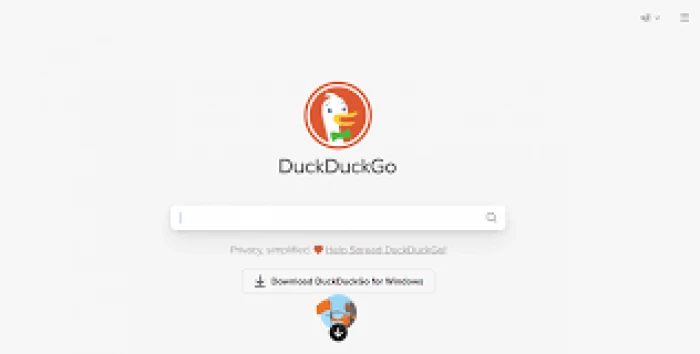
DuckDuckGo is getting a fresh wave of attention in the U.S. as more users look for an alternative to Google’s increasingly AI-driven search experience.
The privacy-focused search company said its U.S. app installs rose 18.1 percent week over week on average between May 20 and May 25, compared with the May 13 to May 18 period. The increase lasted for six consecutive days and reached a high of 30.5 percent on May 25. The iOS numbers were even sharper, with average week-over-week growth of 33 percent and a peak increase of 69.9 percent.
The jump followed Google’s latest Search announcements at its I/O developer conference, where the company showed how AI will take a much larger role in answering queries, summarizing information, and handling more complex search tasks. Instead of search working mainly as a list of links, Google is pushing it toward a more automated, answer-first system.
The reaction to Google’s AI Search shift is not only about artificial intelligence itself. The bigger issue is how much choice users feel they have.
Many people have criticized Google’s AI Overviews and AI-first search direction because the feature can feel difficult to avoid. Some users worry that AI-generated answers may be wrong, incomplete, or too dominant in results. Others argue that summaries at the top of search pages can reduce visits to the original websites that produced the information.
DuckDuckGo is using that opening to highlight its main selling point: privacy, control, and a search experience that does not force AI into every query. The company still has only a small share of the U.S. search market compared with Google, but Google’s AI expansion has created a moment where more users are willing to test another option.
DuckDuckGo CEO Gabriel Weinberg has argued that Google is making AI a default part of search without giving users a simple way to turn it off. His point is that people should be able to decide whether they want AI in their search results, rather than having one version of search pushed on everyone.
DuckDuckGo said traffic to its AI-free search page also climbed during the same period. That page, noai.duckduckgo.com, disables DuckDuckGo’s AI-assisted answers and AI-generated image features by default.
Visits to the page increased 22.7 percent week over week on average and reached a peak of 27.7 percent on May 24. That indicates some users are not just downloading DuckDuckGo but actively seeking a version of search without AI summaries or AI-filtered results.
The company said the rise was particularly noticeable in the United States. It also said the growth continued during the Memorial Day weekend, a period when traffic usually tends to slow down.
DuckDuckGo is not presenting itself as an anti-AI company. It already offers Duck.ai, a private AI chat service that gives users access to multiple AI models without requiring an account. The company says the service hides users’ IP addresses from model providers, deletes chats within 30 days, and prevents conversations from being used to train AI systems.
DuckDuckGo also offers Search Assist, which can generate quick answers for some queries, and an AI Image Filter designed to reduce AI-generated images in search results.
The difference is in positioning. DuckDuckGo is trying to frame AI as an optional tool rather than the default layer of every search. Its message is that users may still want AI help at times, but they should decide when it appears and how much it shapes the search experience.
Google’s search business remains far larger than DuckDuckGo’s, so the install surge does not represent an immediate threat to Google’s dominance. Still, it shows that some users are uncomfortable with the direction search is taking.
Search is a daily habit for millions of people. Users rely on it for quick answers, website links, shopping research, local results, troubleshooting, and news. When that familiar experience changes quickly, even small frustrations can push people to try alternatives.
The timing is also important because Google is already facing regulatory scrutiny over its search dominance and default search agreements. DuckDuckGo has long argued that Google’s position as the default search engine on major devices and browsers makes it harder for smaller competitors to grow. A visible rise in interest around DuckDuckGo gives that argument fresh relevance.
DuckDuckGo’s install growth points to a larger divide in the search industry. Big technology companies are racing to turn search into an AI-powered answer engine, but many users still prefer the older model: type a query, review links, compare sources, and judge the information themselves.
For Google, the challenge is to make AI useful without making users feel trapped inside an AI-led interface. For DuckDuckGo, the opportunity is to appeal to people who want search to feel simpler, more private, and easier to control.
The install numbers do not show a mass migration away from Google. But they do show that Google’s AI-first strategy is pushing some users to explore other search engines. In a market where search habits rarely change, even a short burst of curiosity can become meaningful if users decide the alternative gives them more control.
Seedance 2.5, MiniMax H3, and Wan 3 all promise something bigger than the old pr...
Grace Howard2 months ago

Anthropic’s chatbot is attracting more consumer attention, but ChatGPT still rem...
Samuel Osei3 months ago
Meta is testing a redesigned Creator Studio app with AI tools for content planni...
Benjamin Clark3 months ago

China's humanoid robots are stepping out of the lab and onto the factory floor,...
Sandra Campos3 months ago

Social media platforms are beginning to give users more direct control over the...
Peter Woods3 months ago
Google has officially released Android 17, bringing a wider set of multitasking...
Noura Belkacem3 months ago
Discussion