Technology
7 min read
Sriram Krishnan’s White House Exit Comes at a Critical Moment for U.S. AI Policy
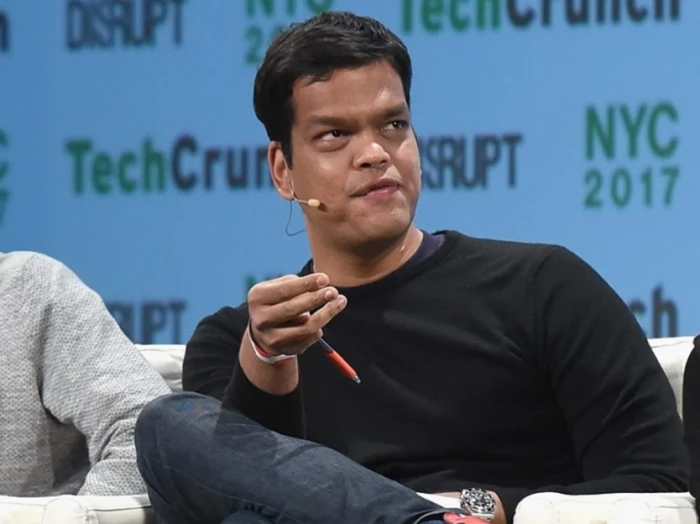
Sriram Krishnan, one of the Trump administration’s leading artificial intelligence policy advisers, is leaving his White House role at the end of June, marking a notable change in Washington’s AI leadership at a time when the federal government is trying to shape its position on frontier models, national security, and the future of the American AI industry.
Krishnan, a former technology executive and venture capitalist, served as senior policy adviser for artificial intelligence at the White House Office of Science and Technology Policy. His appointment drew attention from the beginning because he came from Silicon Valley rather than traditional government policy circles. That background made him a bridge between Washington and the technology industry, especially as AI companies increasingly looked to federal officials for clarity on regulation, infrastructure, safety testing, and national competitiveness.
His departure does not appear to signal a retreat from AI policy inside the administration. If anything, it comes as AI has become one of the most important technology issues in Washington. The federal government is now weighing how to support domestic AI companies, protect national security, handle energy demand from data centers, and keep the United States ahead of China in advanced computing and model development.
Krishnan entered the White House with deep ties to the technology industry. Before joining government, he held senior product and investment roles across major tech companies and venture firms. He was previously a general partner at Andreessen Horowitz, one of Silicon Valley’s most influential venture capital firms, and had worked at companies including Microsoft, Twitter, Yahoo, Snap, and Facebook.
That resume mattered because AI policy is increasingly shaped by technical, commercial, and geopolitical realities at the same time. Lawmakers and regulators are no longer dealing only with abstract questions about algorithmic bias or platform moderation. They are also dealing with chip supply, compute access, model safety, defense use, export controls, copyright disputes, startup competition, and the role of large technology companies in setting the pace of innovation.
Krishnan’s value to the White House was partly that he understood how AI companies and investors think. His presence suggested that the administration wanted policy input from people who had operated close to the product and venture side of the technology economy.
That also made his role politically visible. His appointment had drawn criticism from some parts of the conservative movement, particularly around his past comments on immigration and high-skilled tech workers. Support from prominent technology figures helped defend the appointment, but the controversy showed how AI policy is no longer separate from broader political fights over labor, immigration, national identity, and the power of Silicon Valley.
Krishnan’s planned exit comes during a fast-moving period for U.S. AI policy. The administration has been exploring a more active federal role in artificial intelligence, including discussions around public benefit from AI company growth and closer government engagement with major AI developers.
The White House is also facing major questions over data center energy demand. AI companies need massive computing infrastructure, and that infrastructure requires electricity, land, chips, cooling systems, and grid access. The government’s role in supporting AI infrastructure is becoming a central policy issue, especially as advanced models become more expensive to train and run.
At the same time, national security concerns are intensifying. Frontier AI models are increasingly seen as strategic assets, not just commercial products. Federal officials are looking at how powerful AI systems could affect cybersecurity, biosecurity, defense planning, misinformation, economic competition, and critical infrastructure.
That makes personnel changes inside the White House more meaningful. AI policy is now moving from broad principles into implementation. The next stage will require decisions on testing, procurement, public-private partnerships, data center approvals, export restrictions, and the relationship between federal agencies and private AI labs.
Krishnan’s departure also highlights how politically complicated AI has become in Washington.
For years, AI policy was mostly treated as a technical policy area. That has changed. The sector now touches job displacement, education, national defense, intellectual property, energy use, immigration, financial markets, and the future of U.S. industrial strategy. Every major AI decision now has political consequences.
The administration has tried to position artificial intelligence as both an economic opportunity and a national security priority. That framing gives the federal government a reason to support AI growth while also keeping closer watch over the most powerful systems. But balancing those goals is difficult.
A light regulatory approach may please startups, investors, and large tech companies that want faster deployment. A stricter safety approach may appeal to researchers, national security officials, labor groups, and critics who worry about concentration of power or uncontrolled model capabilities. The White House has to manage both sides while keeping the U.S. competitive globally.
Krishnan’s Silicon Valley background made him useful in that debate, but it also made his role sensitive. The closer AI policy gets to corporate strategy, the more scrutiny advisers with industry backgrounds will face.
One of the immediate questions is who will replace Krishnan or how his responsibilities will be redistributed. The administration will need continuity because AI policy is moving quickly and because industry leaders are pressing for faster decisions.
Companies building frontier models want clarity on cybersecurity testing, federal procurement, copyright exposure, export rules, chip access, and data center permitting. Smaller startups want a policy environment that does not give too much advantage to the largest AI labs. National security officials want insight into model capabilities and possible risks. State governments are also moving on their own AI rules, increasing the risk of a fragmented regulatory landscape.
A stable White House AI team matters because the federal government has to coordinate across agencies. AI is not limited to one department. It affects the Commerce Department, Defense Department, Energy Department, Federal Trade Commission, Department of Homeland Security, National Institute of Standards and Technology, and other agencies.
Without strong coordination, AI policy can become slow, inconsistent, or reactive. That would be costly in a field where technical progress moves faster than normal government rulemaking.
Krishnan has indicated that he intends to continue working on large AI-related challenges facing the United States. That leaves open the possibility that his next role may remain close to policy, technology, or public-private coordination.
If he starts or joins an outside institution focused on AI policy, his influence may continue beyond government. Washington often relies on think tanks, research groups, policy institutes, and industry-backed organizations to shape technical debates before formal rules are written. A former White House adviser with Silicon Valley credibility could remain relevant in that environment.
That would fit a broader pattern in AI governance. Much of the current policy conversation is happening outside traditional regulatory agencies, including universities, labs, private companies, venture firms, safety institutes, standards bodies, and nonprofit organizations. People moving between government and the tech sector can continue to affect the direction of policy even after leaving formal roles.
Krishnan’s exit may therefore be less of an ending than a repositioning. His next step will be watched closely because AI policy is now one of the most contested areas in American technology strategy.
The departure of a senior AI adviser would have been a minor Washington personnel story a few years ago. In 2026, it carries more weight.
Artificial intelligence is now central to U.S. economic policy, technology competition, defense planning, and the relationship between government and Silicon Valley. The White House is under pressure to help the industry grow, prevent major safety failures, manage infrastructure demands, and define what responsible AI leadership looks like.
Krishnan’s time in the administration reflected the growing role of tech insiders in federal AI strategy. His exit comes as the government’s AI agenda is becoming more complex and more consequential.
The next phase will test whether the White House can maintain momentum without losing technical expertise. AI policy is no longer about whether Washington should pay attention. It is about how fast the government can act, how much influence industry should have, and whether the United States can build a policy framework strong enough for the scale of the technology now being deployed.

Seedance 2.5, MiniMax H3, and Wan 3 all promise something bigger than the old pr...
Grace Howard1 month ago

Anthropic’s chatbot is attracting more consumer attention, but ChatGPT still rem...
Samuel Osei2 months ago

Meta is testing a redesigned Creator Studio app with AI tools for content planni...
Benjamin Clark2 months ago

China's humanoid robots are stepping out of the lab and onto the factory floor,...
Sandra Campos2 months ago

Social media platforms are beginning to give users more direct control over the...
Peter Woods3 months ago

Google has officially released Android 17, bringing a wider set of multitasking...
Noura Belkacem3 months ago
Discussion