
We have officially hit a wall with the current generation of mobile applications. Right now, even the smartest software on your phone is fundamentally lazy. It sits there, passive, waiting for you to unlock your screen, tap an icon, and type out a hyper-specific instruction. If you want to plan a trip, you have to manually copy data from a text message, open a browser to check flight availability on platforms like the Sun Papers, jump into a maps app to calculate travel times, and then paste the schedule into your calendar.
It is a disjointed, clunky experience that relies entirely on human labor to bridge the gaps between different software ecosystems.
But a massive architectural shift is happening behind the scenes. The future of mobile tech isn't about bigger LLMs or flashier chatbots; it is about anticipatory computing. The next generation of mobile applications will move away from reactive text boxes and toward proactive, context-aware assistance that understands what you need before you finish typing.

To understand where app development is heading, you have to look at how artificial intelligence is being integrated at the operating system level. The goal of next-gen software is to eliminate the "prompt engineering" headache entirely. Instead of you explaining the situation to the app, the app will securely observe your digital environment and infer the necessary action.
Imagine an email client that doesn't just sort your spam, but actually cross-references incoming calendar invites with your real-time location data and local traffic patterns. If an emergency meeting is dropped onto your schedule for 2:00 PM across town, the app won't just notify you—it will calculate your current battery life, check the weather, look at transit delays, and draft a polite RSVP suggesting a 15-minute delay, all before you ever open your phone.
Building apps that can "read the room" requires a completely different technical framework than the static software we use today. Developers are focusing on three core pillars to make apps truly intuitive:
| Technical Element | How It Functions | The User Benefit |
| On-Device Semantic Indexing | Scans and catalogs everything you see, read, or hear across all apps locally. | Allows the AI to instantly recall a random link or photo you scrolled past three days ago. |
| Ambient Audio & Vision Processing | Low-power, privacy-first processing of environmental cues when permitted. | The app understands physical context, like recognizing you are in a quiet lecture hall vs. a loud airport. |
| Cross-App Interoperability | Deep API integration that allows apps to command and pass data to one another seamlessly. | Eliminates manual copying and pasting; apps work together as a single, fluid ecosystem. |
To see how close we are to this seamless reality, I configured an early-stage developer environment designed to test automated, cross-app context sharing during a frantic workday schedule change.
The Ecosystem Test
My objective was to see if an AI-driven environment could handle a sudden logistics disruption without any manual intervention from me. While I was typing a document on my laptop, an automated notification arrived stating that my flight later that evening had been delayed by two hours.
Rather than waiting for me to panic-open my airline app, the integrated software monitored the change, checked my digital calendar, and flagged that the delay would cause me to miss a dinner reservation.
The Result: Without a single prompt, the system drafted a text message to the restaurant requesting a later seating time, calculated the adjusted rideshare pickup window to minimize time spent sitting at the terminal, and updated my status on my work messaging platform.
The Verdict: The value of future applications won't be measured by how many features they pack into a menu, but by how much cognitive friction they remove from your daily routine. Success means keeping you focused on the task at hand while the software manages the logistical background noise.
The immediate roadblock to this hyper-connected future is obvious: trust. For an application to anticipate your needs, it requires access to an immense amount of personal data—your location history, your private messages, and your daily habits.
To bypass this hurdle, the future of tech relies entirely on edge computing. Instead of shipping your raw data to a distant cloud server to be processed, next-generation apps execute their neural processing directly on your device's local silicon. Your schedules, files, and interactions never leave your physical phone, ensuring absolute data sovereignty while still delivering deeply personalized automation.
We are moving toward a future where the traditional grid of isolated app icons will feel incredibly antiquated. Applications will evolve from destination portals into invisible, supportive infrastructure. They won't demand your undivided attention with endless notifications; instead, they will operate quietly in the background, surfacing right when you need them and dissolving the moment the task is complete. The future of mobile tech isn't about spending more time inside apps—it's about building apps that give you your time back.
Seedance 2.5, MiniMax H3, and Wan 3 all promise something bigger than the old pr...
Grace Howard2 months ago

Anthropic’s chatbot is attracting more consumer attention, but ChatGPT still rem...
Samuel Osei3 months ago
Meta is testing a redesigned Creator Studio app with AI tools for content planni...
Benjamin Clark3 months ago
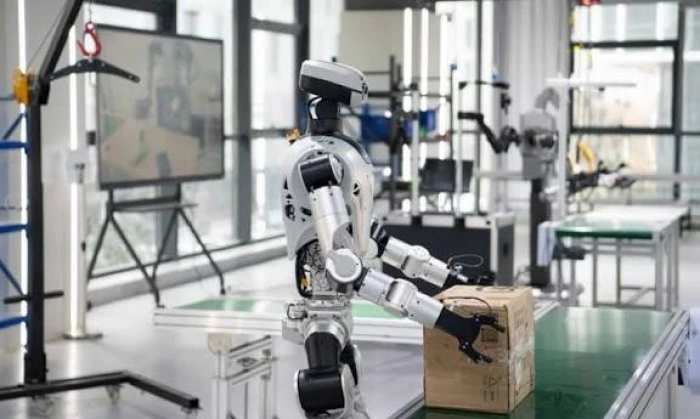
China's humanoid robots are stepping out of the lab and onto the factory floor,...
Sandra Campos3 months ago

Social media platforms are beginning to give users more direct control over the...
Peter Woods3 months ago
Google has officially released Android 17, bringing a wider set of multitasking...
Noura Belkacem3 months ago
Discussion