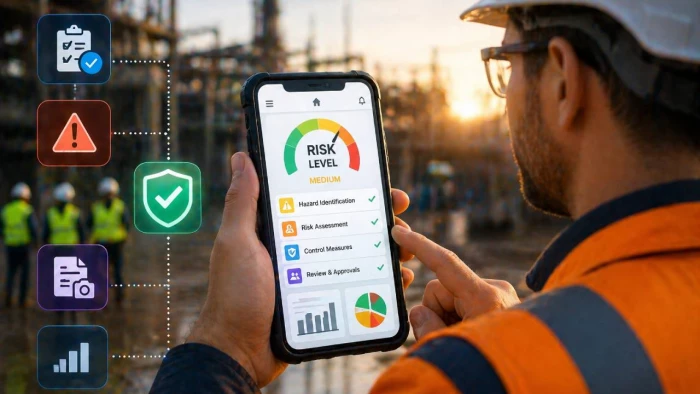
Mobile technology has completely changed how organisations conduct risk assessments across sites, teams and environments. A modern mobile risk assessment app allows businesses to identify hazards, record findings and manage compliance in real time, without relying on paper-based processes.
If you’re looking for scalable risk assessment tools that improve accuracy, save time and enhance safety reporting, this guide breaks down the best options available and what features actually matter.
Within the first step of choosing the right platform, it’s worth reviewing a dedicated solution like risk assessment tools from Velappity, which is designed for structured compliance workflows across multiple industries.
A mobile risk assessment app is software used on mobile devices to conduct risk assessments directly on-site. It enables teams to identify potential hazards, capture data, complete method statements and generate safety reports without needing internet access at all times.
Unlike traditional risk assessment software, mobile-first tools allow users to:
These apps are now essential for businesses that need to stay compliant while operating across multiple sites or environments.
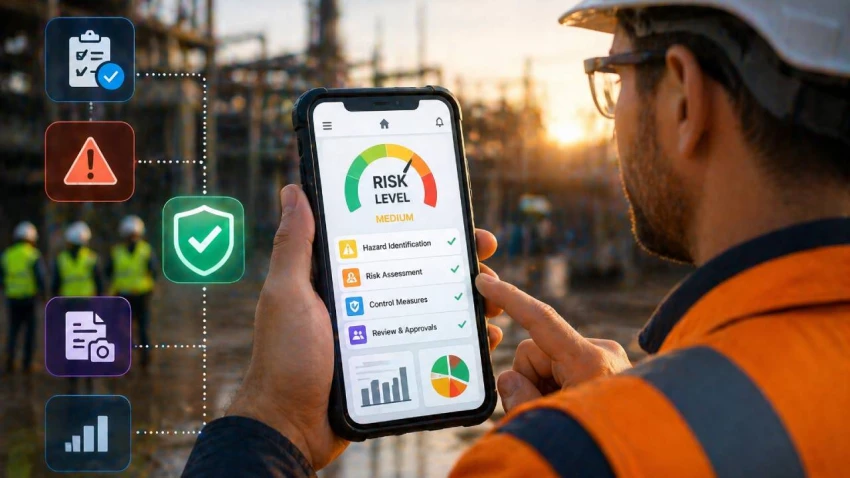
The shift to mobile risk assessment tools is driven by efficiency, compliance and data accuracy.
Paper-based assessments create delays, increase the risk of lost data and limit reporting visibility. In contrast, a risk assessment app centralises the entire assessment process.
Key benefits include:
For small businesses and large enterprises alike, mobile apps help manage health and safety more effectively while improving operational processes.
Velappity is one of the best risk assessment app options for organisations that need structured compliance workflows and custom digital forms.
It focuses on:
Velappity is particularly strong for industries that require strict compliance processes, including fire safety, water management and asbestos.
SafetyCulture is widely used across various industries for conducting inspections and audits. Its assessment app allows teams to create checklists, record findings and monitor workplace risks.
Key features include:
Many generic risk assessment software solutions fall into this category, offering basic templates and reporting tools for smaller teams.
Typical capabilities:
These tools can work for small businesses but often lack advanced compliance management features.
Not all risk assessment apps are built the same. The best platforms combine usability, compliance controls and real-time data access.
A reliable mobile risk assessment app must work without internet access. Teams often operate in remote environments, so the ability to conduct assessments offline is critical. Data should automatically sync once connectivity is restored.
An analytics dashboard provides visibility into risk trends, recurring hazards and operational issues across multiple sites.
This allows teams to:
Modern risk assessment software should automatically calculate risk levels based on likelihood and impact. This improves consistency across assessments and ensures accuracy when identifying potential risks.
Field users should be able to attach images, videos and notes directly to hazards. This improves reporting quality and provides clear documentation for audits.
Assigning corrective actions to specific personnel is essential for risk management. The system should allow teams to track tasks in real time and ensure issues are resolved.
Security is critical when managing risk data. A strong system should include:
This ensures a single source of truth across the business.
The ability to generate safety reports instantly is a major advantage. Reports should be structured, professional and ready for compliance audits without manual formatting.
Mobile risk assessment apps are used across different sectors to manage industry-specific risks.
In construction, teams use apps to identify hazards such as:
This improves safety and reduces workplace accidents.
Healthcare organisations rely on risk assessment software to stay compliant with strict regulations. Apps help manage risks related to:
This ensures compliance while protecting both staff and patients.
Manufacturers use risk assessment tools to manage:
This enhances safety while maintaining operational efficiency.
Facilities teams conduct routine assessments covering:
In facilities management, teams often assess fire risk, ergonomics and building safety, with specialist contractors like Adaston supporting fire risk and compliance alongside digital risk assessments.
Event organisers use assessment apps to identify risks such as:
This ensures smoother operations and improved safety for attendees.
Using a mobile risk assessment app transforms how organisations approach risk management.
Instead of reactive processes, teams can:
The ability to access real-time data across mobile devices allows businesses to make faster decisions and maintain a safer working environment.
Selecting the best risk assessment app depends on your operational needs, industry and compliance requirements.
You should look for a solution that:
For organisations that need structured compliance workflows and detailed reporting, platforms like Velappity offer a more advanced approach compared to generic tools.
Mobile risk assessment apps are no longer optional. They are essential tools for managing workplace risks, improving safety and staying compliant across different sectors.
By moving away from manual processes and adopting modern risk assessment software, businesses can save time, reduce errors and improve overall efficiency.
Whether you operate in construction, healthcare or facilities management, investing in the right assessment app will enhance your ability to manage risk effectively and protect both your team and your operations.
If Google is not finding your pages, the problem might not be your contentYou pu...
Funke Ogunleye1 month ago

Cloud storage is no longer just about saving files online. As data privacy conce...
Alexander Hughes2 months ago

Digital transactions have become the backbone of modern technology ecosystems. F...
John Nyarko2 months ago

ChatGPT’s app integrations let you turn a simple chat into a control panel for d...
John Nyarko3 months ago
Ever wish the workday felt less like a stressful scramble? Over time and a lot o...
John Nyarko5 months ago
Discussion