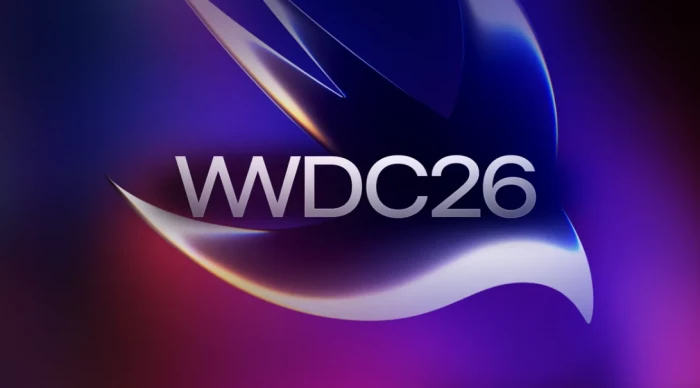
Apple used WWDC 2026 to do something it rarely likes to admit: catch up.
The company’s annual developer conference was filled with updates that addressed long-running complaints across its software ecosystem. Apple improved design issues, added features users had wanted for years, tightened parts of its operating systems, and finally gave Siri the kind of artificial intelligence upgrade that has been expected since the first wave of generative AI reshaped the technology industry.
The keynote did not feel like a company trying to create an entirely new category. It felt like Apple trying to repair gaps, reduce friction, and bring its software closer to where users and competitors have already moved.
That does not make the event unimportant. In fact, it may make it more revealing. Apple’s strength has always been turning existing technologies into polished mainstream experiences. At WWDC 2026, the company appeared to recognize that before it can ask users to trust a deeper AI future, it needs to make the basic experience feel stronger, faster, and more reliable.
The structure of the WWDC keynote said a lot. Apple spent considerable time on performance improvements, interface refinements, app updates, and quality-of-life changes before moving into its more ambitious AI pitch.
That sequencing mattered because Apple has faced criticism over software polish in recent years. Users have complained about design choices, uneven feature rollouts, delayed AI capabilities, and the sense that some Apple platforms were becoming more complex without becoming more useful.
At WWDC 2026, Apple appeared to answer some of those complaints directly. The company tweaked its controversial Liquid Glass design, which had divided users after its introduction. The goal was to keep the visual identity while improving readability and usability. That is a classic Apple correction: preserve the design direction, but make it less irritating for daily use.
The company also highlighted broader system improvements across iOS, macOS, iPadOS, watchOS, tvOS, and visionOS. These updates may not generate the same headlines as AI announcements, but they matter to users who live inside Apple’s software every day.
The biggest symbolic update was Siri. Apple’s voice assistant has been a weak point for years, especially as ChatGPT, Gemini, Claude, and other AI systems changed expectations around what digital assistants should be able to do.
At WWDC 2026, Apple finally moved Siri into a more modern AI direction. The upgraded Siri is designed to be more conversational, more aware of context, and more capable of handling tasks across Apple’s ecosystem. It is expected to work more naturally with apps, personal data, device activity, and follow-up requests.
This is the upgrade Apple needed to show. Siri was once a major early voice assistant, but it gradually became a symbol of missed opportunity. Users had learned to use it for timers, calls, messages, weather, and simple commands rather than serious help.
The new version is meant to change that. Apple wants Siri to become a front door to Apple Intelligence, not just a voice shortcut. If it works well, Siri could help users edit messages, find photos, summarize information, perform app actions, and manage everyday tasks without switching between multiple screens.
But the pressure is high. Apple has promised smarter Siri experiences before, and delays have made users cautious. The company now has to prove that this version is not only better in demos, but reliable in real daily use.
Apple also used WWDC to expand Apple Intelligence across more of its software. The company’s AI strategy is not built around a single chatbot. It is built around placing AI inside apps, workflows, and system functions.
That approach showed up in several areas. Photos received smarter editing features, giving users more ways to change or improve images without relying on third-party apps. Visual Intelligence became more central to how the camera and device can understand the world around the user. Writing, search, summaries, shortcuts, and app-level actions also became part of Apple’s wider AI layer.
This is where Apple’s strategy differs from many AI rivals. OpenAI wants ChatGPT to become a super app. Google is pushing Gemini across search, Android, and productivity tools. Microsoft is embedding Copilot inside work software and developer platforms. Apple is trying to make AI feel like part of the device itself.
The benefit is familiarity. Users do not have to learn a new interface for every AI feature. The risk is that the features may feel less impressive if they appear quietly inside existing apps.
WWDC 2026 showed Apple leaning into that trade-off. The company seemed less interested in making the loudest AI announcement and more interested in making AI useful in small, repeated moments.
Apple’s developer pitch was also important. The company is opening more of its AI stack to app makers, giving developers access to Foundation Models and other tools that can bring Apple Intelligence features into third-party apps.
This matters because Apple cannot build every useful AI experience on its own. If developers can add summarization, generation, search, classification, and app-specific assistance using Apple’s own frameworks, AI can spread more naturally through the App Store.
For smaller developers, the appeal may be cost. Many app makers want AI features but worry about expensive cloud API bills, unpredictable usage, and infrastructure complexity. Apple can reduce that friction by offering a more controlled path into AI development, especially for apps that can use on-device models.
This also strengthens Apple’s platform position. If developers build around Apple’s AI frameworks, Apple Intelligence becomes more deeply tied to iOS and macOS. That makes Apple’s AI strategy less dependent on one headline feature and more dependent on ecosystem adoption.
Apple’s WWDC looked like catch-up, but that is not automatically bad.
Many of Apple’s biggest successes came after other companies moved first. The company did not invent the smartphone, tablet, smartwatch, wireless earbuds, or digital wallet. Its usual strength has been waiting until a technology can be packaged in a way that feels coherent for mainstream users.
The problem is that AI may move faster than some of those earlier categories. Users are already building habits around ChatGPT, Gemini, Claude, Perplexity, Copilot, Cursor, and other AI-native tools. Developers are already choosing AI platforms. Businesses are already testing AI workflows. If Apple waits too long, it risks losing influence over how users expect AI to work.
That is why WWDC 2026 was important. Apple needed to show that it was not ignoring the AI shift. It also needed to show that its delayed approach had a purpose.
The company’s answer was practical rather than dramatic. It improved the foundation, pushed Siri forward, expanded Apple Intelligence, and gave developers more tools. That may not silence every critic, but it gives Apple a clearer AI path than it had before.
One of the more telling parts of the event was Apple’s willingness to adjust Liquid Glass. The design system had been controversial because its glass-like transparency made parts of the interface harder to read for some users.
By changing the design, Apple appeared to acknowledge that visual ambition has limits. A software interface can look modern, but it still has to be readable, accessible, and comfortable across millions of daily interactions.
That lesson applies to AI too. Users may be impressed by a flashy demo, but they will judge the product by whether it saves time, avoids mistakes, respects privacy, and works reliably in ordinary situations.
Apple’s AI strategy depends on that same principle. It is trying to make AI fade into the operating system rather than dominate the screen. For that to work, the system has to feel polished. WWDC’s emphasis on refinements suggests Apple understands that trust begins with basics.
Apple’s WWDC announcements give the company a stronger story, but the real test will come when users get the updates on their devices.
Siri must handle messy real-world requests, not just polished stage examples. Apple Intelligence must produce useful summaries, edits, and suggestions without feeling gimmicky. Developers must find the AI tools practical enough to adopt. The design changes must make the software feel cleaner rather than more complicated.
The rollout will also matter. Apple has faced criticism for delayed AI features and limited availability. If major upgrades arrive slowly, or only on newer devices, user frustration could return quickly.
There is also the competitive problem. Apple is improving, but rivals are not standing still. OpenAI is expanding ChatGPT, Google is pushing Gemini deeper into its products, Microsoft is advancing Copilot, and Anthropic continues to gain attention with Claude. Apple’s ecosystem advantage is large, but it does not erase the pace of AI competition.
WWDC 2026 may be remembered less as Apple’s bold AI breakthrough and more as the event where the company admitted, indirectly, that it had work to do.
That honesty may be useful. Apple did not try to pretend every gap had already been solved. It showed software fixes, practical improvements, and a more serious AI roadmap. It positioned Siri as part of a broader system rather than the only story. It gave developers a role. It made design adjustments where users had pushed back.
The result was a keynote that looked less glamorous than some AI showcases but more grounded in Apple’s actual business. Apple sells devices, operating systems, services, and ecosystem loyalty. Its AI strategy has to strengthen those things, not distract from them.
The company is still behind in some areas, especially compared with AI-native rivals that move faster and experiment more aggressively. But WWDC 2026 showed Apple trying to close the gap in a way that fits its identity: controlled, integrated, privacy-conscious, and focused on the user experience.
Apple is playing catch-up. The important question now is whether it can catch up fast enough without losing the polish that made users trust its products in the first place.
Seedance 2.5, MiniMax H3, and Wan 3 all promise something bigger than the old pr...
Grace Howard2 months ago

Anthropic’s chatbot is attracting more consumer attention, but ChatGPT still rem...
Samuel Osei3 months ago
Meta is testing a redesigned Creator Studio app with AI tools for content planni...
Benjamin Clark3 months ago
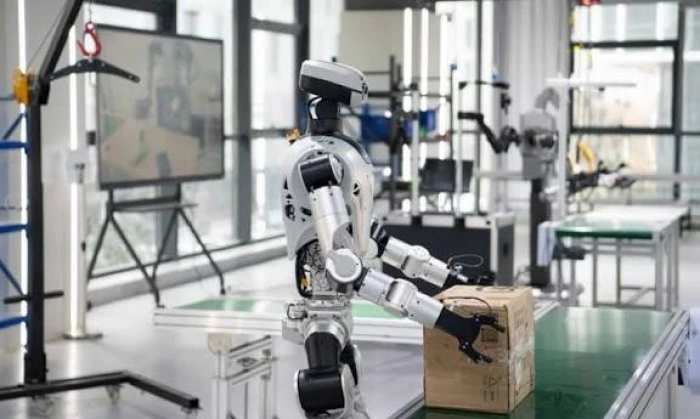
China's humanoid robots are stepping out of the lab and onto the factory floor,...
Sandra Campos3 months ago
Social media platforms are beginning to give users more direct control over the...
Peter Woods3 months ago
Google has officially released Android 17, bringing a wider set of multitasking...
Noura Belkacem3 months ago
Discussion