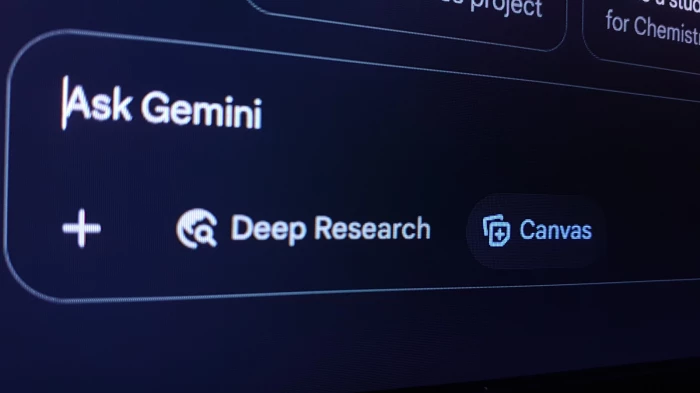
Google has cut the price of its budget AI subscription plan, signaling that the artificial intelligence market is entering a more aggressive pricing phase as major companies fight to turn AI curiosity into paid consumer habits.
The company reduced the monthly price of Google AI Plus from $7.99 to $4.99 and doubled the storage included in the plan from 200 gigabytes to 400 gigabytes. The move gives users a cheaper path into Google’s paid AI ecosystem at a time when rivals are still pushing premium plans that often start much higher.
The price cut is not just a simple discount. It is a strategic move in a market where AI companies are trying to answer one of the industry’s biggest questions: how much are ordinary consumers actually willing to pay for artificial intelligence?
For Google, the answer appears to be that lower-cost plans may matter as much as advanced model access. By making AI Plus cheaper, Google is trying to pull more users into its subscription ladder before competitors can lock them into ChatGPT, Claude, Perplexity, Microsoft Copilot, or Apple’s device-based AI ecosystem.
The new price makes Google AI Plus one of the more accessible paid AI plans from a major technology company. At $4.99 per month, the plan sits closer to a low-cost digital utility than a premium professional tool.
That matters because AI subscriptions are beginning to feel crowded. Many users are already paying for streaming services, cloud storage, productivity tools, music apps, news subscriptions, password managers, and mobile plans. Asking them to add another $20 or $30 monthly AI subscription is difficult unless the value is obvious.
Google’s lower price gives users a softer entry point. Instead of asking casual users to commit to a more expensive plan immediately, Google can offer a cheaper package that includes AI features, more storage, and a path into the wider Google ecosystem.
This is especially important for users who are AI-curious but not heavy power users. They may want better writing help, image tools, search assistance, Gmail support, Docs features, or Gemini access, but they may not need the highest-tier model every day. Google AI Plus gives that audience a more affordable reason to start paying.
Doubling storage from 200 gigabytes to 400 gigabytes is an important part of the move. Google is not only cutting the AI price. It is making the plan feel like a better overall digital subscription.
That is smart because Google already has a strong consumer subscription base through Google One. Many users understand storage more clearly than AI tokens, model limits, or context windows. Extra storage is a tangible benefit. It helps with Gmail, Google Photos, Drive, phone backups, and shared family usage.
By combining AI access with more storage, Google can make AI feel less like a separate experimental product and more like an upgrade to services users already depend on.
This gives Google an advantage over pure AI startups. OpenAI, Anthropic, and Perplexity can offer powerful AI experiences, but Google can bundle AI with storage, search, Gmail, Docs, Photos, Android, Chrome, and YouTube-adjacent workflows. That bundling power may become one of the biggest weapons in the AI subscription fight.
The price cut puts pressure on competitors that rely more heavily on standalone AI subscriptions.
ChatGPT Plus has helped define the consumer AI subscription market, with users paying for stronger models, faster access, file tools, image generation, browsing, voice features, and other advanced capabilities. Claude, Perplexity, and other AI platforms have also leaned into paid tiers that target users who want better performance or more generous limits.
Google’s move changes the comparison. It is not necessarily trying to match every feature of higher-end AI plans at $4.99. Instead, it is creating a cheaper entry tier that could make users question whether they need a more expensive standalone subscription.
That could be especially effective for casual users. A developer, analyst, researcher, or business user may still pay for premium AI tools. But a student, family user, casual creator, or everyday smartphone user may find a cheaper Google plan good enough, especially if it works across apps they already use.
The pricing move also gives Google a way to expand adoption before the market settles into long-term loyalties. Once users build habits around a specific AI assistant, switching becomes harder. Google wants Gemini to become that default habit.
The AI market is not only about who has the strongest model. It is also about who controls the default interface.
Google controls Search, Android, Chrome, Gmail, Docs, Photos, Drive, and YouTube. Microsoft controls Windows, Office, GitHub, LinkedIn, and enterprise software. Apple controls the iPhone, Mac, iPad, App Store, and operating-system experience. OpenAI controls ChatGPT’s brand and direct consumer relationship. Anthropic has strength with developers, researchers, and enterprise users.
The pricing war sits on top of this platform battle. A cheaper AI plan can help Google place Gemini closer to everyday behavior. If users pay for AI through Google One, they are more likely to use AI inside Google products rather than opening a separate chatbot every time.
That is why a $3 price cut can matter more than it looks. The move is not only about monthly revenue. It is about forming habits, building loyalty, and making Gemini feel like a normal part of Google’s consumer ecosystem.
The move also raises a harder question: can AI companies afford a price war?
Running AI products is expensive. Every chatbot response, image request, document summary, coding task, and search interaction consumes computing resources. More advanced models require more infrastructure, including chips, data centers, power, cooling, networking, and cloud systems.
A lower subscription price can attract more users, but it can also squeeze margins if usage grows faster than revenue. That is the tension facing the entire AI industry. Companies want mass adoption, but heavy AI use is not free to serve.
Google may be better positioned than many rivals because it owns major infrastructure, builds AI chips, operates massive cloud systems, and already runs consumer products at global scale. It can also spread AI costs across search, ads, cloud, subscriptions, and enterprise services.
Even so, the economics are difficult. If consumers expect cheaper AI while also demanding better models, faster responses, larger context windows, image generation, and agentic features, companies will need to find major efficiency gains.
Google’s budget AI plan has already been part of a broader push in price-sensitive markets. The U.S. price cut suggests lessons from emerging markets are now influencing the company’s strategy in larger consumer markets.
That matters because AI adoption is global, but willingness to pay varies widely. A $20 monthly AI subscription may be realistic for some professional users in the U.S. or Europe, but it is much harder to justify in many markets where average incomes are lower and subscription fatigue is already high.
By experimenting with cheaper tiers, Google can reach more users across regions and income levels. That could help Gemini grow faster than if the company only focused on premium users.
The strategy also reflects how consumer tech markets often develop. A high-end product may prove the concept, but cheaper plans bring the service into the mainstream. Google appears to be applying that logic to AI.
Google’s move comes as other platform companies are making AI harder to avoid.
Apple is embedding Apple Intelligence into iPhone, Mac, iPad, Photos, Messages, Shortcuts, Safari, and Siri. Its strategy is less about a standalone paid chatbot and more about device-level integration. That gives Apple a different pricing advantage because many AI features may arrive as part of the operating system or device experience.
Microsoft is pushing Copilot through Windows, Microsoft 365, GitHub, and enterprise software. It can package AI inside workplace subscriptions where companies already pay for productivity tools.
That puts pressure on Google to make Gemini feel both useful and affordable. If AI becomes bundled into devices and workplace software, standalone paid plans may become harder to sell unless they offer clear added value.
Google’s price cut is one answer to that pressure. It makes the entry point cheaper while keeping users inside Google’s ecosystem.
The broader AI subscription market remains in flux. Some users are willing to pay for the best model available. Others want the cheapest helpful assistant. Businesses want controls, security, admin tools, and measurable productivity returns. Developers care about coding quality and usage limits. Students and casual users care about affordability.
That means the market may split into several layers. Premium AI plans may continue for professionals and heavy users. Lower-cost plans may target mainstream consumers. Free tiers may remain important for adoption. Enterprise plans may become more specialized and expensive.
Google’s $4.99 AI Plus plan fits into the lower-cost consumer layer. It may not replace higher-end AI subscriptions for everyone, but it could set expectations for what a basic AI plan should cost.
If other companies respond, consumers may benefit from cheaper access in the short term. But the long-term result could be a more complex market with more tiers, more limits, and more bundling.
The price cut shows that Google is not waiting for the AI subscription market to mature on its own. It is actively trying to shape it.
By lowering the cost of AI Plus and increasing storage, Google is making a clear argument: paid AI should be affordable enough for mainstream users, not only professionals and enthusiasts.
That could make the AI price war more intense. OpenAI, Anthropic, Perplexity, Microsoft, Apple, and others will now have to decide whether to compete on model quality, ecosystem integration, pricing, or some combination of all three.
For Google, the goal is not simply to sell a cheaper plan. It is to make Gemini part of daily digital life before users settle elsewhere.
The AI boom has been defined by model launches and feature races. Google’s latest move shows the next phase may be defined by pricing. If AI becomes a subscription battle, the companies with the strongest ecosystems and the deepest infrastructure may have the advantage.
Seedance 2.5, MiniMax H3, and Wan 3 all promise something bigger than the old pr...
Grace Howard2 months ago
Anthropic’s chatbot is attracting more consumer attention, but ChatGPT still rem...
Samuel Osei3 months ago
Meta is testing a redesigned Creator Studio app with AI tools for content planni...
Benjamin Clark3 months ago

China's humanoid robots are stepping out of the lab and onto the factory floor,...
Sandra Campos3 months ago

Social media platforms are beginning to give users more direct control over the...
Peter Woods3 months ago

Google has officially released Android 17, bringing a wider set of multitasking...
Noura Belkacem3 months ago
Discussion