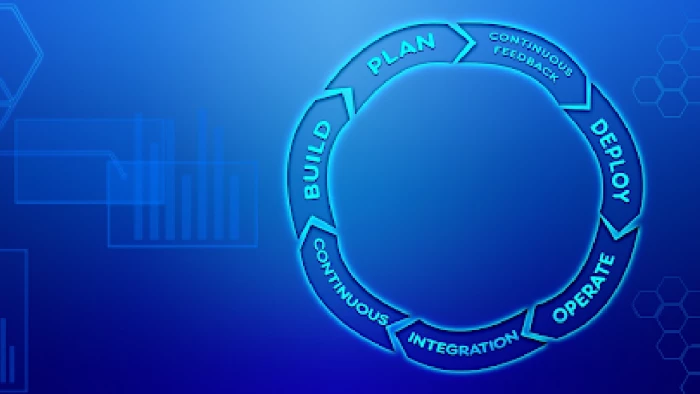
The development of an AI-based web application begins much earlier than the first line of code. Early decisions will influence performance, scalability, and cost. The selection of the appropriate stack is not a technical aspect. It is a strategic one.
The market is inundated with frameworks, libraries, and platforms. Both of them are fast, flexible, and can be easily integrated. The real challenge is to know which ones actually deliver. Let us shed some light on the most important factors to be taken into consideration.
Why the Frontend Framework Matters More Than You Think
The frontend layer is underestimated by most teams when developing AI tools. They pay attention to the model and the backend API. However, users do not engage with the algorithm. They pay attention to the interface. A slow or poorly designed UI kills the interest within a short time. AI tools require real-time updates of data, dynamic rendering, and smooth state management. This is not well-scaled in every framework.
ReactJS has emerged as the preferred solution to AI-intensive interfaces. It manages dynamic content effectively with its virtual DOM. Component-based architecture makes it easy to build and update complex dashboards. This is the reason why many AI SaaS products are currently being developed using React.
When you are hunting for a trusted ReactJS development for your product, it does not matter who you collaborate with. Companies like Binary Studio specialize in building scalable React-based applications. Their team has specialized knowledge in ReactJS development, both in architecture design and production implementation. Selecting the appropriate partner saves time and minimizes technical debt to a large extent.
Your frontend needs a backend that can handle unpredictable AI workloads. AI inference requests can be resource-intensive and slow. Your API layer must be designed to queue, retry, and respond gracefully. React on the frontend is a natural match to Node.js. Python is commonly used in the integration of ML models. Most teams combine them with Node as the API gateway and Python as the AI service layer.
REST and GraphQL are both valid choices here. GraphQL gives more flexibility for complex data queries. REST remains simpler to cache and monitor. The right choice depends on your product's data requirements. According to MDN Web Docs, REST remains the foundational standard for structuring API communication in modern web applications.
AI applications create and process vast amounts of structured and unstructured data. Selecting the incorrect database introduces bottlenecks in a short time. PostgreSQL is a good default choice for relational data. MongoDB is suitable for flexible and document-based storage. To support real-time capabilities, Redis is often added as a caching layer.
State management on the frontend is equally important. Redux is still used in large-scale React applications. Zustand and Jotai are lighter alternatives that are on the rise. Consistency is the key. Mixing state solutions results in bugs and confusion.
Inference in AI apps can often need a compute based on a GPU. Managed ML infrastructure is available in cloud providers such as AWS, Google Cloud, and Azure. The modern standard of scalable deployments is containerization with Docker and orchestration with Kubernetes.
Serverless functions are suitable for lightweight API endpoints. However, dedicated compute is more economical when it comes to sustained AI workloads. Scale your infrastructure first. Retrofitting is a painful and costly process.
In-house building is not always feasible. Most product teams contract specialized agencies or studios to do certain layers of technology. This is particularly so in frontend work where both speed and quality are important.
In assessing partners, seek established delivery in your particular stack. A team that has extensive experience in the development of ReactJS will create a more robust architecture at the outset. A good example is Binary Studio. The company specializes in product development based on React with a well-organized delivery process.
Review their portfolio, client reviews, and technical strategy. Specialized quality is rarely provided by generic agencies. React's official documentation also delivers benchmarks and patterns to validate any partner's technical decisions.
The choice of the right tech stack is not a matter of trends. It is concerned with the alignment of tools to the real needs of your product. AI applications demand performance, real-time capabilities, and solid architecture. ReactJS is still among the most powerful frontend options in this category. Combine it with the appropriate backend, database, and deployment plan. And select development partners who are familiar with the stack, not just at a surface level. The right decisions at the start save months of rework later. Build smart from day one.
Seedance 2.5, MiniMax H3, and Wan 3 all promise something bigger than the old pr...
Grace Howard2 months ago

Anthropic’s chatbot is attracting more consumer attention, but ChatGPT still rem...
Samuel Osei3 months ago
Meta is testing a redesigned Creator Studio app with AI tools for content planni...
Benjamin Clark3 months ago

China's humanoid robots are stepping out of the lab and onto the factory floor,...
Sandra Campos3 months ago

Social media platforms are beginning to give users more direct control over the...
Peter Woods3 months ago

Google has officially released Android 17, bringing a wider set of multitasking...
Noura Belkacem3 months ago
Discussion