
Running a business today without the right software is a bit like trying to build a house with the wrong tools.
In fact, while writing this, I was reminded of a song that I taught my kid about two men building homes, one on sand and the other on rock. When disaster struck, the house built on rock stood strong, while the one built on sand came crashing down.
In many ways, choosing software for your business works the same way. When you choose the right software stack, your business gets a strong foundation, one that can support growth, handle challenges, and adapt as things evolve. But choose the wrong systems, and sooner or later, cracks begin to show. Teams struggle, processes become messy, and what once felt manageable slowly turns into operational chaos.
Whether you are a startup trying to scale, a growing company managing day-to-day operations, or a business looking for industry-specific tools such as retail POS systems, medical billing platforms, or construction management software, your software stack plays a bigger role than you might realize. The challenge? With countless tools, platforms, and technologies available today, choosing the right one can quickly start feeling overwhelming.
But here’s the good news: you do not have to figure it all out alone. This guide will walk you through what actually matters when choosing the right software stack for your business, without the jargon, confusion, or shiny-object distractions.

It’s always good to start with “what” before we get into “how.” So let’s quickly cover the “what” here.
Think of it this way: a well-oiled engine helps your car run smoothly. In many ways, the right software stack does the same for a business. When all the right systems work together, your business runs more efficiently, teams collaborate better, and day-to-day operations feel far less chaotic.
Simply put, a software stack is the collection of tools, platforms, and technologies your business uses to operate digitally. This may include:
● Frontend systems: what customers or employees interact with
● Backend systems: the engine working behind the scenes
● Databases: where important business information is stored
● Cloud infrastructure: systems that support hosting and growth
● Third-party integrations: CRMs, payment gateways, analytics tools, and more
In simple words, your software stack is the system that helps keep your business running smoothly behind the scenes. The goal is not to pick the fanciest technology, but the one that works best for your business.
Now that we know what a software stack is, let’s take a closer look at the things we need to do before picking the right software for a business.
One of the biggest mistakes businesses make is choosing software based on trends rather than actual needs. Just because everyone is talking about AI-powered automation does not mean it automatically makes sense for your business.
Instead, ask practical questions:
● Are you trying to improve operational efficiency?
● Do you need better customer management?
● Is your team struggling with disconnected tools?
● Are you planning to scale quickly?
● Do you need automation to reduce manual work?
For example, let’s compare a local service business and an e-commerce business. The local service business may prioritize scheduling and invoicing tools, while an e-Commerce brand may prioritize inventory management and customer experience.
Similarly, your software decisions should always align with your business priorities, and not its shiny features. A software stack is not just one tool; it is a combination of systems working together to help your business run smoothly. Which is exactly why choosing the right mix matters.
Many businesses choose software that works for now without thinking about what happens a year later. But temporary fixes rarely work if you are planning to grow.
As your business expands, your software should be able to handle increasing workload, support your team, and grow alongside your needs, not become an expensive problem later.
A scalable software stack should be able to:
● Handle increased workload
● Support team growth
● Integrate with future tools
● Improve performance without major disruptions
Imagine investing in a CRM today only to realize next year that it cannot integrate with your billing system, marketing platform, or analytics tools. Suddenly, your “budget-friendly” choice becomes an expensive replacement project.
Planning for growth early often saves both time and money later.
Not every business needs the same software setup.
A healthcare company, for instance, has very different compliance and data requirements compared to a retail brand. Similarly, field-service businesses have operational needs that general-purpose tools may not fully support.
This is where industry-specific software becomes important.
For example, contractors and home-service businesses often require tools tailored to scheduling, customer communication, invoicing, and project estimation. Investing in specialized Roofing software can help roofing businesses manage everything from estimates to job tracking in one place, rather than juggling multiple disconnected systems.
The goal is not to overload your business with tools; it is to choose software that solves the problems unique to your industry.
Sometimes, niche software delivers far more value than a generic all-in-one platform.
You know what quietly frustrates teams? Software that refuses to work together.
If your CRM, invoicing system, analytics platform, and customer communication tools cannot connect smoothly, your team ends up spending more time on manual work than actual work. Choose tools that integrate well with each other.
When evaluating a software stack, look for solutions that can connect with:
● Customer Relationship Management (CRM) systems
● Payment gateways
● Accounting software
● Marketing automation tools
● Customer support platforms
● Analytics dashboards
A connected ecosystem improves efficiency and gives you a clearer picture of how your business is performing.
More importantly, it reduces unnecessary manual work.
Microsoft’s architecture guidance also highlights the importance of building scalable systems that prioritize integration, reliability, and long-term flexibility.
The cheapest software option is not always the smartest one.
You should also consider:
● Setup and implementation costs
● Employee training time
● Maintenance expenses
● Security requirements
● Upgrade fees
● Long-term support
Sometimes, paying slightly more upfront for a scalable and reliable solution ends up being more cost-effective than constantly switching between cheaper tools.
The cheapest option is not always the smartest investment.
Technology changes quickly, and businesses that adapt usually stay ahead.
This does not mean constantly changing software every year. It simply means choosing systems flexible enough to grow with your business and adapt as your needs evolve.
Look for platforms that offer:
● Strong API support
● Cloud-based accessibility
● Regular updates
● Automation features
● AI-ready capabilities
● Reliable customer support
Future-proofing is less about predicting trends and more about staying adaptable.
Just like the story of the two homes, one built on rock and the other on sand, the foundation matters.
Choosing the right software stack for your business is not about following trends or picking the fanciest platform. It is about building systems that support your goals, simplify operations, and grow with your business over time.
Whether you are running a startup, a growing business, or a roofing company managing multiple projects, choosing the right business software can make everyday work smoother, more organized, and far less stressful. Because at the end of the day, technology should help your business move forward, not slow it down.

ClickFunnels is still everywhere in marketing circles, but it is no longer the d...
Grace Howard2 months ago

Managing social media today requires more than simply posting content. Brands, c...
Peter Woods2 months ago
Managing several social media accounts at the same time can quickly become compl...
Alexander Hughes2 months ago

The Platform That Refuses to DisappearVery few software download websites have m...
Noura Belkacem3 months ago

Meta has agreed to acquire Manus, a Chinese founded artificial intelligence...
John Nyarko4 months ago
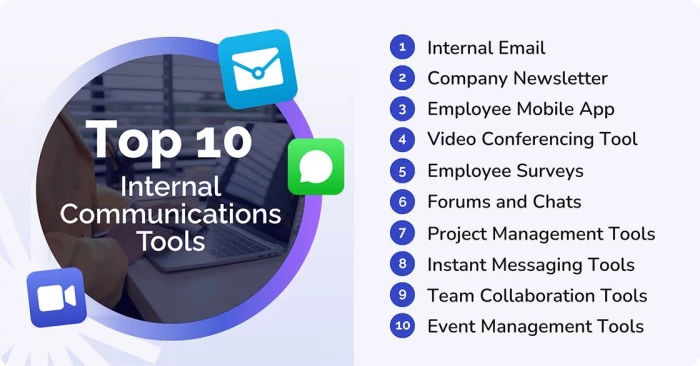
In today’s fast-paced digital workplace, communication software plays a critical...
John Nyarko5 months ago
Discussion