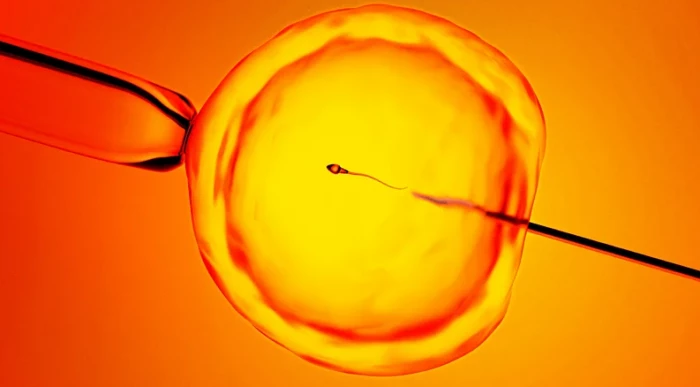
A new AI-powered fertility technology is giving hope to men who were previously told they had little or no chance of having biological children.
Researchers and fertility specialists are now using artificial intelligence systems to detect extremely rare “hidden sperm” cells that traditional laboratory methods often fail to find. The breakthrough could reshape treatment options for thousands of couples dealing with male infertility, particularly in cases once considered nearly impossible to treat.
The technology is being developed at the Columbia University Fertility Center and is known as STAR, short for Sperm Track and Recovery.
One of the biggest challenges in male fertility treatment is a condition called azoospermia, where no sperm can be detected in semen samples using conventional testing methods.
The condition affects around 10% to 15% of infertile men and roughly 1% of all men overall. For decades, many patients diagnosed with azoospermia were told their only realistic options involved donor sperm or invasive surgical procedures.
The issue is not always that sperm do not exist at all.
In some cases, sperm cells are simply so rare that human technicians cannot easily locate them during manual microscopic analysis. Traditional searches can take hours or even days, and still fail to detect viable sperm cells hidden among millions of other cells and debris.
That limitation is exactly what the new AI system is trying to solve.
| Male Fertility Challenge | Why It Is Difficult |
|---|---|
| Extremely low sperm count | Sperm may be nearly invisible in samples |
| Manual microscopic searches | Labor-intensive and slow |
| Invasive surgeries | Physically and emotionally stressful |
| Failed IVF cycles | High financial and emotional cost |
| Limited treatment options | Many patients lose hope early |
The STAR system combines artificial intelligence, high-speed imaging, robotics, and microfluidic technology.
Instead of relying entirely on human technicians manually scanning samples under microscopes, the system rapidly analyzes millions of microscopic images in real time. Samples flow through tiny microfluidic chips while cameras capture hundreds of images every second. AI models then scan those images looking for sperm cells hidden inside the sample.
Once sperm are identified, robotic systems isolate them within milliseconds.
That process is important because traditional methods often involve centrifugation, a spinning technique that can damage fragile sperm cells. The AI-assisted method reduces that risk while dramatically speeding up detection.
Researchers say the system has already identified sperm in nearly 30% of patients who had previously been told they had no detectable sperm at all.
In some cases, AI reportedly located dozens of viable sperm cells in under an hour after traditional lab searches had failed completely.
The technology is not just experimental anymore.
Several couples have already reportedly achieved successful pregnancies using sperm located through the STAR system. One widely discussed case involved a couple who had spent years trying unsuccessfully to conceive before AI-assisted sperm detection identified viable sperm hidden inside the male partner’s sample.
For many patients, the emotional impact is enormous.
Male infertility diagnoses can carry deep psychological effects, particularly when patients are told biological parenthood may never be possible. AI-assisted fertility systems are now reopening possibilities that many couples believed had disappeared permanently.
Doctors involved in the research say the technology effectively changes the definition of what “no sperm” actually means.
The fertility industry has quietly become one of the fastest-growing areas for medical AI adoption.
Artificial intelligence is already being used for:
The STAR system represents a major expansion of that trend into male fertility diagnostics.
Experts say AI is particularly valuable in reproductive medicine because fertility treatment depends heavily on identifying microscopic biological patterns that humans can easily miss under time pressure or fatigue.
| AI Use in Fertility Medicine | Current Purpose |
|---|---|
| Embryo analysis | Improve IVF success rates |
| Sperm detection | Find ultra-rare sperm cells |
| Genetic screening | Detect potential abnormalities |
| Cycle prediction | Optimize fertility timing |
| Lab automation | Reduce human error |
| Imaging analysis | Speed up diagnosis |
Despite the excitement, researchers caution that the technology is still developing.
The system does not guarantee pregnancy success, and larger clinical studies are still needed before the approach becomes widely standardized across fertility clinics.
There are also concerns about accessibility.
Advanced fertility treatments are already expensive, and many insurance systems do not fully cover IVF-related care. Researchers hope AI-assisted sperm detection may eventually reduce costs by lowering the need for unsuccessful surgeries and repeated failed procedures.
Another major issue is balancing optimism with realistic expectations. Fertility medicine is emotionally sensitive, and experts warn against creating false hope for patients without long-term validation data.
Still, many fertility specialists see the technology as one of the most promising recent developments in reproductive medicine.
The broader significance goes beyond fertility itself.
For years, AI discussions focused mainly on chatbots, image generation, and automation software. Technologies like STAR show how AI is increasingly entering highly personal medical areas where pattern recognition and imaging analysis can directly affect human lives.
The fertility field is becoming an early example of how AI may help doctors discover biological signals too subtle or time-consuming for humans to reliably identify on their own.
For men previously told biological fatherhood was impossible, that shift could become life-changing.
New Claude Model Targets Agentic AI WorkflowsAnthropic has launched Claude Sonne...
Samuel Osei3 months ago

Gemini’s Image Tools Get a Wider RolloutGoogle is expanding access to Gemini’s p...
Alexander Hughes3 months ago

Two AI video generators, two very different first days. I ran PixVerse through i...
Alexander Hughes3 months ago
Two of the most talked-about AI chat platforms. I opened both, picked a characte...
Alexander Hughes3 months ago

The two-minute versionIf you only read one thing, read this. The rest of the doc...
Alexander Hughes3 months ago

Why Seedance 2.5 mattersSeedance 2.5 is the latest release in ByteDance’s Seedan...
Alexander Hughes3 months ago
Discussion