OpenAI has introduced a major security upgrade for ChatGPT users called Advanced Account Security (AAS), a new opt-in protection system designed to defend accounts against phishing attacks, credential theft, and unauthorized access. The rollout also includes a high-profile partnership with Yubico, the company behind YubiKey hardware security devices.
The move signals a growing shift inside the AI industry. ChatGPT accounts are no longer treated as lightweight chatbot logins. OpenAI now views them as high-value digital identities that may contain sensitive conversations, research, coding workflows, personal data, and connected business tools.
OpenAI says AI accounts are becoming increasingly attractive targets for cybercriminals because users now rely on ChatGPT and Codex for professional work, research, communication, and software development.
As AI assistants become more integrated into daily workflows, compromising a ChatGPT account could expose far more than chat history. Attackers may gain access to connected apps, uploaded documents, developer tools, or internal business information.
The launch comes during a period of increasing cybersecurity concerns across the AI industry, including growing fears around phishing attacks, account takeovers, and misuse of advanced AI systems.
The new security mode introduces several major changes that dramatically tighten how users log in and recover their accounts.
| Security Feature | What It Does |
|---|---|
| Passwordless Login | Replaces passwords with passkeys or hardware security keys |
| Phishing Protection | Blocks traditional credential theft attacks |
| Disabled SMS Recovery | Removes phone-based recovery vulnerabilities |
| Disabled Email Recovery | Prevents attackers from hijacking accounts through compromised email |
| Session Alerts | Sends notifications for new logins |
| Session Controls | Lets users monitor active devices |
| Shorter Sessions | Reduces exposure from stolen sessions |
| Automatic Training Opt-Out | Conversations are excluded from model training automatically |
OpenAI says users enrolled in AAS can no longer recover accounts using traditional support-based recovery methods. Instead, recovery relies entirely on security keys, recovery keys, or backup passkeys.
That design intentionally removes social engineering opportunities where attackers trick customer support teams into granting account access.
A major part of the rollout is OpenAI’s partnership with Yubico, one of the most recognized names in hardware-based authentication.
The companies are releasing a custom two-key YubiKey bundle specifically designed for ChatGPT users. According to OpenAI and Yubico, the package includes:
The hardware keys support phishing-resistant authentication standards and act as physical verification devices required during login.
OpenAI says it already uses YubiKeys internally to protect employee systems and infrastructure, and now wants to extend that same protection model to users.
Reports indicate the custom bundle is priced at around $68, significantly lower than typical retail pricing for similar security key packages.
One of the biggest implications of this launch is OpenAI’s strong move away from passwords entirely.
Under Advanced Account Security:
This reflects a broader industry transition toward phishing-resistant authentication systems.
Companies like Google and Apple have already expanded passkey adoption, but OpenAI’s implementation is notable because it treats AI accounts with the same security seriousness typically reserved for banking or government systems.
While Advanced Account Security is optional for most users, OpenAI confirmed that members of its Trusted Access for Cyber program will be required to use the protection system starting June 1, 2026.
That program gives verified cybersecurity professionals and researchers access to more advanced AI capabilities.
OpenAI says stronger authentication is necessary because these accounts may have access to highly sensitive tools and systems.
The launch also reflects a wider industry reality: AI platforms are rapidly becoming cybersecurity targets.
As AI systems expand into coding, productivity, enterprise operations, and personal assistance, user accounts increasingly store:
That makes account protection far more critical than it was during the early chatbot era.
The AI industry is now entering a phase where security infrastructure may become just as important as model capability.
For OpenAI, Advanced Account Security appears to be the first major attempt to build enterprise-grade identity protection directly into consumer AI products.

New Claude Model Targets Agentic AI WorkflowsAnthropic has launched Claude Sonne...
Samuel Osei3 months ago
Gemini’s Image Tools Get a Wider RolloutGoogle is expanding access to Gemini’s p...
Alexander Hughes3 months ago

Two AI video generators, two very different first days. I ran PixVerse through i...
Alexander Hughes3 months ago
Two of the most talked-about AI chat platforms. I opened both, picked a characte...
Alexander Hughes3 months ago
The two-minute versionIf you only read one thing, read this. The rest of the doc...
Alexander Hughes3 months ago
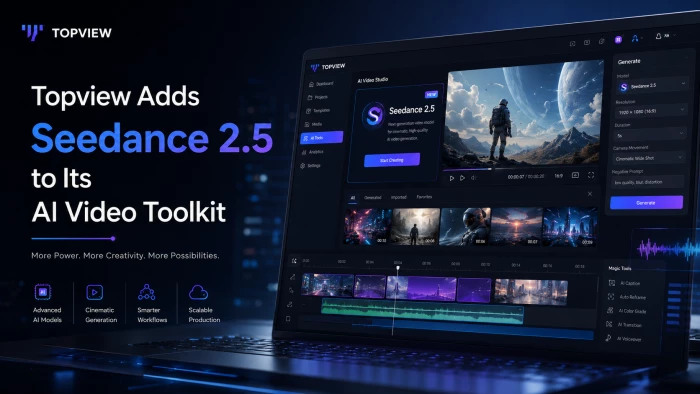
Why Seedance 2.5 mattersSeedance 2.5 is the latest release in ByteDance’s Seedan...
Alexander Hughes3 months ago
Discussion