The no-code website builder market in 2026 is better than ever, but that also makes the decision harder. A restaurant owner, a freelancer, a SaaS startup, and a design agency all need websites, but they do not need the same builder, the same level of control, or the same pricing structure.
That is why this comparison matters. The best no-code website builders in 2026 are not just about drag-and-drop convenience anymore. They now include AI site generation, SEO tools, marketing features, CMS systems, commerce, and in some cases, even full business workflows.
A few years ago, choosing a website builder mostly came down to templates and basic editing. In 2026, the real question is whether a platform can help you launch faster, rank better, scale later, and avoid a painful rebuild.
Some builders are made for beginners who want something live quickly. Others are made for designers who care about motion, responsive control, or clean code. Picking the wrong one can mean spending weeks working around limitations that should have been obvious from the start.
| Rank | Builder | Best For | Why It Stands Out |
| 1 | Webflow | Agencies, marketing teams, scalable sites | Best CMS, strong SEO control, professional output |
| 2 | Framer | Designers, SaaS, creative teams | Best visual quality and motion design |
| 3 | Wix | Small businesses, all-in-one use | Broad feature set and strong AI tools |
| 4 | Squarespace | Creatives, service businesses, simple commerce | Easiest way to get a polished site |
| 5 | Hostinger Website Builder | Budget users, beginners | Cheapest serious option with solid AI features |
| 6 | 10Web | WordPress users, agencies | AI-powered WordPress without the usual hassle |
| 7 | Durable | Freelancers, local service businesses | Fastest path to a live site |

Webflow is the best no-code website builder in 2026 if you care about control, scalability, and long-term quality. It is the strongest option for agencies, content-heavy businesses, and marketing teams that need a site to look polished while still being manageable at scale.
What makes Webflow stand out is its CMS and its code quality. The platform gives you a level of structure and flexibility that most no-code builders cannot match, which is why it works so well for blogs, resource hubs, multi-page marketing sites, and more complex business websites.
Webflow is not the easiest builder on this list, but it is the one most likely to grow with you. If your website is a serious business asset, that matters more than beginner simplicity.
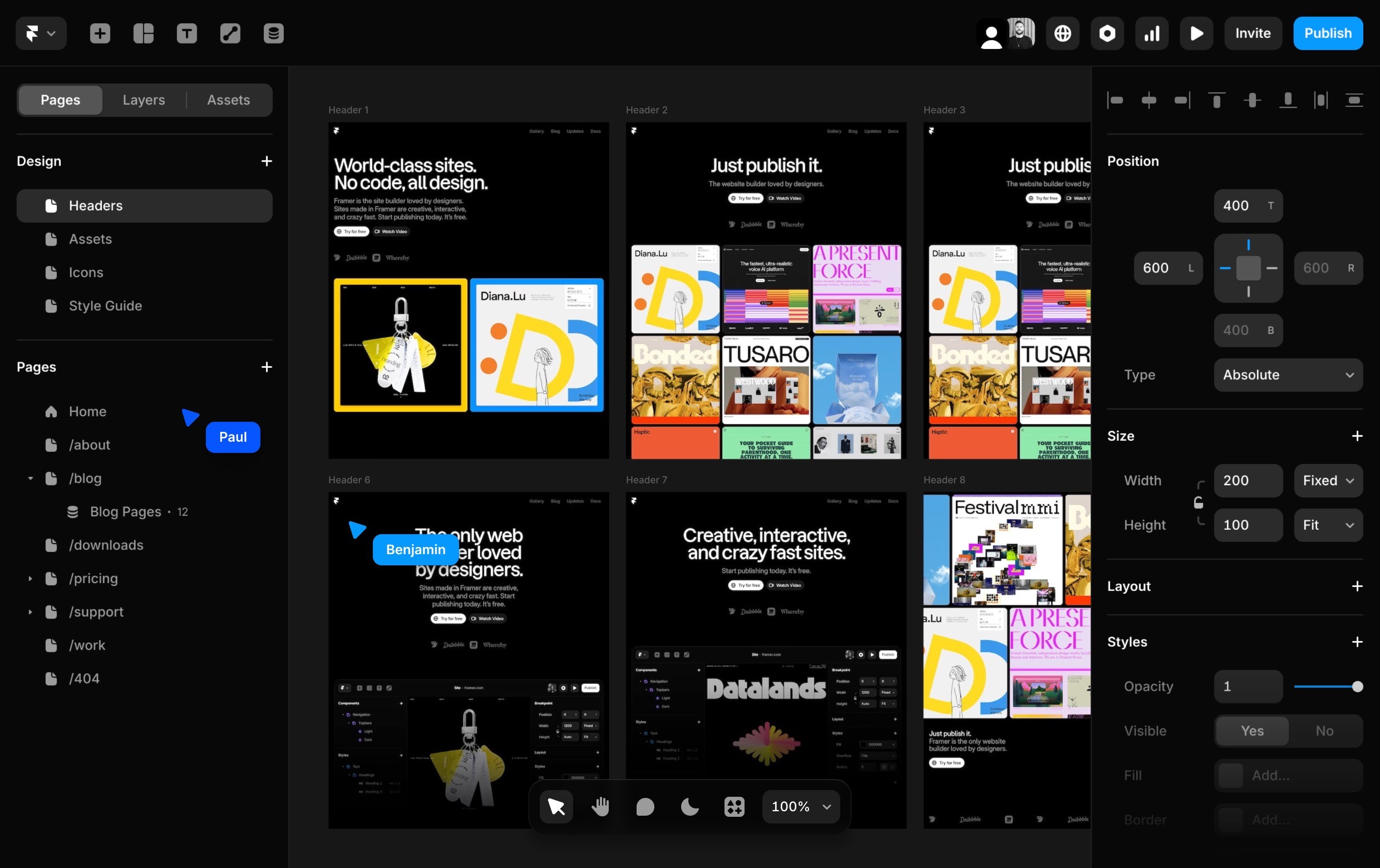
Framer is the platform designers usually fall in love with first. It feels closest to a modern design tool, and that makes it ideal for SaaS landing pages, portfolios, startup launch pages, and visually polished marketing sites.
Its biggest advantage is motion and visual freedom. You can create animations, interactions, and transitions without writing JavaScript, which makes the final result feel more premium than what many other no-code builders can produce.
Framer is not the best choice for beginners or for very complex CMS-driven sites. But if visual quality is a business requirement, it is one of the best options available.
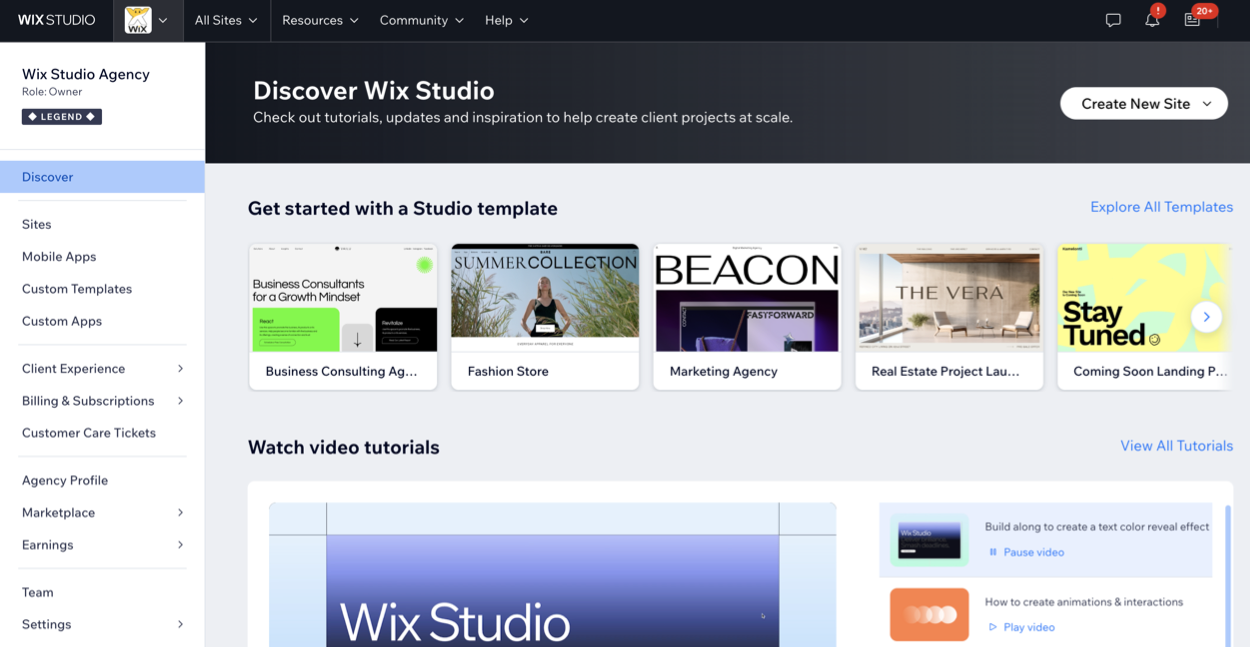
Wix has become much better than its old reputation suggests. In 2026, it is a genuinely strong all-in-one website platform for small businesses, entrepreneurs, and anyone who wants a broad feature set without stitching together multiple tools.
Its biggest strength is breadth. Wix covers site generation, AI copy, image creation, SEO help, commerce, apps, scheduling, and marketing tools in a single ecosystem. That makes it practical for people who want one platform to handle most of their online presence.
Wix is not as clean as Webflow or as design-forward as Framer, but it is often the most balanced choice for real-world business use.
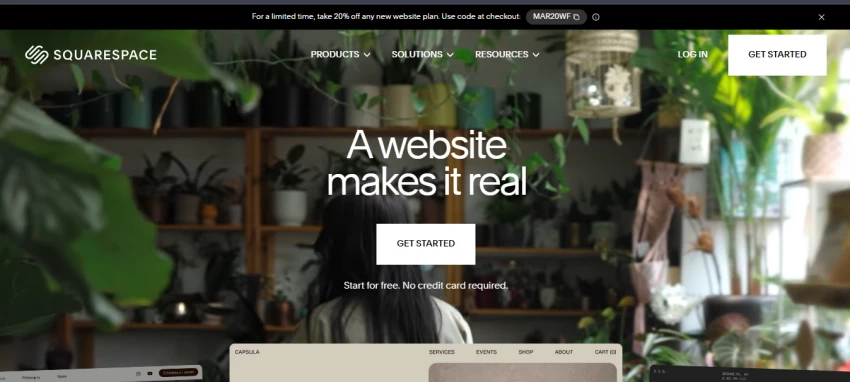
Squarespace is still one of the easiest builders to recommend for people who want a beautiful site without spending too much time making design decisions. It gives you a refined starting point and keeps the final result visually consistent.
That makes it great for creatives, restaurants, freelancers, and service businesses. If your priority is looking professional quickly, Squarespace is one of the safest choices.
The trade-off is flexibility. Squarespace looks great because it keeps you inside its own design system. If you want deep customization, Webflow or Wix will give you more freedom.
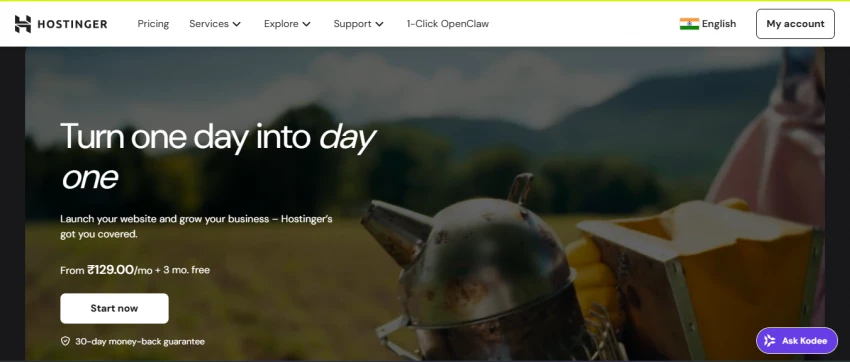
Hostinger is hard to ignore because of its price. It is one of the cheapest website builders worth taking seriously, but it still includes AI tools, hosting, SEO support, and e-commerce features.
For beginners and solopreneurs, that combination is impressive. It gives you a functional website without the higher monthly costs that usually come with AI builder platforms.
The catch is that the low price usually depends on long-term commitment, and renewals are much higher. It is a good deal only if you understand the full pricing structure before signing up.
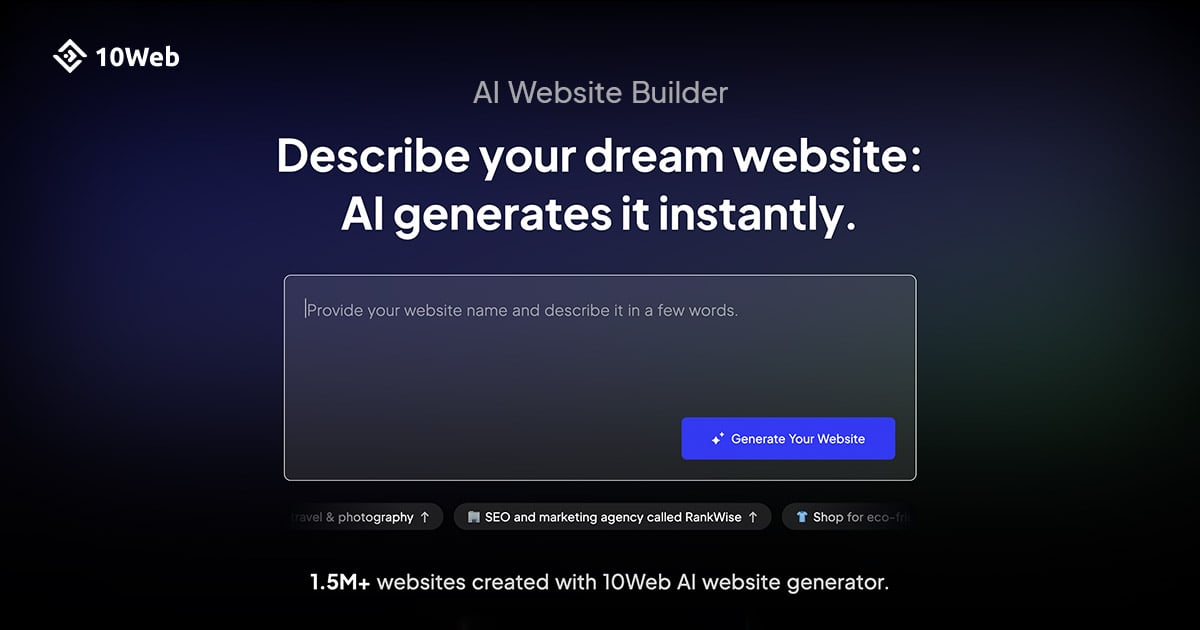
10Web is the best option for users who want AI-powered site creation without leaving WordPress. That makes it especially attractive for bloggers, agencies, and businesses that already know the WordPress ecosystem but want to reduce the usual friction.
Its strengths are automation, speed optimization, and managed hosting. For people who want WordPress flexibility without the typical maintenance headaches, 10Web is a very smart middle ground.
It is not as simple as Hostinger or Durable, but it gives you more ecosystem power and more long-term flexibility.
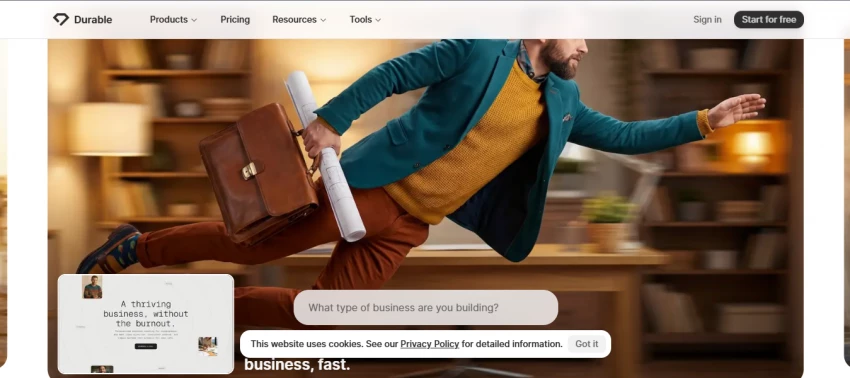
Durable is the fastest way to get a professional-looking website online. It is built for people who do not want to spend time on design decisions and just need a site that looks decent immediately.
It also includes lightweight business tools like CRM and invoicing, which makes it useful for freelancers and local service businesses. That means it is not just a site builder, but a small business starter kit.
The downside is customization. Durable is great when speed matters more than control, but it is not the best platform if you want deep design flexibility.
| Use case | Best builder |
| Best overall | Webflow |
| Best design-first builder | Framer |
| Best all-in-one for small business | Wix |
| Best simple beautiful site | Squarespace |
| Best cheap option | Hostinger |
| Best WordPress alternative | 10Web |
| Fastest launch | Durable |
If you want the best no-code website builders in 2026, the answer depends on what kind of site you are building.
Choose Webflow if you want the strongest long-term platform for serious websites. Choose Framer if design and motion matter most. Choose Wix if you want the widest set of tools in one place. Choose Squarespace if you want something polished and simple. Choose Hostinger if price matters most. Choose 10Web if you want WordPress with less pain. Choose Durable if speed is the priority.
There is no single perfect no-code builder for everyone in 2026, but there are clear winners for different jobs. Webflow is the best overall for power and scalability. Framer is the best for visual quality. Wix is the best all-rounder. Squarespace is the easiest path to a polished site. Hostinger wins on price, 10Web wins for WordPress users, and Durable wins on speed.
The smartest move is not to ask which builder is the best in general. It is to ask which one fits your workflow, your budget, and the type of site you actually need.

New Claude Model Targets Agentic AI WorkflowsAnthropic has launched Claude Sonne...
Samuel Osei3 months ago

Gemini’s Image Tools Get a Wider RolloutGoogle is expanding access to Gemini’s p...
Alexander Hughes3 months ago
Two AI video generators, two very different first days. I ran PixVerse through i...
Alexander Hughes3 months ago

Two of the most talked-about AI chat platforms. I opened both, picked a characte...
Alexander Hughes3 months ago
The two-minute versionIf you only read one thing, read this. The rest of the doc...
Alexander Hughes3 months ago
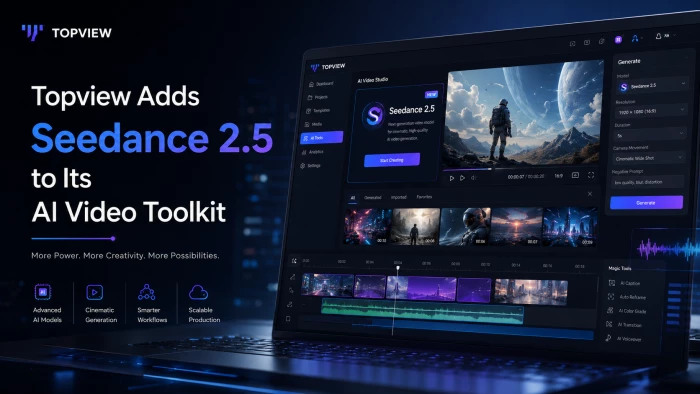
Why Seedance 2.5 mattersSeedance 2.5 is the latest release in ByteDance’s Seedan...
Alexander Hughes3 months ago
Discussion