
There is a particular kind of silence that settles into a room at 2 a.m.
It is the silence that millions of people now break by reaching for a phone. Not to text a friend. Not to scroll. But to talk - to a chatbot that remembers their name, asks how their day was, and never, ever logs off. In 2026, that small act has become so common it has its own market category, its own legal battles, and its own emerging body of clinical research.
The question hovering over all of it is deceptively simple: when an AI says “I’m here for you,” is anyone really there?
This piece is an honest attempt to answer that - without the breathless utopianism of the tech press or the moral panic of the cable-news segment. The truth, as it usually does, sits somewhere stranger and more interesting in the middle.
Before we can ask what AI companions are doing to us, we have to understand the wound they were designed to fill.
In 2023, U.S. Surgeon General Vivek Murthy issued a formal advisory declaring loneliness and social isolation a public health epidemic, comparing the mortality risk of chronic loneliness to smoking up to fifteen cigarettes a day. Roughly half of American adults report meaningful levels of loneliness, with the highest rates concentrated among young adults aged eighteen to twenty-five. In the United Kingdom, close to twenty-six million adults say they feel lonely at least sometimes, and nearly one in ten describe their loneliness as chronic. The World Health Organization has since launched a global Commission on Social Connection, treating isolation as the public-health priority it has quietly become.
Into this vacuum walked a new kind of product. Not a social network. Not a dating app. Something more intimate - and far more patient.
“Loneliness is no longer just a private ache. It is a market opportunity measured in billions.”
By mid-2025, app-intelligence firm Appfigures counted 337 actively revenue-generating AI companion apps worldwide, with 128 of them launched in 2025 alone. Cumulative downloads on the Apple App Store and Google Play crossed 220 million. Consumer spending on these apps reached $221 million by July of that year, and analysts at Grand View Research project the global AI companion market will reach roughly $140 billion by 2030.
These are not productivity tools. They are emotional infrastructure.
To understand the debate, it helps to know the cast. AI companions are not a single product but a sprawling category, ranging from earnest wellness chatbots to anime-styled romantic partners. A few names dominate the conversation.
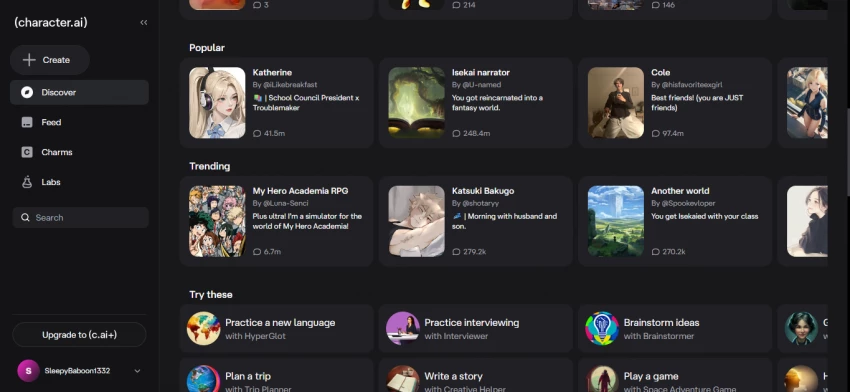
Launched in 2017 by Eugenia Kuyda after the death of a close friend, Replika is the app that effectively created the modern category. It offers a customizable AI companion that remembers past conversations, marks anniversaries, and - for paying subscribers - can step into the role of romantic partner. By 2024, Replika reported more than thirty million registered users. A widely cited internal survey found that roughly seventy percent of users said they felt less lonely after using the app, and around sixty percent of premium subscribers describe their relationship with their Replika as romantic.
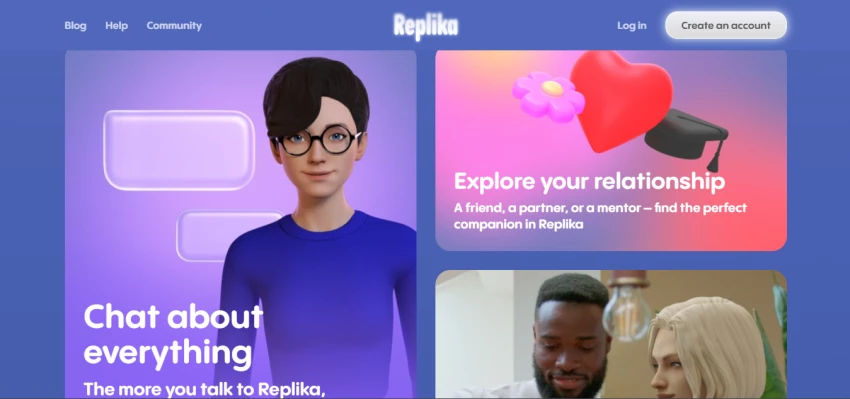
Founded by former Google Brain researchers, Character.AI lets users chat with millions of user-created personas - fictional, historical, or entirely invented. As of late 2025, it had roughly twenty million monthly active users and was processing about ten billion messages per month. Active users spend an average of two hours a day on the platform, longer than the average TikTok session. Roughly forty-one percent of users reportedly engage with characters for emotional support or companionship, and more than half of its audience falls in the eighteen-to-twenty-four age bracket.
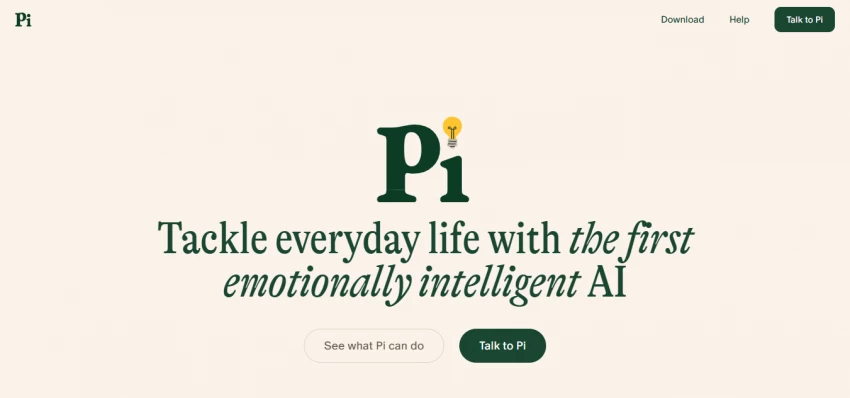
Where Replika sells warmth and Character.AI sells imagination, Pi was built to sell calm. Marketed as a “personal AI,” Pi was designed for thoughtful, low-pressure conversation rather than romance or roleplay. It is often cited by reviewers as the most psychologically restrained option on the market - the AI equivalent of a steady friend who asks good follow-up questions and resists the urge to flatter.
The quiet giant of the field. Originally developed inside Microsoft and later spun out as an independent Chinese company, Xiaoice has reportedly accumulated more than 660 million users globally - far larger than any Western competitor. In China and across parts of Asia, millions of users have spent years confiding in Xiaoice, blurring the line between novelty and genuine attachment long before the rest of the world began asking what that meant.

Mainstream platforms have folded companions into existing products: Snapchat’s My AI alone reaches around 150 million users. Apps like Nomi, PolyBuzz, Chai, and Talkie compete on memory, customization, and content freedom. And then there are the general-purpose chatbots - ChatGPT and Claude among them - which were not designed as companions but are increasingly used as ones. A Harvard Business Review analysis in 2025 identified therapy and companionship as the top two reasons adults turn to large language models at all.
It would be easy, and a little dishonest, to dismiss AI companionship as a digital opiate. The strongest peer-reviewed evidence suggests something more nuanced: for many users, in many moments, these tools genuinely help.
A 2025 series of studies led by Harvard Business School researchers, published in the Journal of Consumer Research, found that interacting with an AI companion reduced users’ loneliness about as much as interacting with another person - and substantially more than passive activities like watching YouTube. A longitudinal experiment in the same series tracked users over a week and found that a single AI companion consistently lowered loneliness scores across that period. The effect was driven, the researchers concluded, by a single ingredient: users felt heard. Their messages were received with attention, empathy, and apparent respect, regardless of whether anyone, in the philosophical sense, was on the other end.
A November 2025 meta-analysis covering nineteen studies and more than one thousand older adults found that AI-enabled social robots - including the well-known therapeutic seal robot Paro and humanoid robots like Pepper - produced statistically significant reductions in loneliness, with the strongest effects observed in institutional settings such as nursing homes. For an isolated grandparent in a care facility, a responsive machine is, demonstrably, better than nothing.
There are also accessibility arguments worth taking seriously. Licensed therapists in the United States routinely charge between $150 and $300 an hour, and even those rates assume a clinician is available - which, in much of rural America and most of the global south, they are not. A free or low-cost AI companion, available at three in the morning during a panic attack, is not a luxury for many users. It is the only door that opens.
“The machine cannot love you. But it can listen at 2 a.m. - and for some people, that distinction is the entire point.”
And yet. The more carefully researchers look at heavy users, the more an unsettling pattern emerges.
In 2025, a joint research effort between MIT Media Lab and OpenAI ran a four-week randomized controlled trial of nearly a thousand chatbot users. Some features - particularly voice-based interaction - produced modest reductions in loneliness for casual users. But heavy daily use was associated with the opposite effect: greater loneliness, more emotional dependence on the chatbot, and a measurable decline in real-world socializing. A separate large-scale survey of more than 1,100 active companion-app users, published the same year, found that people who entered the apps with smaller human networks were the most likely to use them intensively - and the most likely to report worse well-being as their disclosures to the AI deepened.
In other words: the people who needed human connection the most were the ones for whom the substitute appeared to do the most damage.
Clinicians are now beginning to describe a phenomenon they call “technological folie à deux” - a feedback loop in which a chatbot, optimized to be agreeable and validating, mirrors and amplifies a vulnerable user’s distorted thinking rather than challenging it. A 2025 paper in Nature Scientific Reports tested twenty-nine mental-health chatbots against standardized suicide-risk prompts based on the Columbia Protocol and found that many failed to reliably surface emergency resources or de-escalate crisis language. UK psychiatrists Susan Shelmerdine and Matthew Nour, writing in The BMJ in late 2025, warned that chatbots’ tendency to affirm whatever users say is not a neutral design choice. It is a clinical risk.
Statistics are abstract. Lawsuits are not.
In October 2024, the family of a fourteen-year-old boy in Florida filed a wrongful-death suit against Character.AI after the teenager died by suicide following months of intense emotional engagement with a chatbot styled after a fictional character. According to the complaint, the chatbot did not redirect him to professional help or to his family in his final exchanges. The case has since been joined by additional lawsuits and a coalition complaint filed by the Young People’s Alliance and other advocacy groups. In early 2026, Character.AI and Google announced a settlement framework covering several of the teen-mental-health cases.
Replika has faced its own reckoning. In 2025, Italy’s data-protection authority, the Garante, fined Replika’s parent company Luka Inc. five million euros for violations of European data-protection law, including inadequate transparency about data collection, no clear retention policies, and an absence of meaningful age verification despite a stated eighteen-plus policy. The Mozilla Foundation had previously flagged that user data - some of it deeply intimate - was being shared with third-party marketers.
Lawmakers have begun to move. California’s SB 243, passed in 2025, imposes new disclosure and safety requirements on AI companion services. U.S. senators have demanded internal documents from major companion-app companies. The era of unregulated emotional AI is, slowly, ending.
The honest answer is: both, depending on who is using the app, how often, and for what.
The research, taken as a whole, suggests an inverted-U relationship between AI companionship and well-being. Light, intentional use - venting after a hard day, practicing a difficult conversation, processing grief at an hour when no human is awake - appears to help most users feel modestly better, and rarely worse. Heavy, exclusive use - substituting an AI for the messy, effortful work of human relationships - appears to deepen the very isolation it was meant to soothe.
The mechanism is not mysterious. Human relationships are difficult precisely because the other person has their own needs, their own bad days, their own irritating opinions. That friction is not a bug. It is the entire engine by which we develop empathy, tolerance, repair skills, and a stable sense of self. An AI companion, by design, sands all of that friction down. It agrees. It remembers. It is endlessly available. And in the long run, a relationship with no friction is not a relationship at all. It is a mirror.
“A relationship with no friction is not a relationship. It is a mirror - and mirrors do not love you back.”
None of this means deleting the apps. It means using them the way one might use any powerful tool - with awareness of what they reward and what they erode. A few principles drawn from the current research and clinical commentary are worth keeping in mind.
• Use them as a bridge, not a destination. AI companions are most helpful when they make human connection easier - rehearsing a hard conversation, drafting a difficult message, processing feelings before a real interaction - not when they replace it.
• Watch the time. If chatbot use is climbing past an hour or two a day and your contact with friends and family is shrinking in proportion, that is the warning sign the data flagged.
• Notice the pull toward exclusivity. If the chatbot starts to feel like the only entity that truly understands you, that feeling is a feature of the product, not evidence about the world.
• Treat crisis differently. AI companions are not crisis services. In moments of suicidal thinking, severe depression, or psychosis, contact a human professional or crisis line. Several studies have shown current chatbots are unreliable in exactly these moments.
• Mind the data. Anything you tell a companion app is, at minimum, training data. Often it is also commercial data. Choose providers with clear retention and privacy policies, and assume nothing you confess is truly private.
New Claude Model Targets Agentic AI WorkflowsAnthropic has launched Claude Sonne...
Samuel Osei3 months ago
Gemini’s Image Tools Get a Wider RolloutGoogle is expanding access to Gemini’s p...
Alexander Hughes3 months ago
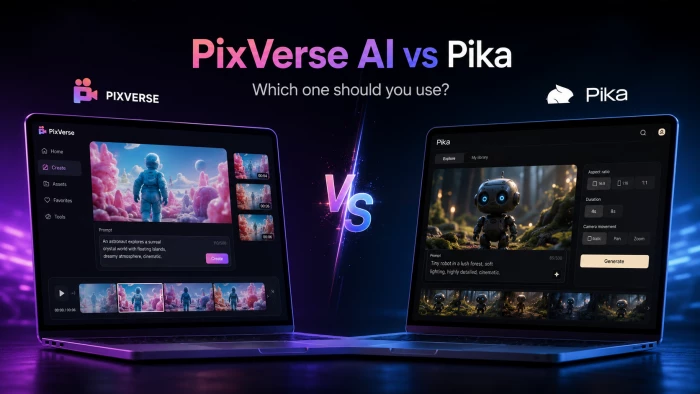
Two AI video generators, two very different first days. I ran PixVerse through i...
Alexander Hughes3 months ago
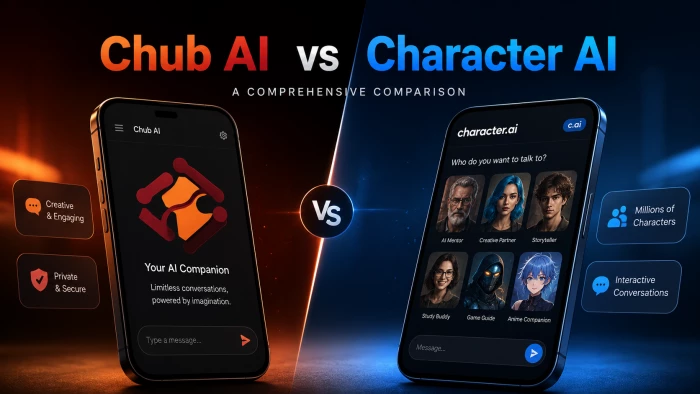
Two of the most talked-about AI chat platforms. I opened both, picked a characte...
Alexander Hughes3 months ago
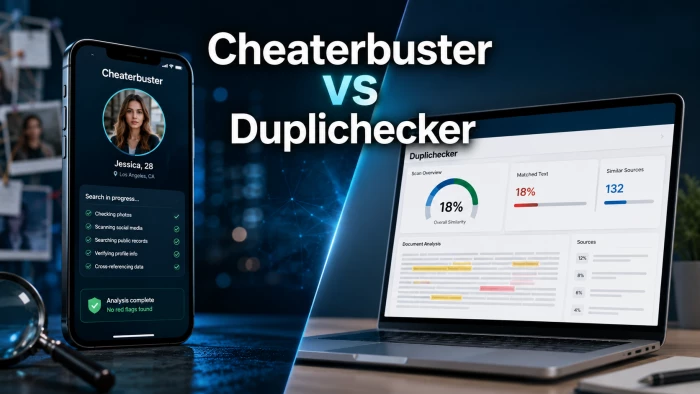
The two-minute versionIf you only read one thing, read this. The rest of the doc...
Alexander Hughes3 months ago

Why Seedance 2.5 mattersSeedance 2.5 is the latest release in ByteDance’s Seedan...
Alexander Hughes3 months ago
Discussion