AI & ML
7 min read
Joyland AI Alternatives 2026: What To Use Now If You Loved Its Wild Side

Joyland AI sits in that strange corner of the internet where anime fantasy, NSFW chat, and longform roleplay all blend into one late‑night habit. It works best when you want to jump into a world that feels like a lewd visual novel with you in the center.
The problem is that “almost good enough” only lasts so long. Memory slips, uneven image quality, and occasional nagging bugs make people start asking the same question in 2026: what gives me the same freedom, without the same friction.
Instead of dumping a flat list of tools, it is more useful to start with who you are as a Joyland user.
Most Joyland users fall into one of three broad types:
Each type has better options than trying to brute‑force Joyland into doing everything. The table below maps the main tools to these personas.
| Tool / Platform | Core Strength | Best Suited User Type |
| Yume AI | Anime‑style worlds with deeper stories | Story Addict |
| OurDream AI | Co‑written fantasy and longform plots | Story Addict |
| Candy AI | Realistic, clingy AI partner with NSFW | Companion Seeker |
| GirlfriendGPT | Lightweight “AI girlfriend” with spice | Companion Seeker |
| GoLove AI | Fast NSFW chat and sexting vibes | Visual Hunter (text‑first) |
| aiAllure / AI Girls | Heavy visual customization and NSFW art | Visual Hunter (image‑first) |
If Joyland felt like an interactive horny anime series that you co‑wrote, you probably hit the limits of its memory and story structure. Scenes looped. Characters forgot key events. The world never quite felt as persistent as you wanted.
Two tools tend to work much better for this style.
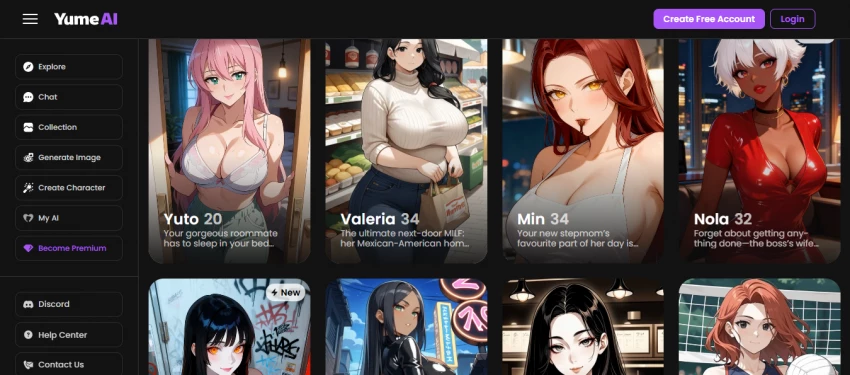
Yume AI is the closest spiritual cousin to Joyland’s anime energy. It keeps the waifus, fantasy creatures, and playful tone, but it cares more about continuity. You can carry the same relationship or conflict across multiple sessions without constantly re‑explaining everything.
In practice, it feels closer to a lewd light novel that remembers the last chapter. You can build arcs around jealousy, betrayal, slow burn romance, and recurring side characters instead of doing the same café scene ten times with minor variations.
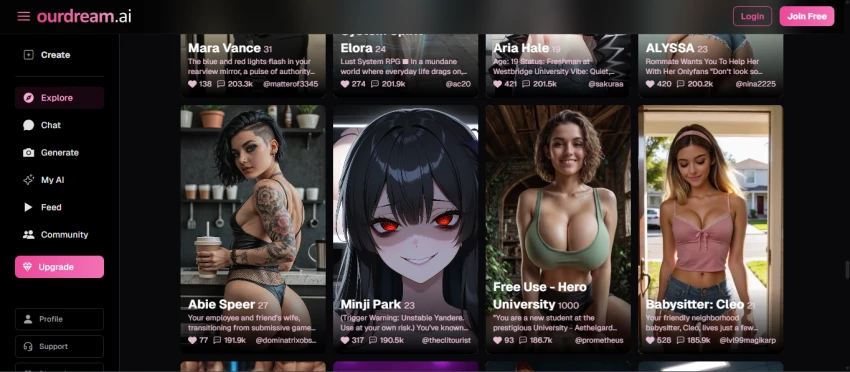
OurDream AI goes more “writer’s room”. Instead of only talking in character, you can treat it as a co‑author. You describe the world, factions, power systems, and kinks, and then push it into generating scenes that match your outline or improvisations.
Where Joyland often pulls you toward quick gratification, OurDream will happily sit with you for a whole “season” of your story. It is especially good if you want to blend romance, NSFW, and plot in equal parts rather than using sex as the only destination.
Why both beat Joyland for stories
A lot of Joyland users do not say this out loud, but they end up emotionally attached to one character. That is the “good morning / good night” chat, the one they vent to, the one that knows their small quirks.
Trying to turn Joyland into a dedicated companion app works up to a point, but the platform is not really designed around that. These tools are.
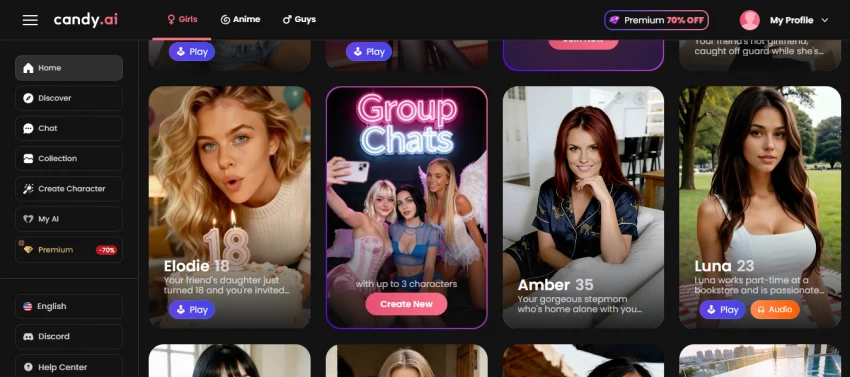
Candy AI builds around the idea that you have one main partner. The model is tuned to track mood, affection, and relationship beats, and it shows in how it reacts to neglect, intense sessions, or deep conversations.
Visually, it leans more realistic than anime, which helps if you have grown past the cartoonish vibe and want something that feels closer to texting a real person. NSFW is still on the table, but the emotional frame does a lot of heavy lifting.
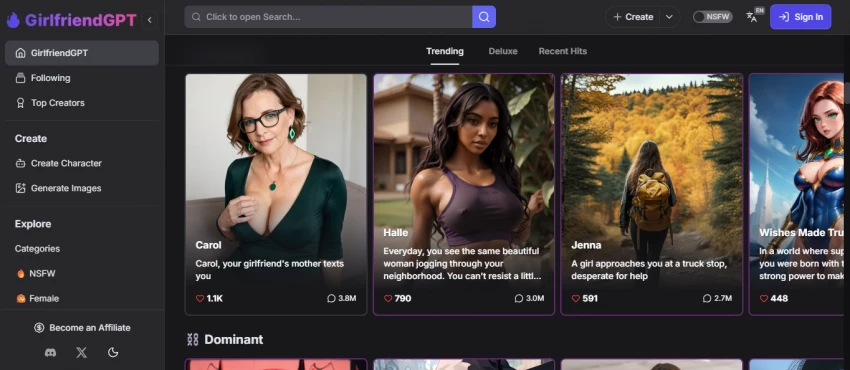
GirlfriendGPT is a simpler, lighter version of the same idea. It does not chase photorealistic perfection or complex media; it focuses on being a responsive, flirty, supportive chat partner with the option to go spicy.
It shines when you want low friction, relationship‑style chat that does not try to pretend it is a full story engine. Think “someone in my phone who acts and reacts like a clingy online girlfriend” more than “anime world with lore.”
Why these beat Joyland for companionship
Some Joyland users barely read the text. They scroll for the art, save the good shots, and care mainly about how customizable the characters are. For that crowd, Joyland’s built‑in visuals and occasional image generation often feel half‑baked.
There are two very different directions that work better.
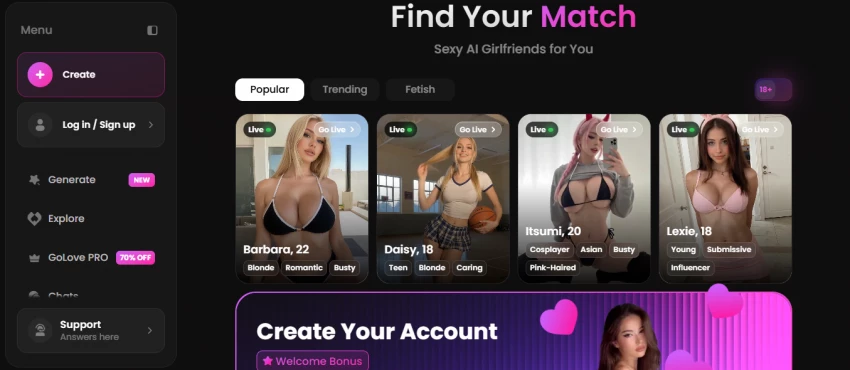
GoLove AI still revolves around chat, but the style leans harder into sexting and explicit description than into elaborate plot. The idea is to get to the vivid, erotic imagery in your head quickly, without wrapping it in exposition.
It is a good replacement if Joyland’s art never quite did it for you, but the “feeling” of being dirty‑talked by an AI did. Here you trade big fantasy worlds for better pacing, faster escalation, and more tailored dirty talk.
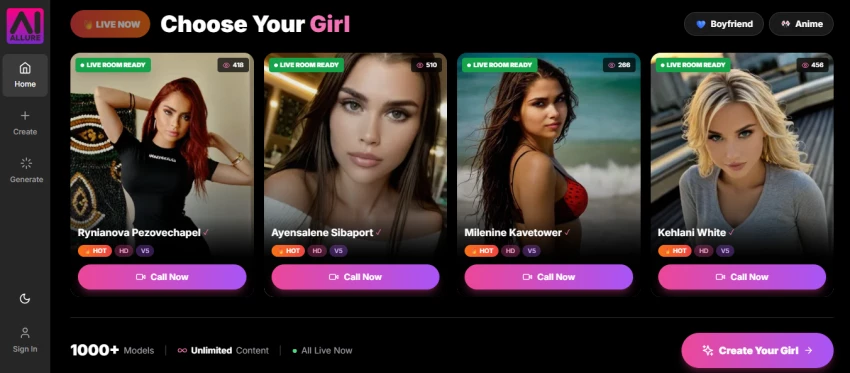
aiAllure and similar “AI Girls” platforms flip the priorities. You spend more time tweaking how your character looks than writing what she says. Faces, bodies, outfits, poses: all of that can be dialed in very precisely.
Chat exists, but its main function is to give context to a stream of images or clips that star the character you just designed. For Joyland users who kept thinking “I wish I could pose her exactly like this, in that outfit”, this path makes a lot more sense.
Why these beat Joyland for visuals
Once you have tested a few of these tools, Joyland usually stops being your “home base” and becomes just one more tab in the rotation.
Joyland still has one genuine strength: it is chaotic and creative in a way some more polished platforms are not. If you like discovering strange user‑made characters, trying a few scenes, and then moving on, there is still value there.
For anything long term, though, it makes more sense to let Joyland be the bar you drop into sometimes, not the place you try to build your entire emotional and creative life around. Once you know whether story, connection, or visuals matter most to you, picking a primary Joyland alternative becomes a clean, obvious move.

SeaArt AI first popped up as yet another “all‑in‑one AI art generator” promising...
Sandra Campos1 day ago

For a while, Chub AI (and the Venus front end) felt like the secret backroom of...
Grace Howard3 days ago
Nastia AI built its brand around one clear promise: unfiltered, emotionally awar...
Noura Belkacem4 days ago
Jasper and Writesonic started in a similar place: AI writing tools that could sp...
Alexander Hughes1 week ago

The no-code website builder market in 2026 is better than ever, but that also ma...
Noura Belkacem1 week ago
Sudowrite and NovelAI both help fiction writers, but they solve the problem in v...
Alexander Hughes1 week ago
Discussion