Pick almost any free business-name generator and you get the same party trick: it grabs your keyword, bolts on a prefix or suffix, and serves up the leftovers as “branding.” Those names rarely survive contact with a real logo. Namelix is the exception people keep returning to. Built by the team behind the logo product Brandmark, it runs on a generative model trained to produce short, genuinely brandable names, the kind that already sound like funded companies, and wraps them in live domain lookups and instant logo mockups. The market has clearly responded: the site pulls in somewhere around 878,000 visits a month.
But that popularity papers over two real gaps. Namelix will happily hand you a name that is already a live trademark, and it nudges you toward a paid logo at almost every step. I ran it through a six-part evaluation to work out exactly where it shines and where it quietly hands the hard part back to you.
| Overall rating | 4.1 / 5 (first-shortlist naming audit) |
| Best for | Startup, SaaS and side-project naming when speed and zero cost matter |
| Weakest at | Trademark safety and audience fit, both still left to you |
| Price | Naming is free with no account; logo kits run $25 to $175 one-time |
| Built by | Brandmark, its sister logo and branding product |
Namelix is a free, AI-powered name generator aimed at founders, marketers, indie makers and small teams who need a batch of short, brandable ideas without slowing down. There is nothing to sign up for and no ceiling on how many searches you can run. The names it favors sit firmly in the modern, clipped, SaaS-flavored style that has become shorthand for “new tech company.”

The key thing to understand about Namelix is its parentage. It is a Brandmark product, and that lineage runs through the entire experience. Namelix generates the name; Brandmark waits on the other side to sell you the logo and the rest of the identity kit. If you are a founder, having a name and a first logo concept in one continuous flow is genuinely convenient. If all you came for is a name, the same design quietly routes you into a larger, paid branding pipeline. Domain availability is pulled in through a registrar partner, so you never leave the results page to see what is free.
There is nothing complicated about the flow, and most of the quality comes from how you use the filters rather than from the very first list it shows you.
1. Type in a handful of keywords describing your business, product or project.
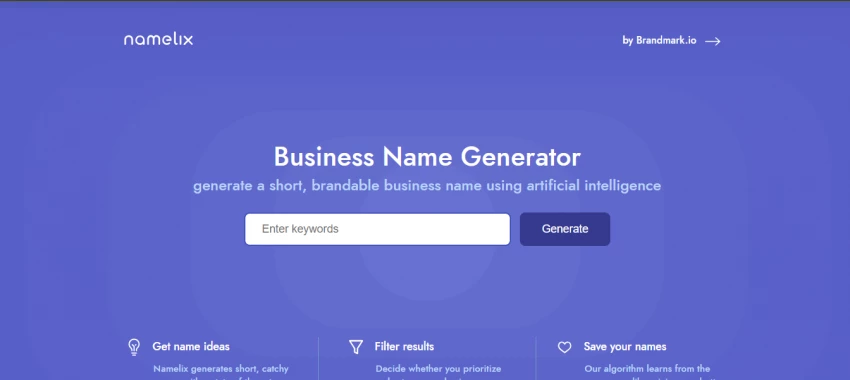
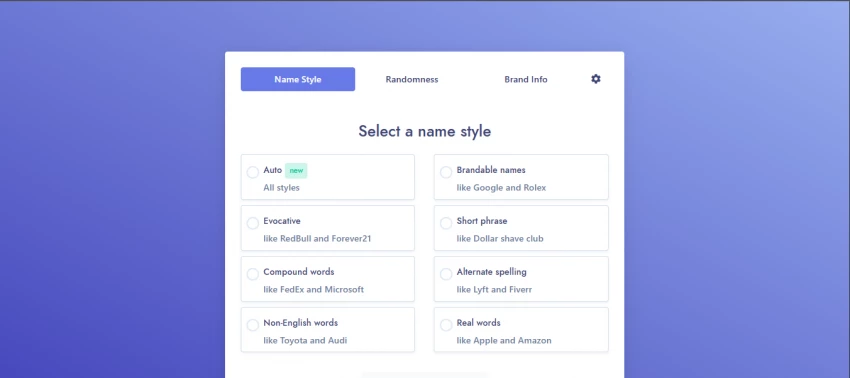
2. Choose a naming style: invented brandable words, compound words, creative misspellings, or plain real words.
3. Dial in the length, anywhere from ultra-short (three to six letters) up to longer multi-word names.
4. Scan the suggestions next to live domain availability and a spread of modern TLDs.
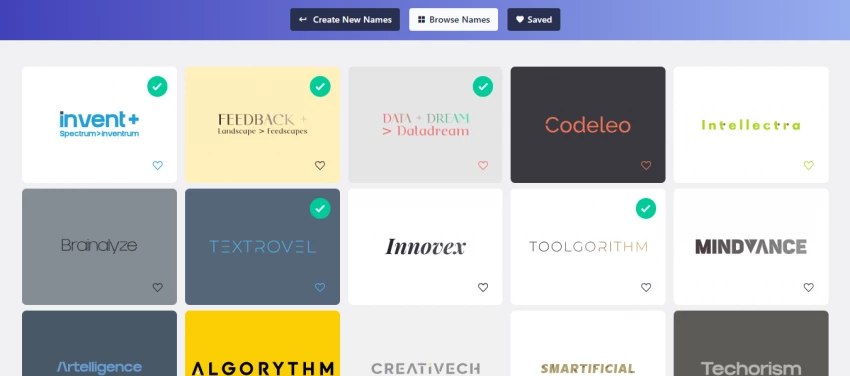
5. Save the names you like. Each favorite teaches the model your taste, and the next batch tightens around it.
6. Optionally hop over to Brandmark to mock up and buy a logo for a shortlisted name.
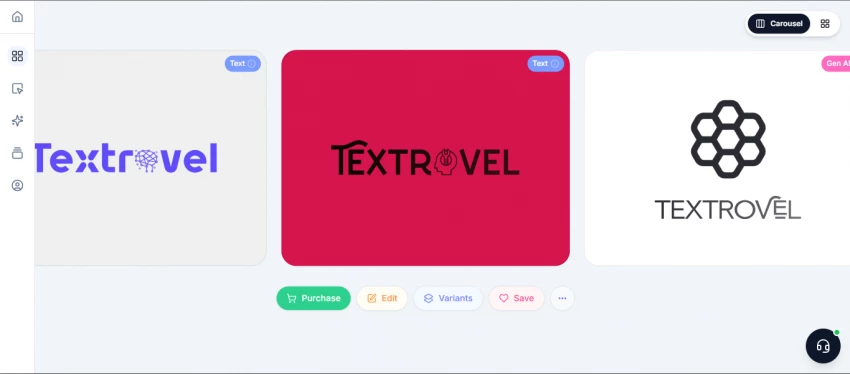
Step five is where Namelix separates itself. That feedback loop genuinely works within a single session, a rare thing in this category, and the feature people mention more than any other.
I assessed Namelix with a first-shortlist naming audit, a rubric built for AI naming tools specifically, not generic software, because the honest job of these tools is narrow: get you from a blank page to a shortlist you can actually use. Each of six lenses is scored from 1 to 5, and the headline figure is a weighted average that leans on output quality and honesty. Scoring drew on repeated sessions across three briefs (a tech startup, a local service business and a digital product), plus published hands-on reviews and founder feedback gathered around the web.
• Output brandability: are the names short, sayable and launch-ready, or just filler?
• Relevance control: do the style and length filters really steer what you get?
• Domain intelligence: are the availability checks accurate, and the TLD picks sensible?
• Adaptive learning: does saving favorites measurably sharpen the next round?
• Speed and access: what is the real cost, friction and usage limit?
• Honesty and limits: how upfront is it about trademarks, upsells and ads?
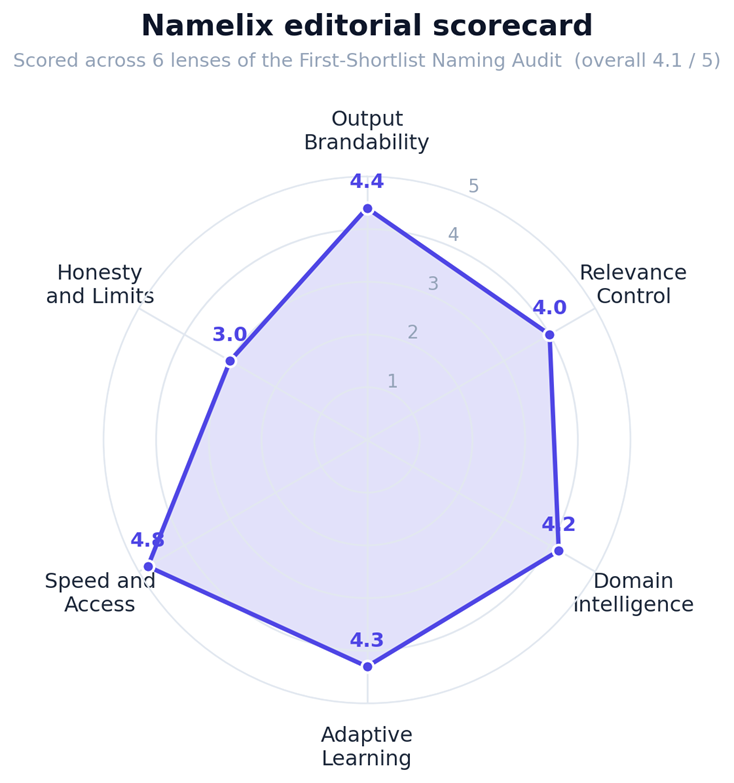
Namelix scores high on speed and output, with a single soft spot on honesty and limits.
| Lens | Score | What testing showed |
| Output brandability | 4.4 | Short, modern names that read like real companies, the strongest output in its class. |
| Relevance control | 4.0 | Style and length filters steer results well; broad keywords still drift toward the generic. |
| Domain intelligence | 4.2 | Real-time availability with sensible modern TLDs; no pricing shown for the domains it suggests. |
| Adaptive learning | 4.3 | Saving favorites visibly sharpens later suggestions, the standout feature. |
| Speed and access | 4.8 | Free, no account, no caps, instant, best in category on pure friction. |
| Honesty and limits | 3.0 | No trademark check and a steady nudge toward paid logos, the clearest area to improve. |
| Overall | 4.1 | A fast, free first-pass naming tool. Build a shortlist with it, then verify before committing. |
The biggest thing in its favor is the near-total absence of friction. No login, no usage cap, no wait. Names land the instant you ask. For someone stress-testing ideas at one in the morning, that beats any feature checklist. And the output holds up: the short invented names sit closer to real startup branding than just about any free rival, and they pair naturally with the .io, .ai and .app endings modern projects gravitate toward.
The adaptive learning is not window dressing either. A few saved favorites in, and the suggestions visibly bend toward your taste, the difference between a random list and a workable one. Built-in domain checks kill the usual copy-paste-into-a-registrar dance, and the instant logo preview lets you judge a name as a brand instead of as plain text on a screen.
| What works | What to watch |
Free and frictionless: no login, no caps, instant results. Genuinely brandable: short, modern names that sound like real startups. Learning that works: saving favorites visibly improves later results. Domain aware: real-time checks plus modern TLDs like .io, .ai and .app. Instant logo preview: see a name as a brand before you commit. | No trademark check: it can return names already registered as marks. Repetition on vague input: broad keywords yield generic, abstract names. English-leaning: limited multilingual or culturally specific naming. Funnels to Brandmark: logos are a paid add-on and ads appear in the flow. No audience fit: it won't tell you whether a name suits your market. |
The limitation that matters most is the one the interface never says out loud: Namelix does not check trademarks. Confirming a domain is open is not the same as confirming a name is legally clear, and brand strategists have pointed out that it can surface names already locked down as registered marks. Building on one of those is an expensive thing to undo, so every finalist still needs a proper trademark search before a cent is spent.
Quality also sags when the input is thin. Vague, generic keywords beget vague, generic names, and the cure is sharper keywords, not more clicks. The model is distinctly English-first and offers little for multilingual or culturally specific naming. And it bears repeating that the free tool is a funnel: logos are a paid Brandmark add-on, ads appear in the flow, and nothing in the tool tells you whether a name actually lands with the audience you are chasing.
| Trademark warning. A free domain does not mean a name is legally safe. Run every shortlisted name through a trademark search, and ideally a quick check with a professional, before printing anything or buying a domain. |
The mood across hands-on reviews and founder forums is remarkably consistent. People praise the speed and the brandable output, and the ones who keep coming back point to the adaptive learning as the reason. The criticism is just as steady: results get samey on vague prompts, and the trademark blind spot rattles anyone who has been stung before. The recurring verdict treats Namelix as an excellent place to start rather than the final naming authority.
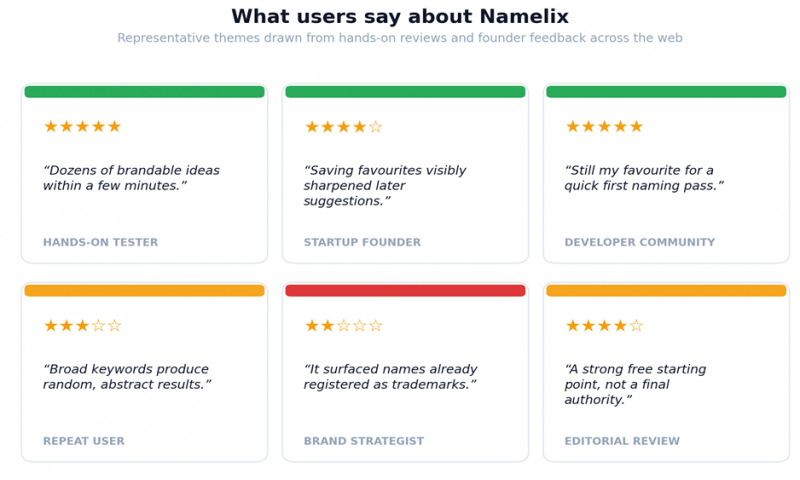
Representative themes from hands-on reviews and founder feedback. Sentiment, not verbatim individual reviews.
Namelix's pricing is refreshingly founder-friendly precisely because it keeps the two halves apart: naming is free, branding assets are optional and paid. Generating names, filtering them and saving favorites costs nothing and requires no account.

Naming is free. The paid tiers buy a logo and brand kit through Brandmark.
Money only enters when you want a logo. Brandmark sells one-time logo kits at roughly $25 for a basic bundle, around $65 for a designer kit with source files and brand assets, and about $175 for the fullest enterprise package. Domain registration is separate and priced by the registrar, so a tidy .com can still cost real money even when the name itself was free. For what it delivers, Namelix is among the most cost-efficient tools in its category.
Namelix is not the only strong option, and the best pick depends on the job in front of you. Here is how it stacks up against three common alternatives on the points that actually swing a decision.
| Tool | Free naming | Trademark check | Domain check | Logos / brand | Best for |
| Namelix | Yes | No | Yes, real-time | Paid (Brandmark) | Short SaaS and tech names |
| Looka | Yes | No | Yes | Paid kits, $20 to $500 | Name plus full brand identity |
| Namify | Yes | Yes | Yes | Free logo ideas | Trademark-aware founders |
| Shopify generator | Yes | No | Yes | None | Descriptive and local names |
The short version: reach for Namelix when you want fast, free, modern naming. Pick Looka when you need a name and a finished brand identity in one place and have the budget for it. Pick Namify when built-in trademark and social checks matter more to you than raw name style. And pick a descriptive generator like Shopify's when you want a clear, literal name for a local, retail or service business rather than an invented one.
• You need short, brandable names for a startup, SaaS product or side project, fast.
• You have no budget and just want a strong free first-pass shortlist.
• You are fine with modern domains like .io, .ai or .app when the .com is gone.
• You are an agency or freelancer hunting quick inspiration for client work.
• You need trademark clearance built into the tool rather than done on the side.
• The name has to work across languages or carry a specific cultural meaning.
• You want a descriptive, local-business name instead of an invented one.
• You need a polished, finished brand identity in a single click.
4.1 / 5. I came to Namelix with a finished habit-tracking app and no name for it, after days of crossing options off a list and getting nowhere. The first thing I noticed was that it asked nothing of me upfront. No account, no card, just a couple of keywords describing the idea, and it started generating. I spent most of my time in the settings, which is where it got interesting for me. I steered the style toward invented brandable words and played with the randomness slider, turning it low for safe names that sat close to my keywords and high for stranger, more abstract inventions. What kept me scrolling was that every name showed up inside a small logo mockup, and seeing a plain word sitting in a finished-looking logo genuinely changed how I judged it. I had to keep catching myself though, because I was reacting to the typography as much as the name itself, and after a few rounds of refreshing, a lot of the results started blurring into the same generic, startup-sounding soup. I learned fast to save anything I liked the second I saw it, since the good ones scrolled past quickly. The part that deflated me was the domains. Almost every short name I fell for had its .com already taken, and I kept hitting that wall. I also clocked pretty quickly that the free generator is really a front door to Brandmark, the paid logo tool behind it, since clicking into a name I liked nudged me toward buying the logo. None of that stopped it from doing the thing I actually needed. I never lifted a name straight off the screen, but it gave me enough raw material and a few directions I had not thought of, and the name I ended up using was a tweaked version of one of its suggestions rather than the suggestion itself. I went in stuck and walked away with a name I was happy with. |
New Claude Model Targets Agentic AI WorkflowsAnthropic has launched Claude Sonne...
Samuel Osei1 month ago
The Quick verdictInSnoop is a free, browser-based tool that promises to let you...
Alexander Hughes1 month ago
Gemini’s Image Tools Get a Wider RolloutGoogle is expanding access to Gemini’s p...
Alexander Hughes1 month ago
Two AI video generators, two very different first days. I ran PixVerse through i...
Alexander Hughes1 month ago
Two of the most talked-about AI chat platforms. I opened both, picked a characte...
Alexander Hughes1 month ago
The two-minute versionIf you only read one thing, read this. The rest of the doc...
Alexander Hughes1 month ago
Discussion