Google Search is changing faster than it has in decades. At I/O 2026, Google confirmed a major shift toward AI-driven search experiences, conversational responses, and Gemini-powered agents that increasingly replace the traditional “ten blue links” web experience.
For some users, that sounds exciting. For others, it feels like the internet’s default search engine is slowly turning into a chatbot.
That tension is driving renewed interest in alternative search engines. Some focus on privacy, some on human-curated discovery, and others lean heavily into AI-native search experiences.
The important shift is that people are no longer searching for “a Google competitor.” They are searching for different philosophies of how search should work.
Google’s AI Overviews and AI Mode increasingly summarize answers directly instead of sending users to websites. The company also introduced “information agents” that can proactively monitor and retrieve information on behalf of users.
Critics argue this changes the nature of search itself.
Instead of exploring the web manually, users are increasingly consuming AI-generated interpretations of the web. Researchers have also raised concerns around accuracy, source attribution, and publisher traffic loss tied to AI-generated search summarie
That environment is creating space for alternative search products with different priorities.
DuckDuckGo remains one of the most recognizable alternatives for users who prioritize privacy over personalization.
The platform avoids extensive user tracking and minimizes behavioral profiling compared to Google. Over the years, it evolved from a niche privacy tool into a mainstream option for users uncomfortable with targeted advertising and large-scale data collection.
DuckDuckGo has also cautiously integrated AI features, but its core appeal remains relatively straightforward: simpler search without deep surveillance infrastructure.
For users overwhelmed by AI-heavy search interfaces, that simplicity is becoming attractive again.
Perplexity represents the opposite direction entirely.
Instead of resisting AI search, the company fully embraces conversational retrieval. Queries behave more like research sessions than traditional keyword searches, with cited summaries, follow-up questions, and contextual interaction.
The platform has grown rapidly because many users increasingly prefer synthesized answers over link-hunting workflows.
But Perplexity also reflects the broader industry shift away from classic search behavior. It feels less like Google and more like an AI research assistant.
That makes it popular among students, researchers, and power users, though critics argue it further reduces direct traffic to publishers.
Brave Search has quietly become one of the strongest independent search alternatives.
Unlike many smaller search engines that rely heavily on Google or Bing indexing, Brave built its own independent search index. That matters because true independence in search infrastructure is extremely difficult and expensive.
Brave’s broader ecosystem also appeals to users already invested in privacy-focused browsing through the Brave browser itself.
The company positions its search engine as less manipulated, less ad-heavy, and less dependent on large AI-generated answer layers.
For users nostalgic for more traditional search behavior, Brave often feels closer to old Google than modern Google does.
Kagi is one of the most unusual search engines gaining traction right now because it operates on a paid subscription model instead of advertising.
That changes incentives dramatically.
Rather than maximizing engagement and ad impressions, Kagi markets itself around cleaner results, better filtering, fewer SEO-spam pages, and stronger user control.
The service appeals especially to developers, researchers, writers, and users frustrated with low-quality content farms dominating modern search results.
Kagi also reflects a broader realization spreading across tech: some users are increasingly willing to pay directly for better internet experiences rather than subsidizing them through data and ads.
Ecosia approaches search from a very different angle.
The company uses search advertising revenue to fund tree-planting and environmental projects. While its core search infrastructure relies partly on larger providers, its identity is built around sustainability rather than raw search innovation.
For users who see search as a commodity utility, Ecosia offers a way to align everyday browsing behavior with environmental goals.
Its continued survival also shows that not every alternative search engine succeeds by competing technically against Google. Some compete through values and identity instead.
Marginalia Search has become increasingly popular among internet users frustrated with algorithmically optimized mainstream web results.
The engine focuses heavily on smaller, independent websites and personal blogs rather than heavily SEO-optimized corporate content. (Wikipedia)
In many ways, it feels like a search engine designed for people nostalgic for the older web.
Users searching through Marginalia often discover hobby sites, niche forums, independent writing, and obscure resources that modern search algorithms frequently bury beneath commercial content.
Its rise reflects a growing cultural backlash against homogenized internet discovery.
What makes this moment interesting is that “search” no longer means one thing.
Different platforms now optimize for entirely different priorities:
| Search Engine | Core Identity |
|---|---|
| AI-powered ecosystem search | |
| DuckDuckGo | Privacy and simplicity |
| Perplexity | Conversational AI retrieval |
| Brave Search | Independent indexing and privacy |
| Kagi | Premium ad-free search |
| Ecosia | Sustainability-focused search |
| Marginalia | Discovery of the indie web |
That fragmentation would have seemed unlikely a decade ago when Google’s dominance felt untouchable.
The rise of alternative search engines is really a reaction to a broader transformation happening online.
Traditional search engines helped users navigate the web manually. Modern AI search increasingly attempts to interpret, summarize, and mediate the web instead.
That may ultimately prove more convenient for many people. But it also changes the relationship between users, websites, publishers, and information itself.
For some users, Google’s AI-heavy future feels exciting.
For others, it feels like the web is slowly disappearing behind AI-generated layers.
That tension is exactly why alternative search engines are suddenly becoming relevant again.

New Claude Model Targets Agentic AI WorkflowsAnthropic has launched Claude Sonne...
Samuel Osei3 months ago

Gemini’s Image Tools Get a Wider RolloutGoogle is expanding access to Gemini’s p...
Alexander Hughes3 months ago

Two AI video generators, two very different first days. I ran PixVerse through i...
Alexander Hughes3 months ago

Two of the most talked-about AI chat platforms. I opened both, picked a characte...
Alexander Hughes3 months ago

The two-minute versionIf you only read one thing, read this. The rest of the doc...
Alexander Hughes3 months ago
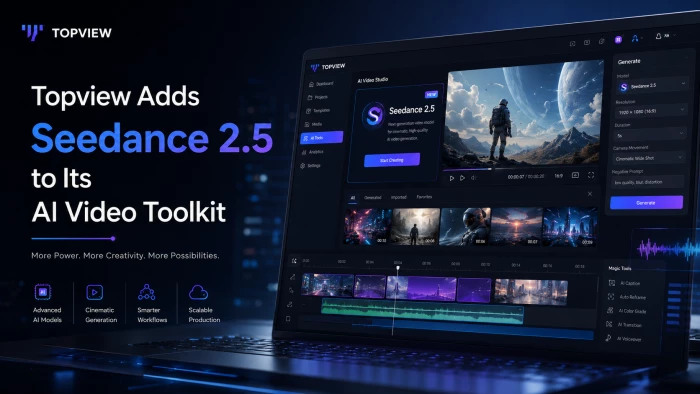
Why Seedance 2.5 mattersSeedance 2.5 is the latest release in ByteDance’s Seedan...
Alexander Hughes3 months ago
Discussion