
Paxton AI earned its following by doing something most legal AI vendors refused to do: publishing a price and letting solo attorneys and small firms sign up without a sales call. The platform pairs natural-language research across federal and state case law with drafting assistance, document analysis, and a Microsoft Word plug-in, positioned squarely at lawyers who found enterprise platforms unaffordable or overbuilt.
That same accessibility creates the reasons firms shop around. Paxton leans toward contract-centric and document-heavy practices, its case-law corpus covers appellate level and above rather than the deepest trial-court record, and it does not integrate with mainstream practice management software. Litigators who need KeyCite-grade citation verification, transactional teams who want native redlining inside Word, and multinational practices needing cross-border coverage all eventually test the field.
The market has also shifted underneath every buyer. Through late 2025 and into 2026, legal AI moved from chat-style question answering toward agentic systems that run multi-step research and review workflows, while the price gap between the cheapest and most expensive options widened to roughly one hundred times. Picking the right alternative now depends less on a feature checklist and more on matching a tool to the actual shape of the work.
How This Guide Approaches the Comparison Pricing reflects publicly listed rates or verified third-party reporting as of May 2026. Several vendors disclose pricing only through a demo, and those are marked accordingly rather than estimated. Accuracy references draw on the Stanford legal AI benchmark published in late 2025, which scored research tools on case retrieval, statutory interpretation, regulatory analysis, multi-jurisdictional research, and brief drafting. Each alternative includes an honest account of where it falls short, because no single platform leads on research depth, drafting, workflow, and price at once. |
Legal AI listicles tend to collapse very different products into one ranking. A research database with an AI layer, a Word-native drafting assistant, and an enterprise reasoning platform solve different problems, and comparing them on a single axis misleads buyers. The criteria below keep the comparison grounded.
• Citation reliability. Whether answers trace to primary sources and whether the platform verifies that cited authority is still good law.
• Research corpus depth. Coverage across federal, state, trial, and international sources, and how current the record stays.
• Drafting and review surface. Native document editing, contract redlining, and where that work happens, inside Word, a browser, or a dedicated vault.
• Workflow model. Single-answer chat versus agentic workflows that chain multiple steps with review tables and custom playbooks.
• Total cost of ownership. Seat minimums, ecosystem dependencies, and add-on database fees that the headline price hides.
• Practice fit. Whether a platform was built for solos, mid-market firms, in-house teams, or large litigation and corporate shops.
The following table summarizes the seven platforms covered in this guide alongside Paxton AI itself. Pricing figures are per user per month unless noted; several enterprise tools quote only through sales and are listed as custom.
| Platform | Indicative Price | Workflow Style | Best Fit | Standout Trait |
|---|---|---|---|---|
| Paxton AI | Approx. $159 to $499 | Chat-based | Solo / small firm | Transparent self-serve pricing |
| Thomson Reuters CoCounsel | Approx. $225 to $428 | Guided workflows | Mid-size / litigation | Westlaw-grounded answers |
| Lexis+ AI (Protégé) | Custom quote | Chat + agents | Mid to large firms | Shepard's validation |
| vLex Vincent AI | Approx. $79 | Agentic (20+ flows) | Cross-border practices | International coverage and price |
| Harvey AI | Custom (~$1,000+) | Agentic at scale | BigLaw / large in-house | Bulk diligence in Vault |
| Spellbook | Custom quote | Word-native | Transactional lawyers | Inline contract redlining |
| Westlaw Precision AI | Custom quote | Chat-based | Litigation-heavy firms | KeyCite citation safety |
| GC AI | Approx. $500 | Agentic | In-house counsel | Playbooks + exact-quote citing |
Figures reflect listed or reported rates current as of May 2026 and shift frequently. Confirm current terms directly with each vendor before purchase.
The single most important fact for any buyer is how far apart these tools sit on cost. The chart below plots indicative entry pricing per seat per month. Where vendors publish only custom quotes, the bar reflects the lower end of reported market figures and is labeled as approximate.
| vLex Vincent AI | ~$79 |
| Paxton AI (Pro) | ~$159 |
| CoCounsel (Core) | ~$225 |
| Paxton AI (Premium) | ~$499 |
| GC AI | ~$500 |
| Harvey AI | $1,000+ |
The Hidden-Cost Warning Most Lists Skip CoCounsel Core does not include case-law search on its own; deep research requires a Westlaw subscription layered underneath. Harvey has been reported to require a multi-seat minimum, which pushes a small firm into paying for seats it will never staff. Spellbook depends on Microsoft Word, and Lexis+ AI delivers full value only inside the LexisNexis ecosystem. Budget the whole stack, not the AI line item alone. |
Each platform below is reviewed on what it does well, who it suits, and where it falls short. The order moves roughly from the most accessible to the most enterprise-oriented.
CoCounsel is one of the most established AI research and drafting platforms, built on large language model technology and tied to the Westlaw database. It runs complex research, reviews and summarizes case files, and drafts first responses with citation quality that separates it from general-purpose chatbots. Thomson Reuters now sells it through package-based plans such as CoCounsel Legal, Westlaw Advantage with CoCounsel Essentials, and CoCounsel Essentials, with a core tier reported in the $225 to $428 monthly range.
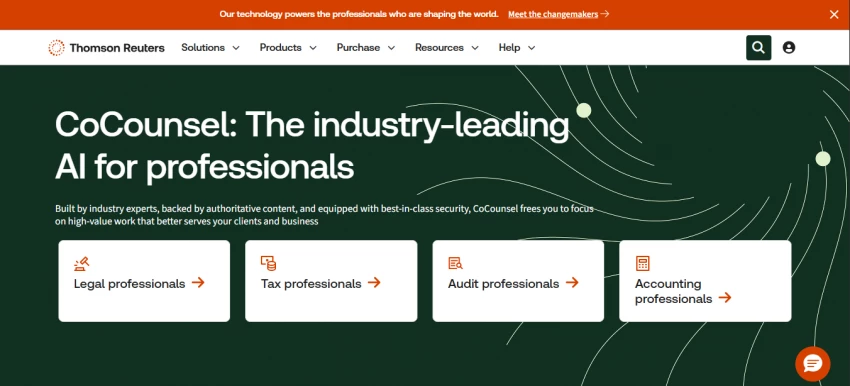
The platform's guided workflows move it beyond single-answer chat, letting users run repeatable multi-step tasks. For firms already paying for Westlaw, adding the AI layer is often the cleanest value because the research grounding is already in place.
• Mid-size and litigation-focused firms that need answers grounded in trusted case-law content.
• Teams already invested in the Westlaw ecosystem who want an assistant on the same platform.
The value proposition weakens sharply for firms without existing Westlaw access, because the case-law search that makes the research defensible sits behind that separate subscription. Package-based pricing also makes clean comparison difficult; a live quote is effectively mandatory before weighing it against standalone tools.
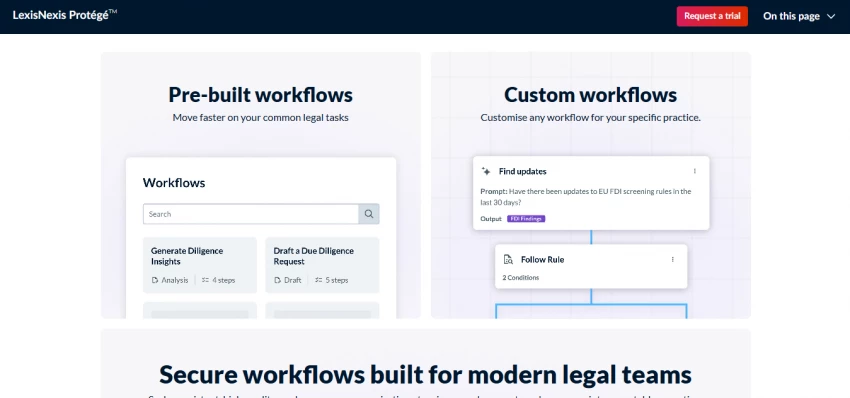
Lexis+ AI anchors generative answers to the LexisNexis corpus, supporting natural-language queries across case law, legislation, and secondary sources alongside AI-assisted drafting and document analysis. Its signature advantage is real-time Shepard's validation, which checks whether cited authority remains good law, a capability that matters most when the work ends in a filing. In the Stanford benchmark published in late 2025, Lexis+ AI posted the highest overall accuracy among the research tools tested at roughly 65 percent.
• Mid to large firms that value citation credibility and the depth of LexisNexis secondary sources.
• Practices where defensible source trails outweigh raw drafting speed.
Pricing is quote-only and positioned as a premium product, with full value realized only inside the LexisNexis ecosystem. Like CoCounsel, it represents AI bolted onto a platform whose architecture predates the generative era, which can show in the experience. Solo practitioners on tight budgets rarely find it the natural starting point.
Now part of Clio following the 2025 acquisition, vLex pairs one of the largest legal libraries in the world with Vincent, an AI assistant built natively rather than retrofitted. The platform covers more than 100 countries and, through the earlier Fastcase merger, carries solid United States coverage on top of its international strength. Vincent markets more than twenty prebuilt agentic workflows, and the platform undercuts the incumbents on price, with reported rates around $79 per user per month.
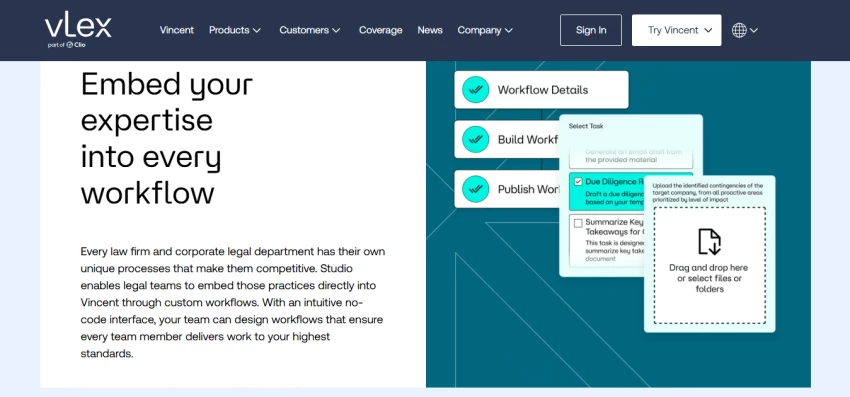
On the Stanford benchmark Vincent scored about 58 percent overall and was the strongest tool tested on international and comparative law, giving it arguably the best accuracy-to-cost ratio in the field.
• Cross-border, immigration, and international arbitration practices that need multi-jurisdictional reach.
• Cost-conscious firms that want native AI research without Westlaw or Lexis lock-in.
For United States primary practice, case-law depth and recency still trail Westlaw, and the Key Number style of topical precision is not fully matched. Litigators who depend on the deepest domestic record may find the corpus thinner than the incumbents for specialized work.
Harvey is the platform large-firm partners name when asked which legal AI their firm approved. It launched with AmLaw firms and has grown into a reasoning layer that integrates with a firm's own knowledge base, organized around Assistant for research and drafting, Vault for bulk document analysis and diligence, Knowledge for firm-specific access, and Workflow Agents for multi-step automation. Following an $11 billion valuation in March 2026 and rapid revenue growth, Harvey leads the category on visibility.
Its strength shows when work is high-stakes, high-volume, and spread across multiple review steps, which is why it reads as core infrastructure rather than a side assistant for the firms that adopt it.
• BigLaw and large in-house functions where bulk diligence is a primary, recurring use case.
• Organizations evaluating AI across a large user base with the budget for enterprise deployment.
Pricing is not published and sits well above the rest of the field, with reported figures of $1,000 or more per seat per month and a seat minimum that has been reported at around twenty users. That structure puts it out of reach for most solo, small-firm, and lean in-house teams. It is also not a traditional research database; its research edge comes from a firm's own work product rather than a curated public corpus.
Spellbook is the clearest specialist pick for transactional lawyers who live inside Microsoft Word. Rather than sending users to a separate research portal, it brings AI contract drafting and inline redlining directly into the document where the work already happens, and its Associate feature extends into agentic, multi-step tasks. For deal-focused practices, that native-Word surface removes the friction of switching tools mid-draft.
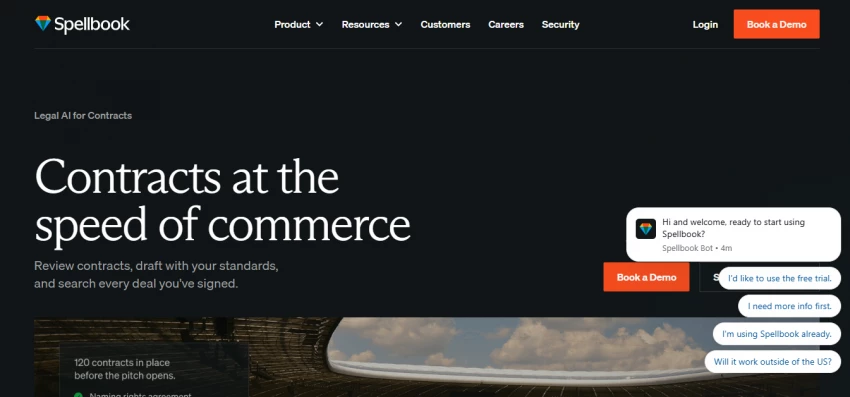
• Transactional and corporate lawyers whose day centers on drafting and reviewing contracts.
• Teams that want AI assistance without leaving the Word environment.
Spellbook depends on Microsoft Word, so it is a poor fit for litigation research or for teams standardized on other editors. Pricing is quote-based, and it is not built for deep case-law retrieval, meaning research-heavy practices will still need a separate platform alongside it.
Westlaw Precision AI layers generative research, Deep Research, and litigation analytics onto the Westlaw database. Its defining advantage is citation safety: KeyCite verification reduces the risk of relying on bad authority, which is exactly what litigators preparing briefs need most. Deep Research can produce genuinely useful first drafts, and the integration means no workflow disruption for firms already on Westlaw.
• Litigation-heavy firms that need guaranteed citation accuracy before filing.
• Practices already standardized on Westlaw that want AI on the same platform.
Pricing is opaque and high, and the AI features are locked to the Westlaw ecosystem with no ability to export them elsewhere. Deep Research queries can run slowly during peak hours. For straightforward transactional drafting at a one-to-five-attorney firm, alternatives such as vLex deliver comparable research at a fraction of the cost; Westlaw's premium is justified by citation reliability rather than writing ability.
GC AI is a purpose-built in-house platform rather than a law-firm product retrofitted for corporate teams. It runs multi-agent research across authoritative sources and primary law, uses Playbooks for repeatable agentic review against a team's own standards, and offers Exact Quote for character-level citation. Unusually for the enterprise tier, it publishes per-seat pricing at around $500 per user per month with no seat minimum and a free trial that requires no credit card.
• In-house legal teams, especially those under twenty lawyers, who want published pricing and a self-serve trial.
• Corporate workloads spanning regulatory monitoring, contract review, and daily legal chat.
GC AI is not built for deep litigation case-law research; teams whose core work is brief-heavy litigation will still lean on Westlaw or Lexis for the corpus. At $500 per seat it also costs meaningfully more than budget research tools, so very small or occasional users may find it heavier than they need.
Marketing claims aside, the Stanford legal AI benchmark published in late 2025 gave the market its first independent accuracy yardstick, testing tools across case retrieval, statutory interpretation, regulatory analysis, multi-jurisdictional research, and brief drafting. The overall accuracy scores below are useful context, with the caveat that any benchmark is a snapshot and accuracy continues to improve across vendors.
| Lexis+ AI | 65% |
| vLex Vincent AI | 58% |
| Harvey | 53% |
Chart placeholder note: figures reflect the late-2025 Stanford benchmark as reported by third-party reviewers. Scores measure tested accuracy, not overall product value, and not every alternative was included in the same test set.
Two patterns matter for buyers. First, the database-grounded incumbents lead on raw accuracy, reinforcing why litigation work that ends in a filing still gravitates toward Lexis or Westlaw. Second, Vincent's score is striking given its price, which is why it keeps surfacing as the value pick for firms that do not strictly require the deepest domestic corpus.
The cleanest way to choose is to start from the shape of the work rather than the feature list. The matrix below maps common practice profiles to the alternative that tends to fit best, with a runner-up where the decision is genuinely close.
| Practice Profile | Primary Recommendation | Strong Runner-Up |
|---|---|---|
| Solo or small firm wanting published pricing | Paxton AI | vLex Vincent AI |
| Cross-border or international research | vLex Vincent AI | Lexis+ AI |
| Litigation needing citation safety | Westlaw Precision AI | Lexis+ AI |
| Transactional contract drafting | Spellbook | CoCounsel |
| In-house corporate team | GC AI | vLex Vincent AI |
| BigLaw bulk diligence at scale | Harvey AI | CoCounsel |
| Already paying for Westlaw | CoCounsel | Westlaw Precision AI |
Choosing a replacement is only half the decision. Moving off Paxton AI, or onto any new platform, carries operational cost that rarely appears in a feature comparison.
1. Audit the real workload. Track how time actually splits between research, drafting, contract review, and case management for a month before buying. The dominant task should drive the choice.
2. Price the full stack. Add database subscriptions, seat minimums, and onboarding to the headline figure. A $225 tool that requires a separate research subscription can cost more than a $500 all-in platform.
3. Test citation behavior. Run the same live matter through a trial and verify every citation by hand. Citation reliability, not prose fluency, is where legal AI tools diverge most.
4. Check integration reality. Confirm whether the tool connects to existing practice management and document systems, since gaps here quietly create duplicate work.
5. Confirm data handling. Verify how client data is stored and whether the vendor's terms preserve confidentiality before any sensitive material is uploaded.
No single alternative beats Paxton AI on every front, which is the honest answer behind every ranked list. Paxton remains a sensible default for solo and small-firm practitioners who value transparent, self-serve pricing and a workable blend of research and drafting. The reason to look elsewhere is almost always a specific gap.
For the deepest, most defensible case-law research, Lexis+ AI and Westlaw Precision AI lead, with Westlaw's KeyCite verification the safer choice for litigators heading toward a filing. For cross-border work and the strongest value for money, vLex Vincent AI is hard to beat. Transactional teams who draft in Word will be most productive in Spellbook. In-house departments that want enterprise capability with published pricing fit GC AI. And large firms running high-volume diligence as core infrastructure are the natural home for Harvey, budget permitting.
One-Line Recommendations Tightest budget with broad coverage: vLex Vincent AI. Litigation and citation safety: Westlaw Precision AI or Lexis+ AI. Contract drafting inside Word: Spellbook. In-house with self-serve pricing: GC AI. Enterprise diligence at scale: Harvey AI. Westlaw shop wanting an assistant: CoCounsel. |

New Claude Model Targets Agentic AI WorkflowsAnthropic has launched Claude Sonne...
Samuel Osei3 months ago

Gemini’s Image Tools Get a Wider RolloutGoogle is expanding access to Gemini’s p...
Alexander Hughes3 months ago
Two AI video generators, two very different first days. I ran PixVerse through i...
Alexander Hughes3 months ago
Two of the most talked-about AI chat platforms. I opened both, picked a characte...
Alexander Hughes3 months ago
The two-minute versionIf you only read one thing, read this. The rest of the doc...
Alexander Hughes3 months ago
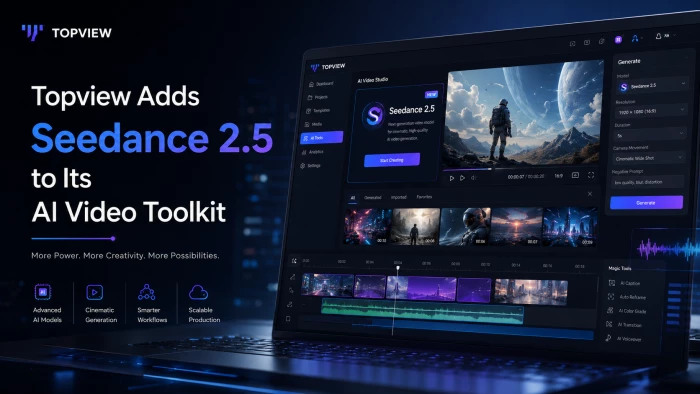
Why Seedance 2.5 mattersSeedance 2.5 is the latest release in ByteDance’s Seedan...
Alexander Hughes3 months ago
Discussion