AI & ML
13 min read
Deevid AI vs Kling AI: Which AI Video Generator Is More Practical?
AI video generation has split into two camps as of 2026. On one side sit the model leaders building deeper, more cinematic proprietary engines. On the other sit the aggregators bundling multiple models behind a single subscription. Deevid AI and Kling AI are the cleanest examples of each approach, which makes the comparison genuinely useful: not which one wins in the abstract, but which philosophy fits a specific creator workflow.
This breakdown looks at what each platform actually does, how the differences play out across real use cases, where the pricing math falls, and which kinds of projects each one handles well. The aim is practical guidance, not benchmark theatre.
The two products solve different problems even though both output AI-generated video.
Kling AI, developed by Kuaishou Technology and launched in mid-2024, is a proprietary model family. Per Kling’s published documentation, the platform has reached over 60 million users and generated more than 600 million videos. Its latest model, Kling 3.0, holds the top ELO benchmark score (1243) among AI video models as of April 2026 according to public leaderboard data referenced by Magic Hour and Max Productive’s review. The proposition is depth: best-in-class proprietary technology aimed at serious video work.
Deevid AI, launched in late 2024 and based in Las Vegas, took the opposite design choice. Rather than build a proprietary model, the platform aggregates several leading commercial engines (Veo 3.1, Sora 2, Kling AI, Runway, Seedance, PixVerse, Google’s Nano Banana, Hailuo, and others) under one subscription and one workflow. Per Deevid’s documentation and Appcritica’s 2026 review, the aggregator design is the central selling point. The proposition is breadth: try every leading model from one dashboard, with one billing relationship.
The practical question is which proposition matches the work. The rest of this comparison digs into where each platform lives up to its pitch and where the trade-offs bite.
For creators who already know which underlying model they prefer and need consistent, repeatable output at the highest available quality, Kling AI is the cleaner choice. The proprietary focus shows in motion, physics, and frame-to-frame coherence.
For creators experimenting across styles, comparing model output, or producing high-volume short-form social content where iteration speed matters more than peak realism, Deevid AI’s aggregator approach earns its subscription.
Both come with real caveats. Both work. The mismatch usually comes from picking one for the work the other was built for.
A useful starting point for any DeeVid AI Review is how the platform defines itself: Deevid AI describes itself as a “next-generation AI video agent” optimized for short-form content production, per its iOS App Store listing. The defining design choice is the aggregator positioning: instead of running parallel subscriptions to Runway, Kling, and Pika, a single Deevid subscription routes prompts to whichever underlying model fits the task.
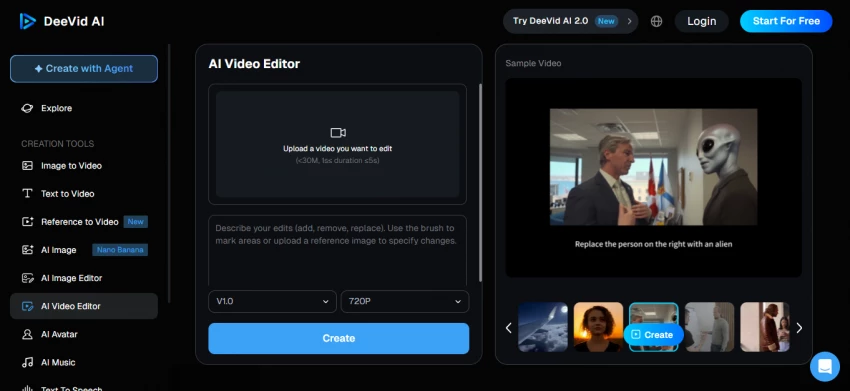
Per Deevid’s product pages and DigitalizeLife’s review, the platform offers three execution modes on top of model selection:
• Fast V2.0 for rapid iteration when concept testing matters more than fidelity.
• Quality V2.0 for higher-resolution output up to 1080p.
• Master V2.0 which adds audio generation and lip-sync into a single pass.
Deevid supports text-to-video, image-to-video, and video-to-video transformations, per its documentation. Resolution caps at 1080p on Pro and Premium tiers. Generation time, per GoEnhance AI and DigitalizeLife hands-on tests, typically lands between one and three minutes per clip.
Per GoEnhance AI’s review, the image-to-video flow supports start-to-end frame control, allowing creators to define keyframes and guide motion paths. The platform supports uploading up to 12 reference files (images, video, audio) in its AI Video Generator workflow, per Storylab AI’s 2026 comparison.
Deevid’s published pricing tiers, per HitPaw and cscestudiodigital reviews, sit roughly as follows:
• Lite at approximately $10 to $14 per month: around 200 credits, 720p output, no watermark.
• Pro at approximately $25 to $35 per month: around 600 credits, 1080p output.
• Premium at approximately $119 to $159 per month: up to 3000 credits, 1080p, commercial rights, priority access.
Credits typically do not roll over indefinitely, and additional credit packs are sold for heavier use. Per Kosoku AI’s review, the platform operates a strict no-refund policy, which has been a recurring user complaint.
Kling AI takes a single-model approach refined through rapid iteration. The model family progressed through 1.5, 1.6, 2.0, 2.1, 2.5 Turbo Pro, 2.6, and now 3.0 within roughly 18 months. Per AVB’s review, Kling 3.0, released February 5, 2026, introduces a new Omni One architecture supporting physics-accurate motion, multi-shot storytelling with up to six connected shots, and 4K 60fps output through its Multi-Shot feature.
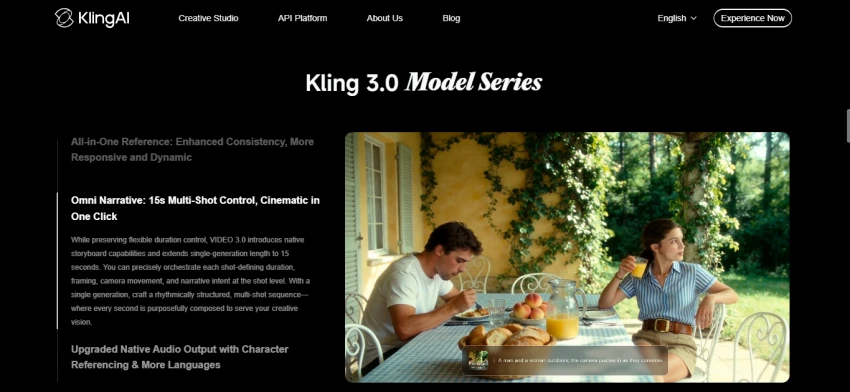
Per AI Tool Analysis and Max Productive reviews, Kling differentiates Standard mode from Professional mode. Professional mode produces the higher-fidelity output most creators eventually rely on, but consumes more credits and runs slower. Standard mode is faster and cheaper, with quality dropping noticeably.
Per Max Productive’s review, Kling’s Motion Control feature has no direct competitor among major platforms. It allows creators to direct specific motion paths, camera movements, and object trajectories in ways most generators handle only through prompt language. Combined with the Motion Brush tool introduced in Kling 1.5 (which directs up to six independent objects per Kling AI’s product page), this gives Kling a control surface oriented toward intentional direction rather than prompt-and-pray.
Per AVB’s documentation review, Kling 2.6 introduced simultaneous audio-visual generation with lip-sync, meaning the audio track is produced in the same pass as the video rather than added afterward. Avatar 2.0 supports talking-head generation. These features matter for creators producing dialogue-driven content where post-production sync becomes the bottleneck.
Per Magic Hour’s verified April 2026 pricing breakdown and AVB’s review:
• Free at $0: 66 credits per day, 720p maximum, 10-second clips.
• Standard at $6.99 per month: 30-second clips, commercial use included.
• Pro at approximately $26.99 per month: 60-second clips.
• Premier at approximately $64.99 per month: custom duration, priority queue.
• Ultra at premium tier pricing: 8,000 credits per month, lowest per-credit cost.
Annual billing on consumer plans saves approximately 34% per AVB. API pricing via fal.ai sits at $0.084 per second for Standard and $0.112 per second for Pro, both without audio.
This is where the two diverge most clearly.
Per Max Productive’s April 2026 review, Kling 3.0 holds the top ELO benchmark score (1243) among AI video models, ahead of Google Veo 3.1, Runway Gen-4.5, and Pika 2.2. The benchmark measures human preference across blind A/B comparisons. Per Flux Note’s hands-on testing across 50+ clips, the output delivers film-like coherence on cinematic prompts roughly 75% of the time on 8-second clips, a meaningful step up from earlier model versions.
Deevid’s output quality is harder to characterize because it depends on which underlying model is selected. When routed to Sora 2 or Veo 3.1, output quality matches what those models produce directly. The aggregator does not improve the underlying model output, only the access. Per Kosoku AI’s tested review, certain consistent issues emerged across models: text rendering struggles, occasional anatomy distortion (extra fingers, off facial proportions), and prompt adherence variance between models.
The practical conclusion: Kling delivers a higher quality ceiling on cinematic content. Deevid offers more variety in styles and approaches without leaving the dashboard but does not surpass the underlying models when called directly.
Realism is a single dimension. Motion coherence, prompt adherence, and frame-to-frame consistency matter more for most production work than peak demo-reel pretty pictures.
Reliability matters as much as ceiling quality, especially when each generation consumes credits.
Per AI Tool Analysis, Reddit users have reported failure rates of 30 to 40 percent on Kling’s free tier during peak hours, and failed generations still consume credits. This is the most frequently cited frustration in Kling user feedback. The Professional mode and paid tiers have lower failure rates, but the issue persists.
Deevid’s reliability profile is different. Per cscestudiodigital and GoEnhance AI reviews, generation typically completes in one to three minutes per clip with fewer outright failures, though quality variance between submissions is higher. The credit cost is opaque (different underlying models consume different credit amounts), which makes per-video cost harder to predict than with Kling’s published tier sheet.
For prompt control specifically:
• Kling offers Motion Control, Motion Brush, advanced camera direction (six camera movement types per Kling AI’s product page), and Chain-of-Thought reasoning that helps the model handle multi-step actions per AVB’s documentation.
• Deevid offers style presets, camera movement direction, duration options, aspect ratio selection, and start-to-end keyframe control, per GoEnhance AI’s review. Control depth ultimately depends on which underlying model is selected.
Production specs often decide the practical pick. A side-by-side reference clarifies the deltas.
| Specification | Deevid AI | Kling AI |
|---|---|---|
| Maximum resolution | 1080p on Pro and Premium tiers | 4K 60fps via Multi-Shot on Kling 3.0 |
| Single-clip duration | Varies by model, 5 to 10 seconds | 30s Standard, 60s Pro, custom Premier |
| Multi-shot storytelling | Through workflow, not native | Up to 6 connected shots in Kling 3.0 |
| Native audio generation | Yes, in Master V2.0 mode | Yes, in Kling 2.6 and later |
| Lip-sync | Yes, in Master V2.0 | Yes, with native audio in 2.6+ |
| Free tier | Limited credits, 720p, watermark | 66 credits/day, 720p, 10-second clips |
| Underlying models | 10+ aggregated models | 1 proprietary model family |
Kling’s tiered duration ramp gives it the practical edge on long-form clips; Deevid’s duration inherits whichever underlying model is invoked.
Kling’s edge here is meaningful: longer clips, higher peak resolution, native multi-shot storytelling for narrative work. Deevid’s range depends on which underlying model is invoked, and several of those (including Kling itself, accessed through Deevid) inherit the same caps as direct access.
Sticker pricing tells half the story. Effective per-video cost matters more.
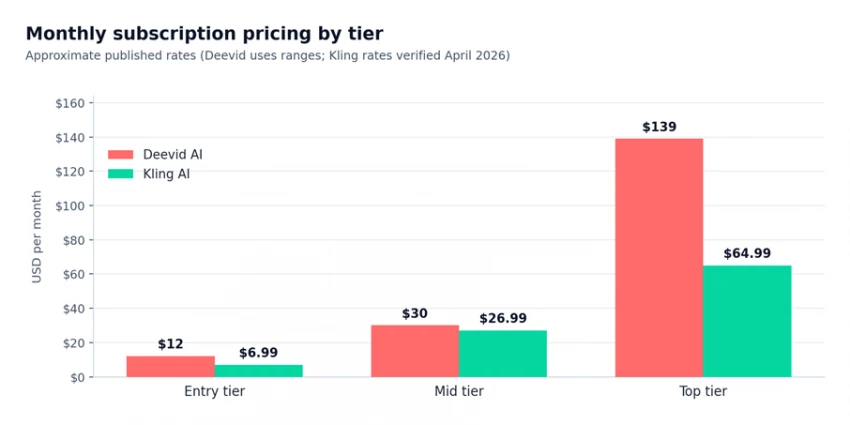
Kling undercuts Deevid at every tier; the gap widens dramatically at the top, where Deevid’s Premium tier sits more than 2x above Kling’s Premier.
For Kling, per AI Tool Analysis calculations, a 660-credit allocation translates to roughly 9 to 18 Professional mode videos per month after failed generations are factored in, and 6 to 12 if native audio is enabled. The published Standard plan at $6.99 per month is the lowest entry price for commercial-use AI video generation among major platforms per Magic Hour’s review, but the realistic monthly output is significantly lower than advertised credit counts suggest.
For Deevid, credit consumption varies by which model is invoked. A Sora 2 generation costs differently than a Kling 2.6 generation. This makes per-video cost harder to plan but offers flexibility: cheaper models can be used for iteration, premium models reserved for finals. Per HitPaw’s review, the Pro tier at the mid range provides reasonable value for creators producing roughly 30 to 50 short clips per month.
The pattern across both platforms: published credit counts overstate realistic output by roughly two to three times once failed generations, retries, and quality-checking iterations are accounted for.
This is where Deevid earns its strongest reviews and Kling shows its rougher edges.
Per multiple reviewers (Lovart, HIX AI, MagicLight, DigitalizeLife), Deevid’s learning curve is effectively zero. The dashboard surfaces template-driven workflows, model selection as a dropdown, and consistent control layouts across the underlying models. First video generations typically complete within minutes of signup.
Kling’s interface is more powerful but less welcoming to newcomers. Per Max Productive’s review, customer support is a significant weakness. Per AI Tool Analysis, billing practices have generated repeated complaints, particularly intro pricing that increases at renewal and credits deducted for failed generations. The credit system requires acclimation. Power users adapt; casual creators sometimes do not.
The editing surface on both platforms is intentionally light. Neither replaces a dedicated NLE for production work. Both export clips that typically get assembled in CapCut, DaVinci Resolve, or comparable downstream tools.
Stripped of marketing language, the wins look like this.
| Category | Deevid AI | Kling AI |
|---|---|---|
| Best output quality on cinematic prompts | Yes | |
| Best for iterating across model styles | Yes | |
| Lowest entry price with commercial use | Yes | |
| Fastest learning curve | Yes | |
| Longest single-clip duration | Yes | |
| Most flexible input types | Yes | |
| Strongest motion and camera control | Yes | |
| Best for high-volume short-form social | Yes | |
| Strongest native audio integration | Yes | |
| Best learning-curve-to-output ratio | Yes |
The pattern is clear: Kling wins on technical depth and output ceiling. Deevid wins on workflow flexibility and accessibility.
Practical recommendations by use case:
• Short-form social ads, TikTok content, Instagram Reels. Deevid AI fits better. Speed of iteration, multiple model access for style testing, and lower per-clip stakes make the aggregator approach productive.
• Cinematic short films, narrative work, music videos. Kling AI is the cleaner pick. Motion Control, longer durations, multi-shot storytelling, and ELO leadership matter most where polish is the deliverable.
• Marketing teams testing AI video for the first time. Deevid AI’s lower learning curve and model variety make for a softer landing than committing to a single proprietary tool.
• Established AI video creators with a preferred model. Kling AI direct, if that model is Kling. Direct access avoids the aggregator’s per-credit markup and offers full feature parity.
• High-volume content studios. Both have viable plans, though Kling’s Ultra tier (8,000 credits) offers the lowest per-credit cost in the category per Magic Hour.
• Education, e-learning, talking-head explainers. Kling AI’s Avatar 2.0 and native audio give it an edge, though Deevid’s Master V2.0 mode remains a credible alternative.
Deevid AI and Kling AI both deserve their place on AI video shortlists, but neither one fits every creator. The honest summary:
Kling AI is the choice when output quality is the primary deliverable, when motion or cinematics matter, and when the work can absorb the credit-system frustration and customer-support gaps in exchange for the technical lead. Per the ELO benchmark and most independent reviews, the underlying model is the best in the category as of April 2026.
Deevid AI is the choice when workflow flexibility matters more than peak quality, when testing across model styles is genuinely useful, and when an easy on-ramp matters more than the deepest control surface. Per multiple reviewers including GoEnhance AI, the aggregator advantage is real but does not surpass the underlying models when called directly.
The mismatch most creators make is picking the aggregator when they actually wanted depth, or picking the proprietary leader when they actually wanted breadth. Identifying which workflow fits first, then matching the tool to it, is the practical decision. Both subscriptions sit at low enough entry tiers (between $5 and $15 per month) that a free trial on each before committing is the cheapest possible answer.
New Claude Model Targets Agentic AI WorkflowsAnthropic has launched Claude Sonne...
Samuel Osei3 months ago
Gemini’s Image Tools Get a Wider RolloutGoogle is expanding access to Gemini’s p...
Alexander Hughes3 months ago
Two AI video generators, two very different first days. I ran PixVerse through i...
Alexander Hughes3 months ago

Two of the most talked-about AI chat platforms. I opened both, picked a characte...
Alexander Hughes3 months ago
The two-minute versionIf you only read one thing, read this. The rest of the doc...
Alexander Hughes3 months ago
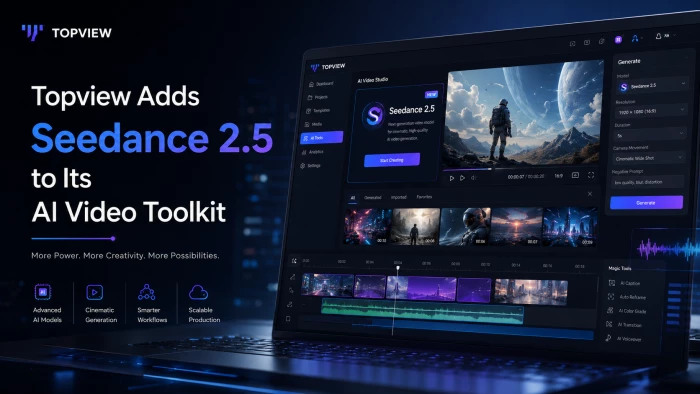
Why Seedance 2.5 mattersSeedance 2.5 is the latest release in ByteDance’s Seedan...
Alexander Hughes3 months ago
Discussion