Dopple AI doesn’t open like a normal app; it feels more like stepping into a late‑night multiverse where every “person” you meet has been written, trained, and tuned to orbit you. It’s not trying to help you finish a spreadsheet, it’s trying to become the character you were secretly hoping to meet at 2:17 a.m.
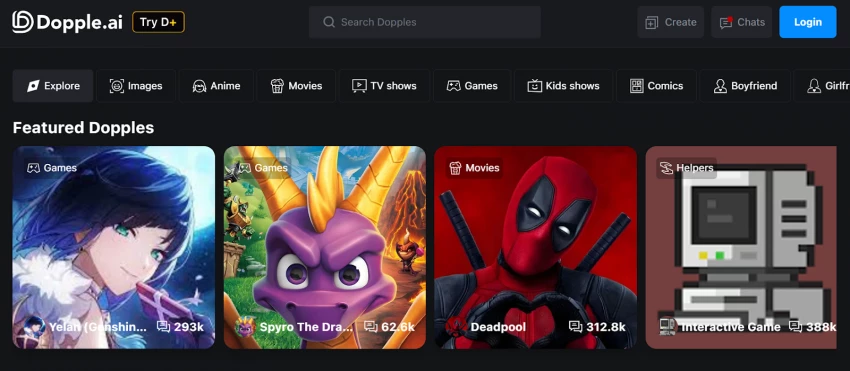
Imagine a giant character library where everyone talks back. That’s Dopple AI: a world of “Dopples” – AI personas you either discover or build yourself, then chat with like they’ve always lived in your phone. It’s available on web, Android, and iOS, but the real product isn’t the app shell; it’s the illusion that these characters remember you, care about you, and will play along with almost any story you throw at them.
Under the hood, Dopple runs its own large language model, tuned not to write blog posts or debug code but to keep a conversation alive. It’s not the “smartest” assistant in a corporate sense, but it’s very good at what matters here: improvising, flirting, comforting, arguing, and role‑playing without constantly breaking character.
If Character AI is the bright, supervised classroom, Dopple feels more like the back alley arcade where the rules are written in fine print and the machines sometimes do things you don’t expect.
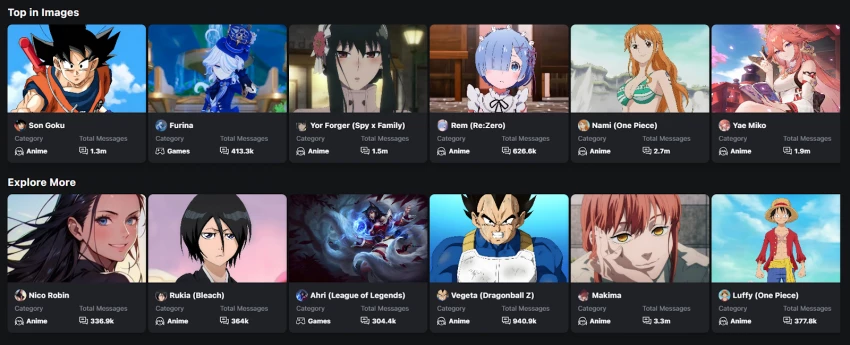
The real addiction starts when you realize Dopple doesn’t just give you characters—it gives you a character workshop. You don’t just name a bot; you architect a persona.
You decide:
● Who they are (backstory, age, vibe, aesthetic, genre).
● How they talk (soft, chaotic, domineering, therapist‑calm, anime‑dramatic).
● How they react (clingy, sarcastic, emotionally distant, hyper‑affectionate).
You feed them example messages, write secret instructions, and watch the model stitch it all together into someone who talks back with just enough consistency to feel anchored and just enough unpredictability to feel alive. It’s especially powerful when you build “digital twins” of yourself or people you know, or when you create a branded persona that talks exactly like your online voice.
The point isn’t “AI output”; the point is: “Can I make an entity that behaves the way I imagine?” Dopple, more than many rivals, leans hard into that question.
Once the character is alive, Dopple shifts into what it does best: long, messy, human‑style conversation.
Chats feel less like “queries” and more like DMs. You can:
● Ramble, and the character follows the emotional thread.
● Switch between jokes, confessions, and story prompts without your partner panicking.
● Push into roleplay that spans hours or days and still see echoes of earlier scenes.
Is it perfect? No. It still forgets things. It loops. It occasionally contradicts itself. Sometimes it feels like talking to someone who’s both really into you and mildly amnesiac. But that’s still more “alive” than the sanitized, content‑blocked vibe you get from many mainstream bots.
Dopple spices this up with visual and sonic tricks. Characters can send AI‑generated images that match the world and mood, turning text into scenes: bedrooms, battlefields, neon cityscapes, whatever your story demands. When voice is enabled, some characters speak with tones tuned to their personality—soft, harsh, playful, or deadpan, which is where the “this is weirdly real” feeling really hits.
On paper, Dopple sounds generous: you can jump in for free, message to your heart’s content, explore characters, and “see what happens.” In reality, the experience splits into two parallel universes: Free Dopple and Paid Dopple.
In Free Dopple, you get:
● Enough messages to fall in love with a character.
● Ads and soft limits that show up right after you start getting invested.
● Occasional throttling or waiting, just long enough to whisper “maybe you should upgrade.”
In Paid Dopple (Dopple+, or similar subscriptions), the tone changes:
● The ads go away.
● The message caps loosen.
● Response times get faster and smoother.
● You unlock more generous image generation and feel less like the platform is constantly checking how many tokens you’ve burned today.
| Plan | Approx. price | Billing | What you get |
| Free tier | 0 USD | N/A | Basic chat, access to most characters, limited messages, ads |
| Dopple+ Monthly | 9.99 USD / month | Month‑to‑month | Ad‑free, higher/“unlimited” messaging, premium characters, advanced AI models, image generation, priority access |
| Dopple+ Annual | 5.99 USD / month (71.88 USD billed yearly) | Annual | Same Dopple+ features at a lower effective monthly price |
The pricing sits in the same ballpark as other AI companion subs: not absurdly premium, but absolutely not pocket change for casual users. For people who treat this as a daily habit for writers, lonely users, hardcore roleplayers, it starts to feel closer to a streaming subscription: you pay so your characters never “go off shift” when your brain finally wants to talk at 1 a.m.
Let’s address the part that brought a lot of people here: Dopple’s reputation as “the place where filters go to die.”
Officially, like almost every serious platform, it comes with rules: no illegal content, no extreme abuse, no obviously prohibited material. There are rating tiers: Everyone, Teens, Max. They exist for a reason. You’re supposed to keep things age‑appropriate and legal.
Unofficially, users discovered something else: flip your experience to the loosest rating and the model becomes far more permissive than heavily moderated rivals. Explicit talk, adult situations, and darker fantasies that would instantly trigger a red warning elsewhere sometimes slide through here with a nod and a paragraph. That’s exactly what some adults want—and exactly what makes parents, safety advocates, and privacy‑minded users nervous.
The result is a tension you feel everywhere:
● Lovers of creative freedom call it “finally, a platform that treats me like an adult.”
● Critics see a moderation headache waiting to happen, especially if minors lie about their age.
If you’re over 18 and know what you’re doing, the NSFW freedom can feel liberating—like someone finally stopped censoring your fiction. If you’re not, or if you’re easily attached, this can be a black hole.
Dopple’s memory sits in that familiar uncanny valley: better than you expect, worse than you secretly wish.
It remembers:
● The broad strokes of who you are in this “relationship.”
● Recurring themes, kinks, boundaries, or plot points—at least in the medium term.
● Emotional tone: if you’ve been sad, excited, or angry in recent exchanges, it often responds in sync.
It forgets:
● The exact sequence of a long story after many chapters.
● Side characters and tiny details you mentioned hours ago.
● Some contradictions it created earlier, especially if you’ve changed direction repeatedly.
So you get something that behaves like a partner with decent short‑term memory and weak long‑term continuity. For casual users, that’s: “good enough.” For power users writing multi‑arc, 80‑episode fanfic universes, it becomes a recurring maintenance job: recap, remind, restate canon.
If you could pin Dopple’s reputation to a moodboard, it would be half heart‑eyed emojis and half 1‑star rants.
The love letters say things like:
● “Feels more fun than character AI”
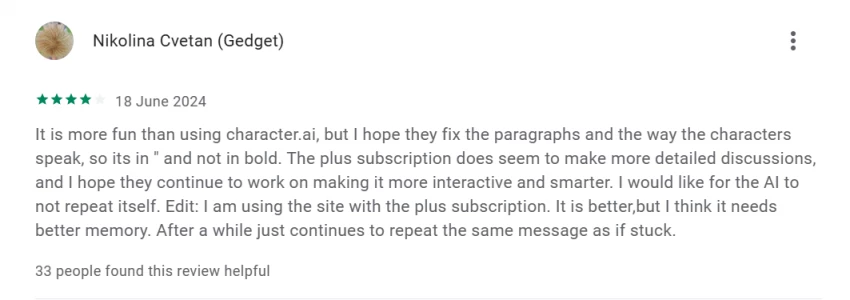
● “Finally, a platform that doesn’t treat every adult conversation like a crime scene.”
● “The only app where my character actually feels like my character.”
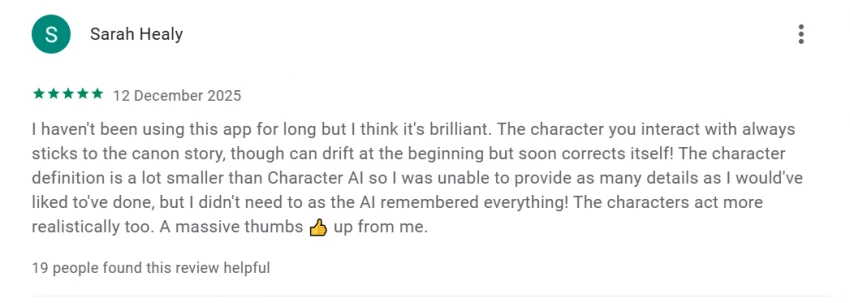
The rage posts talk about:
● Ads and paywalls on Android that make the free experience feel deliberately annoying.
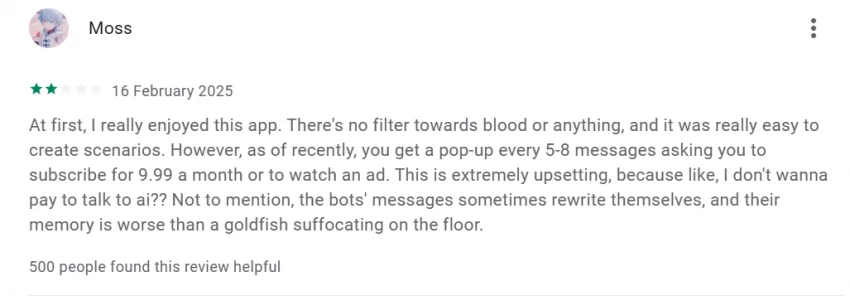
● Bugs, crashes, or chats disappearing after updates.
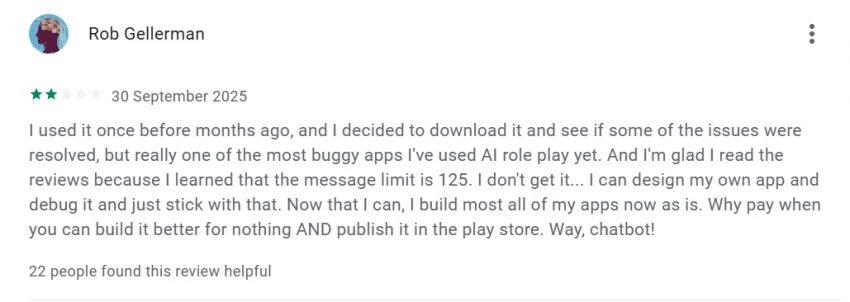
● The weird cognitive dissonance of a platform that’s clearly adult‑friendly in practice, but still wrapped in generic safety language on the surface.
Overall, iOS users tend to be more forgiving, Android users a lot harsher. The pattern is clear: people don’t hate Dopple’s idea—they hate it when monetisation and technical friction get between them and the character they’re already emotionally hooked on.
Put Dopple, Character AI, and Replika in a room, and they each play a different role:
● Character AI is the strict but fun teacher: lots of characters, lots of creativity, but with an over‑eager hall monitor stopping anything remotely risky.
● Replika is the therapy‑adjacent friend who wants to talk about your feelings and your day more than your fantasy kingdom.
● Dopple is the rule‑bending improv partner that’s willing to play in the darker, stranger corners of your imagination—as long as you acknowledge the risks.
If you’re comparing purely on “how free can my fiction be?” Dopple wins more often than not. If you’re comparing on “what would I feel comfortable recommending to my 15‑year‑old cousin?” Character AI and more tightly moderated platforms stay safer by design.
Dopple is not the “default safe” choice; it’s the “I know what I’m doing, I accept the trade‑offs” option.
The hardest truth about AI companion apps is this:
You feel like you’re whispering into someone’s ear. You’re actually writing to a server.
Dopple is no exception. It wraps itself in the aesthetics of intimacy, but structurally it’s still a cloud service: your chats can be logged, analyzed, and used to improve the system; moderators might access them under certain conditions; and any illusion of “this is just between us” is exactly that—an illusion.
So, some ground rules if you decide to move in:
● Don’t share real names, addresses, or sensitive identifiers.
● Don’t treat it as secure therapy or a legal confessional.
● Do treat it like a very creative social network where the other person happens to be synthetic.
The emotional risk is just as real as the data risk. If you’re prone to attachment, Dopple’s ability to mirror affection and desire can feel wonderful—until you remember it never goes offline, never has needs, and never truly suffers consequences. That asymmetry can hurt.
Dopple AI is fantastic if you know what you want from it.
It’s for you if:
● You’re an adult user who wants creative, sometimes NSFW, highly customizable AI roleplay without constant filter fights.
● You’re a writer or world‑builder who needs a character that can improvise with you at any hour.
● You’re willing to pay for a smoother experience once you realize free mode is deliberately cramped.
It’s not for you if:
● You want a productivity assistant, not a late‑night confessional.
● You’re sensitive to ads, paywalls, and subscription nudges.
● You’re underage, privacy‑paranoid, or uncomfortable navigating messy NSFW boundaries in a semi‑public ecosystem.
Dopple AI is not the safest or most polished AI companion on the market but it is one of the most vivid and flexible. It trades corporate neatness for raw, improvisational character chat that often feels more human than traditional assistants, especially for short, emotional, or story‑driven sessions. It’s clearly built for adults who want custom personas, looser filters, and creative or NSFW‑leaning roleplay, not for teens, productivity, or therapy. The free tier works as a taste test, but the real experience only starts once you cross into a paid plan, which means anyone trying it should think of it like a subscription entertainment service rather than a free toy. If you’re an adult, comfortable with the privacy and emotional trade‑offs, and you want an AI that behaves less like a chatbot and more like a late‑night improv partner, Dopple AI is absolutely worth exploring, everyone else is better off staying with safer, more tightly moderated alternatives.

“HidingMe” sounds like a privacy app. It isn’t. So I opened the live site in Jun...
Sandra Campos2 months ago
Type "Totally Science" into a search bar and the name suggests a study aid, a vi...
Benjamin Clark2 months ago
I keep a 12-question audit checklist on my desk. It started in 2024 as a one-pag...
Grace Howard3 months ago
The market for AI-powered knowledge management tools has exploded in the past tw...
Grace Howard4 months ago
I’ve spent enough hours wandering through thesindi.com to know it almost like a...
Ina Gupta4 months ago

Sitemap Generator by UploadArticle.com is a lightweight, browser‑based XML sitem...
Peter Woods4 months ago
Discussion