AI & ML
10 min read
Unlucid AI vs Leonardo AI for Character Art: A Detailed 2026 Comparison
The choice between Unlucid AI and Leonardo AI defines two different approaches to AI character art in 2026. One platform emphasizes speed, simplicity, and looser content rules. The other ships a production-grade pipeline built around character consistency and custom model training. This comparison breaks down both tools across output quality, pricing, character consistency, workflow, and the specific use cases each serves best.
All pricing, features, and capabilities reflect data verified between January and May 2026 from official product pages and independent reviews. Both platforms update frequently, so verification on each official page before purchase is recommended.
Leonardo AI is the stronger pick for production character art, game assets, and serialized work that needs the same character across multiple scenes. The Consistent Character Engine, LoRA training, and Phoenix model give it a clear lead on output quality and consistency. Pricing starts at $12 per month on the Apprentice plan when billed annually.
Unlucid AI fits creators who prioritize speed, simplicity, and broader content latitude. The platform's strengths sit in short-form character video, surreal style exploration, and a friction-free interface. Premium pricing is $29 per month.
For most character art workflows, Leonardo AI wins on price-to-feature value. For experimental work and short character video, Unlucid AI holds its ground.
Unlucid AI is an AI-powered creative suite that generates images and short videos from text prompts and reference images. The platform supports text-to-image, image-to-image, text-to-video, and image-to-video workflows, with style presets covering realism, fantasy, sci-fi, anime, and surrealism.
The platform runs on a credit-based system called Gems, with daily free allowances and top-up options. Free output is watermarked and limited in length. The Premium plan at $29 per month unlocks unlimited video length and premium rendering options. Commercial use is available on paid plans.
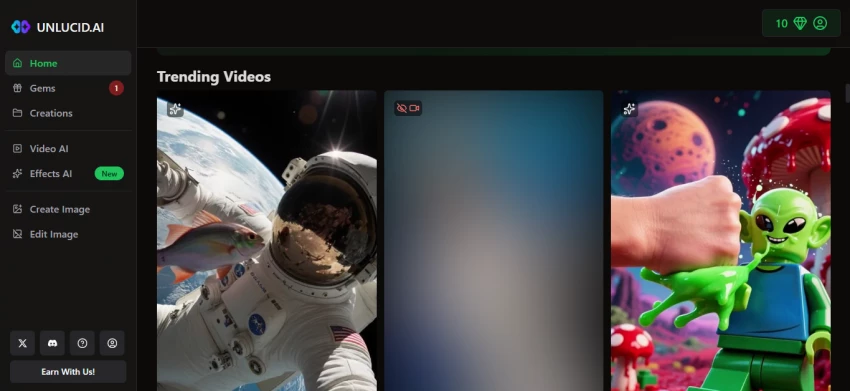
Unlucid AI markets itself as an uncensored platform with fewer content filters than mainstream generators. This positioning extends creative latitude for surreal imagery, unconventional character designs, and experimental themes, while placing responsibility for prompt content and third-party rights on the user.
• Text-to-image and image-to-image character generation
• Text-to-video and image-to-video with 15+ video effects
• Style presets including realism, fantasy, sci-fi, anime, and surrealism
• Background and object removal, AI-powered photo editing, and upscaling
• Browser-based interface with no installation required
• Looser content policy compared to mainstream generators
Leonardo AI is a production-grade AI art platform used by more than 1.2 million artists who have collectively generated over a billion artworks. The platform supports image generation, video generation, custom model training, character consistency tooling, and 3D texture generation in a single hosted environment.
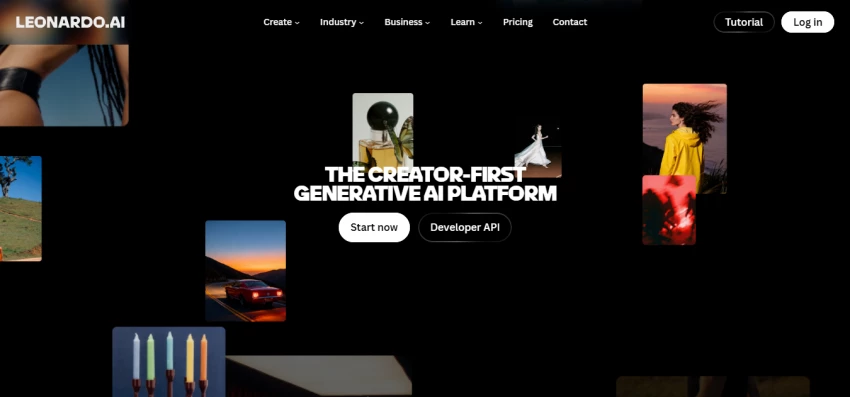
The token-based pricing model gives users 150 free tokens daily, with paid plans starting at $12 per month for Apprentice (billed annually), $30 per month for Artisan, and $60 per month for Maestro. The Phoenix model, Leonardo's in-house flagship, sits alongside KinoXL, Anime Pastel Dream, and several purpose-trained models for game assets and concept art.
Leonardo grants full ownership and commercial rights to all images generated on every plan, including the free tier. The platform's Consistent Character Engine and LoRA training are the two features most frequently cited as differentiators from competitors including Midjourney and Stable Diffusion.
• Phoenix flagship model with strong prompt adherence and text-in-image rendering
• Consistent Character Engine for recurring characters across scenes
• LoRA training for fine-tuning a custom model on user reference images
• AI Canvas with inpainting, outpainting, layering, and compositing
• Real-time Canvas that previews results as the prompt is typed
• ControlNet-style guidance for pose, depth, and edge control
• Motion module for short looping video clips
• Upscaler, background remover, and transparency support
• API access on Artisan and Maestro plans
The table below maps the most-asked features for character art across both platforms. Native support means the feature is built directly into the product. Workaround means the feature can be approximated through prompts or settings but is not a dedicated tool.
| Feature | Unlucid AI | Leonardo AI |
| Text-to-image | Yes | Yes |
| Image-to-image | Yes | Yes |
| Character consistency engine | Workaround only | Yes (dedicated tool) |
| Custom model training (LoRA) | No | Yes |
| ControlNet pose guidance | No | Yes |
| In-house style models | Curated style filters | 7+ models (Phoenix, KinoXL, etc.) |
| Text-to-video | Yes (15+ effects) | Yes (Motion + third-party) |
| Inpainting and outpainting | Limited | Yes (AI Canvas) |
| Real-time preview generation | No | Yes |
| Text rendering inside images | Limited | Yes (Phoenix model) |
| API access | No | Yes (Artisan and above) |
| Free tier commercial rights | No | Yes |
| Looser content policy | Yes | No (standard policy) |
Output quality is where the gap between the two platforms is widest. Leonardo AI's Phoenix model and KinoXL deliver higher prompt adherence, better lighting consistency, and cleaner detail rendering on character portraits, concept art, and game assets. Independent reviewers cite Leonardo's output as the strongest in the hosted-platform category for character art.
Unlucid AI produces competitive results on stylized, surreal, and fantasy work, particularly when the prompt is loose. Detail rendering on photorealistic portraits and on technical compositions such as armor or mechanical parts is documented as less consistent than dedicated production models.
On text rendering inside images, Leonardo's Phoenix model is one of the few hosted generators that handles logos, signs, and posters with legible text. Unlucid AI does not advertise this capability and lags in design work that requires copy inside the image.
Maintaining a recognizable character across multiple poses, scenes, and outfits is the hardest problem in AI character art. Leonardo AI addresses it directly through the Consistent Character Engine and LoRA training.
The Consistent Character Engine adds roughly 25 percent to token cost per generation in exchange for tight visual consistency. LoRA training allows uploading 10 to 20 reference images and fine-tuning a model on a specific character or style. The Apprentice plan includes one LoRA training per month, Artisan includes five, and Maestro extends this to 20 custom models.
Unlucid AI does not offer a dedicated character consistency engine or LoRA training equivalent. Consistency relies on consistent prompts, seed reuse, and image-to-image workflows. The approach works for short sequences and one-off concepts but breaks down across larger character sets where small differences accumulate.
For serialized character art such as webtoons, game character sheets, or recurring brand mascots, Leonardo AI is the clear pick. For one-off character portraits or quick mood boards, both tools are viable.
The two platforms structure pricing differently. Unlucid uses a credit-based system marketed as Gems with a single paid tier. Leonardo runs a tiered token system with three paid plans that scale across token volume, LoRA training counts, concurrency, and API access.
| Plan | Price | What is included |
| Free | $0 | Daily Gems, watermarked output, limited video length |
| Premium | $29 / month | Unlimited video length, premium rendering, commercial use rights |
| Plan | Annual Price | Tokens | Key features |
| Free | $0 | 150 / day | Public generations, full commercial rights |
| Apprentice | $12 / month | 8,500 / month | Consistent Character Engine, 1 LoRA, private generations |
| Artisan | $30 / month | 25,000 / month | 5 LoRAs, API access, priority queue |
| Maestro | $60 / month | 60,000 / month | 20 LoRAs, full motion generation, highest concurrency |
On a price-to-feature basis, Leonardo AI's Apprentice plan at $12 per month delivers character consistency, LoRA training, private generations, and commercial rights at less than half the cost of Unlucid AI's Premium plan at $29 per month. Unlucid's value proposition lives elsewhere, in longer video output and a looser content policy.
Unlucid AI presents a streamlined, single-screen interface that prioritizes speed to a first result. The Gems credit system gamifies the experience with daily rewards and visible credit counts. For users new to AI art, the friction is low: a prompt, a style filter, and a generate button cover most of the surface area.
Leonardo AI offers a more comprehensive interface that has grown denser as features have accumulated. The AI Canvas combines inpainting, outpainting, layering, and compositing in one workspace. Real-time Canvas updates the preview as the prompt is typed, dramatically faster for iteration. The trade-off is a steeper discovery curve; first-time users face more options before finding the right workflow.
Generation speed on Leonardo's free tier slows during peak hours when paid users take queue priority. Unlucid's free tier has similar performance limits during high-demand periods. Both platforms run faster on paid plans.
Content policy is a real differentiator between the two platforms. Unlucid AI positions itself as an uncensored creative platform with fewer content filters than mainstream generators. The looser policy extends latitude for surreal imagery, unconventional character designs, and mature artistic themes, while placing responsibility on the user to ensure outputs do not infringe third-party rights or violate applicable laws.
Leonardo AI applies standard content moderation comparable to Adobe Firefly and Midjourney. Prompts that target real public figures, depict harmful content, or violate platform policy are filtered or rejected. The standard policy is suitable for client work, commercial projects, and use cases that require predictable output behavior.
On commercial rights, Leonardo grants full ownership, copyright, and intellectual property rights to all images generated on every plan including the free tier. Unlucid AI permits commercial use on the Premium plan. Both platforms place rights-management responsibility on the user.
The table below maps common character art workflows to the platform that fits better, along with the operative reason.
| Use case | Better fit | Reason |
| Indie game character sheets | Leonardo AI | Consistent Character Engine, game-asset models, pose control |
| Concept art for short films | Leonardo AI | Phoenix model quality, Cinematic Kino preset, AI Canvas |
| Webtoon and comic characters | Leonardo AI | LoRA training for recurring characters, anime presets |
| Quick mood boards | Unlucid AI | Lower friction, faster path from prompt to result |
| Short-form character video | Unlucid AI | 15+ video effects, longer outputs on Premium tier |
| Print and merchandise designs | Leonardo AI | Text-in-image rendering, upscaler, transparency support |
| Freelance illustrator client work | Leonardo AI | Private generations on paid plans, full commercial rights |
| Surreal and experimental themes | Unlucid AI | Fewer content filters, broader prompt latitude |
| Developers building AI art tools | Leonardo AI | API access on Artisan and Maestro tiers |
| Hobbyists on tight budgets | Leonardo AI Free | 150 daily tokens with commercial rights, no signup fee |
• Low-friction single-screen interface that gets new users to a first result quickly
• 15+ video effects and image-to-video tooling in the same product
• Looser content policy supports experimental and surreal work
• Premium tier offers unlimited video length
• Daily free Gems for ongoing experimentation
• No dedicated character consistency engine or LoRA equivalent
• Premium tier at $29 is steep for image-only workflows
• Smaller model lineup compared to Leonardo's in-house options
• Output quality on photorealistic portraits lags production-grade models
• Free tier outputs are watermarked
• Looser content policy carries higher user responsibility for rights compliance
• Consistent Character Engine and LoRA training for serialized character art
• Phoenix model with strong prompt adherence and text-in-image rendering
• 7+ in-house models plus brokered access to third-party models
• Free tier with 150 daily tokens and full commercial rights
• Apprentice plan at $12 per month unlocks private generations and LoRA
• API access on Artisan and Maestro plans
• 4.6 Trustpilot rating from a base of 1.2 million artists
• Token system can feel opaque to new users
• Interface has grown dense as features accumulated
• Output quality requires more prompt tuning than Midjourney
• Free tier speed slows during peak hours
• Tokens do not roll over month to month
• Custom model training results vary with reference data quality
For most character art workflows in 2026, Leonardo AI is the stronger production-grade platform. The Phoenix model, Consistent Character Engine, LoRA training, and structured pricing tiers deliver a clear advantage on output quality, character consistency, and price-to-feature value. The Apprentice plan at $12 per month billed annually unlocks the features most character artists actually need.
Unlucid AI earns its slot for creators who prioritize speed, simplicity, short-form video output, and broader content latitude. The platform fits stylized exploration, surreal concepts, and quick mood boards better than production work with strict consistency requirements.
Many serious character artists eventually use both tools in tandem, with Unlucid handling fast ideation and Leonardo handling the finished character set. For users picking just one platform, Leonardo AI wins this head-to-head.
New Claude Model Targets Agentic AI WorkflowsAnthropic has launched Claude Sonne...
Samuel Osei3 months ago
Gemini’s Image Tools Get a Wider RolloutGoogle is expanding access to Gemini’s p...
Alexander Hughes3 months ago
Two AI video generators, two very different first days. I ran PixVerse through i...
Alexander Hughes3 months ago
Two of the most talked-about AI chat platforms. I opened both, picked a characte...
Alexander Hughes3 months ago
The two-minute versionIf you only read one thing, read this. The rest of the doc...
Alexander Hughes3 months ago
Why Seedance 2.5 mattersSeedance 2.5 is the latest release in ByteDance’s Seedan...
Alexander Hughes3 months ago
Discussion