AI is quietly becoming the engine behind modern email marketing powering better targeting, smarter timing, and higher conversions with less manual work. Instead of guessing subject lines or blasting one-size-fits-all campaigns, marketers can now use AI tools that learn from subscriber behavior and optimize every send automatically.
Email still delivers one of the highest ROIs among digital channels, but inboxes are overcrowded and user attention spans are short. AI helps by analyzing past campaigns, predicting user actions, and personalizing content at scale, so each subscriber sees messages that feel tailor‑made. From predictive send times to dynamic product recommendations, AI reduces guesswork and lets marketers focus on strategy instead of repetitive tasks. The result is typically higher open rates, more clicks, and more revenue from the same list.
Instead of treating these tools as a flat list, let’s walk through a realistic lifecycle and see which platform shines at which stage: data and infrastructure, automation logic, copy and language, and cross‑channel orchestration.
These tools turn your subscriber data into a living model that powers everything else.

Klaviyo is built for e‑commerce and DTC brands that live inside platforms like Shopify, WooCommerce, or BigCommerce. Once integrated, it pulls in browsing data, product views, carts, purchases, and revenue over time. From this, it predicts values like “next expected order date”, “likelihood to churn”, and “estimated lifetime value” for each customer.
You can then construct flows that react to those predictions instead of just static timers. For instance, replenishment campaigns can fire shortly before each customer is statistically likely to reorder, rather than after an arbitrary 30‑day delay. High‑value customers can automatically fall into VIP tracks with early access and unique bundles, while low‑engagement customers get gentler touchpoints and re‑engagement sequences. Dynamic product blocks further personalize each email, so even mass sends feel relevant on a per‑user level.
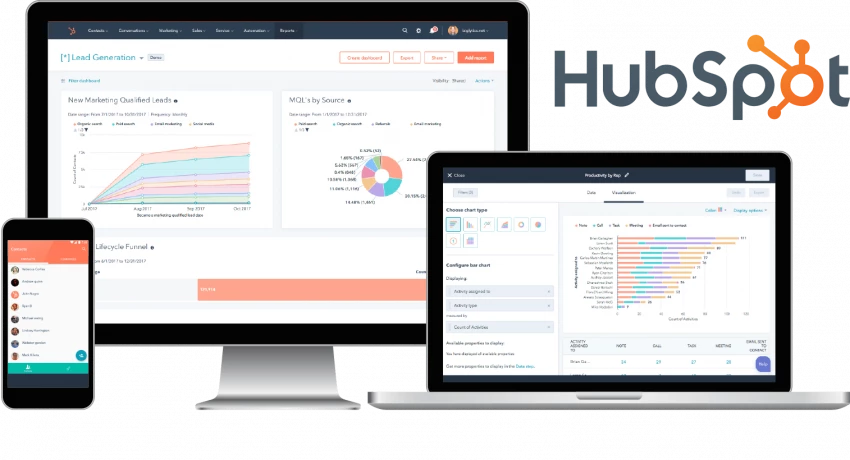
Where Klaviyo is retail‑centric, HubSpot is CRM‑centric. It tracks leads from first website visit through forms, sales calls, deals, and customer activity. Its predictive lead scoring uses that entire journey to estimate which contacts are most likely to convert. Email is one of the inputs and one of the outputs: engagement feeds the score, and the score shapes the nurture.
In practical terms, HubSpot lets you route high‑intent leads into deeper product or case‑study sequences while keeping colder leads in lighter, educational drips. Smart send times, content tests, and automatic frequency controls help protect list health while keeping hot leads warm. For B2B and SaaS, this “email plus CRM plus AI” combination turns your inbox presence into a measurable pipeline driver.
These tools shine when you’re orchestrating complex, multi‑step flows.
ActiveCampaign is a visual automation engine with an AI layer that continuously tweaks timing and targeting. On its canvas you design journeys that span emails, tags, lists, CRM updates, SMS, and more. Predictive sending then determines when each contact is most likely to open and quietly schedules emails into those individual windows.
Beyond timing, ActiveCampaign uses engagement history to inform lead scoring and content decisions. Leads with rising scores can be escalated to sales reps or moved into more aggressive sequences, while low‑scoring contacts are nurtured with softer, educational messages. For brands running long onboarding, trial, or consultative sales cycles, this approach helps keep people moving without overwhelming them.
Brevo takes a more stripped‑down, budget‑friendly approach while still incorporating AI‑like optimization. You get all the basics campaigns, transactional messages, and workflows then layer in send‑time optimization and behavior‑based triggers. The system learns when your audience tends to interact and gradually shifts sends into those windows, improving open rates without constant A/B testing.
Simple but effective workflows welcome series, cart recovery, post‑purchase follow‑up can be built with conditions like “opened previous email”, “clicked specific link”, or “visited key page”. The AI here is more about removing guesswork and manual labor than deep predictive modeling, which is exactly what many small and mid‑sized businesses need.
These tools don’t send emails themselves; they make the words inside your emails work harder.
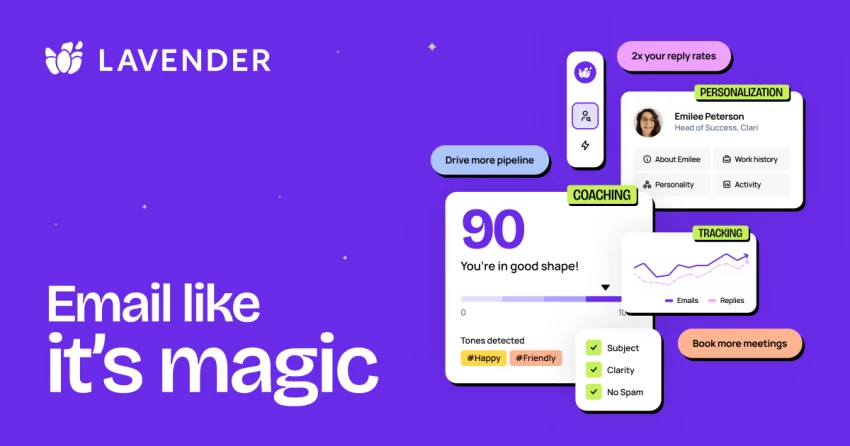
Lavender behaves like a smart editor that lives inside your email composer. As you draft, it scores your message based on clarity, length, tone, reading level, and personalization. It highlights where your subject line is vague, your intro too long, or your call‑to‑action buried in dense paragraphs.
The key benefit is that it teaches you and your team to write better emails over time. Instead of guesswork, you get concrete suggestions: shorten this sentence, swap jargon for simpler language, add one personalized detail that proves you know the recipient’s context. Marketing and sales teams can use those suggestions to improve newsletters, nurture sequences, and outreach campaigns without needing a full‑time copy coach.
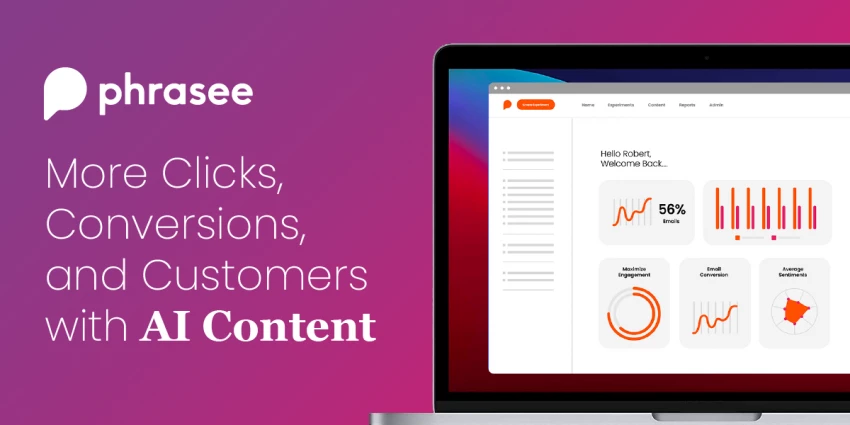
Phrasee zooms in on an area with outsized impact: subject lines, preview text, and call‑to‑action phrases. You define your brand voice and feed it past performance data. The system then generates multiple on‑brand variants, runs tests, and quickly promotes winners.
Over time, Phrasee learns how your specific audience responds to different emotional tones, levels of urgency, word patterns, and structures. Instead of “I think this sounds good”, you lean on language that has been statistically proven to lift opens and clicks for your list. For high‑volume senders, even a small percentage lift in open rate can translate into significant incremental revenue.
Email rarely operates alone anymore. These tools help coordinate email with SMS and other touchpoints.

Omnisend is built for retail and DTC brands that want email, SMS, and sometimes push notifications working in sync. Its AI looks at which channels each customer actually responds to and adjusts accordingly. If one customer consistently ignores email but responds to text, your cart recovery flow can emphasize SMS; another customer might primarily see email reminders.
Pre‑built flows for welcome, post‑purchase, and win‑back campaigns give you a starting point, and AI gradually optimizes timing and channel mix. Product recommendations and dynamic discount logic can target high‑value customers differently from discount‑driven bargain hunters, even within the same automation.
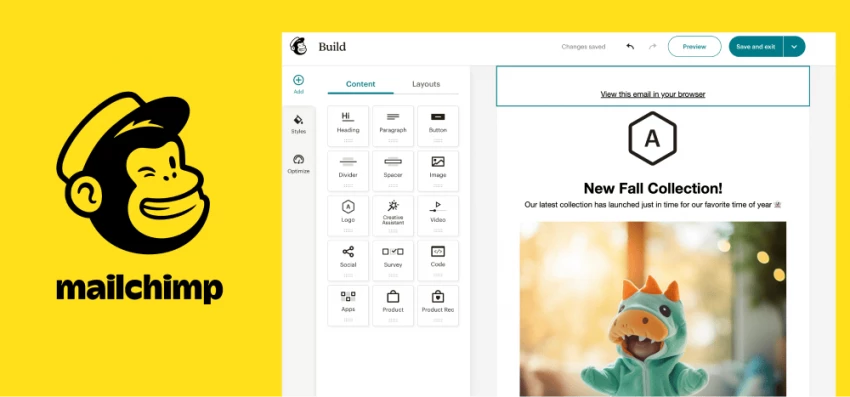
Mailchimp remains a go‑to for general SMBs, and its AI features are designed to be usable without a steep learning curve. The Content Optimizer compares your subject lines and email structure to patterns from a huge pool of campaigns and suggests tweaks. Its Creative Assistant helps you generate on‑brand, consistent layouts using your logo and colors.
Predictive segmentation can cluster contacts by purchase likelihood or engagement, allowing you to tailor promotions. While Mailchimp may not match specialized tools on deep automation or predictive analytics, it’s often the fastest path for small teams to start benefiting from AI without rebuilding their stack.
A useful way to choose is to map each tool to your main constraint:
● If your biggest lever is customer data and prediction, start with Klaviyo (e‑commerce) or HubSpot (B2B/SaaS).
● If you’re bottlenecked by manual flow building and timing, explore ActiveCampaign or Brevo.
● If performance is limited by copy and subject lines, add Lavender or Phrasee on top of your existing stack.
● If your challenge is channel chaos, where SMS and email feel disconnected, Omnisend or Mailchimp (with SMS add‑ons) can bring your messaging into one place.
In practice, strong email programs often combine one primary sending platform (Klaviyo, ActiveCampaign, HubSpot, Omnisend, Mailchimp or Brevo) with one specialist language tool (Lavender or Phrasee). That gives you both infrastructure and uplift without bloating your stack.
AI has turned email into a system that learns and improves with every send. The real advantage comes from choosing tools that solve your specific bottlenecks whether that’s automation, data, copy, or cross-channel execution instead of chasing features.
Strong setups stay simple: a core platform for sending and automation, paired with one focused tool that improves your biggest gap. As you grow, you can layer in advanced AI like predictive targeting and personalization without rebuilding everything.
The goal isn’t just using AI, but making better decisions at scale who to reach, what to say, and when. When each tool clearly improves one of these, email becomes a consistent growth engine rather than trial and error.
When I sat down to seriously compare InVideo and Pictory, I wasn’t just testing...
Grace Howard5 months ago

AI background removal has quietly become the “first edit” step for almost every...
Benjamin Clark5 months ago
AI photo enhancement has quietly become the “secret sauce” behind sharp Instagra...
Funke Ogunleye5 months ago

Looking Beyond Canva: What Are You Really Missing?Canva is brilliant for getting...
Grace Howard5 months ago

A few years ago, “chatbot” meant a rigid decision tree that collapsed as soon as...
Benjamin Clark5 months ago
ElevenLabs has set a high bar for lifelike AI voice generation, but it’s no long...
Grace Howard6 months ago
Discussion