ElevenLabs has set a high bar for lifelike AI voice generation, but it’s no longer the only serious contender in the space. Whether you care more about pricing, open‑source control, or creator‑friendly workflows, several tools now beat ElevenLabs on specific fronts such as scalability, deployment flexibility, and production‑ready editing.
ElevenLabs is popular for its natural voices, multilingual capabilities, and strong voice cloning, which makes it a go‑to choice for creators and startups. Yet teams often outgrow it because of cost at scale, limited deployment options, and a focus on cloud SaaS rather than full control or integrated editing workflows.
As the text‑to‑speech ecosystem matures, alternatives are emerging that focus on narrower but deeper strengths: enterprise security, open‑source hosting, benchmarked quality, or all‑in‑one production studios. That shift gives you much more room to choose a tool that matches your exact use case instead of settling for a one‑size‑fits‑all platform.
Fish Audio has moved from an insider favourite to a platform that now competes at the top of independent TTS leaderboards. Its flagship models are trained for expressive, human‑like delivery across a wide range of tones and languages, and it’s frequently cited in community tests as matching or surpassing ElevenLabs on naturalness.
Where Fish Audio really pulls ahead is the combination of scale and pricing. The service typically offers a very large voice library, multilingual coverage, and low‑latency streaming that’s suitable for interactive use while keeping per‑character costs more forgiving than typical ElevenLabs tiers once you pass hobby usage. For channels and products generating hours of content, that difference compounds quickly.
Typical starting price: usually around 5 USD/month for creator‑level subscriptions, with usage‑based pricing above that (always confirm on the official site before publishing exact numbers).
Best for: YouTube channels, agencies, e‑learning studios, and SaaS products that want “benchmark level” voices but need better cost efficiency as volumes grow.
Resemble AI aims squarely at professional and enterprise users who want more than a pretty web demo. It offers fast voice cloning from small samples, detailed emotional controls, and advanced features like speech‑to‑speech transformation making it attractive for game studios, production companies, and brands building long‑term voice IP.
The big differentiator versus ElevenLabs is how and where you can run it. Resemble AI supports on‑premise and private deployments, so companies can keep all voice data inside their own infrastructure, enforce internal compliance rules, and tightly manage latency and uptime. For industries that need strict data residency and security, that’s a non‑negotiable advantage.
Typical starting price: self‑serve or creator plans often start in the 20–30 USD/month range, with custom quotes for enterprise and on‑premise deployments.\
Best for: regulated sectors, game studios, and large brands that need studio‑grade cloning plus strict control over data and infrastructure.
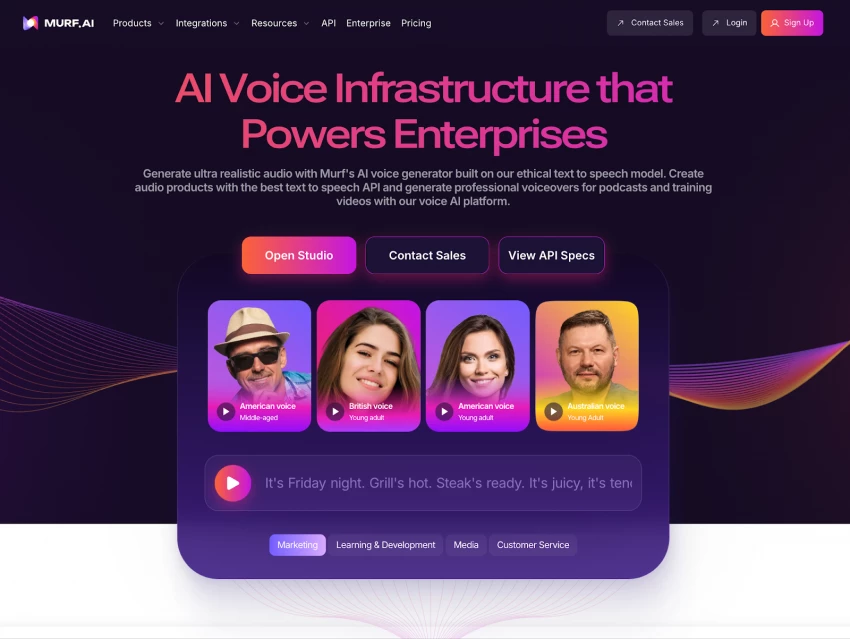
Murf AI treats AI voices as one piece of a larger production puzzle. Instead of just an API, it gives you a browser‑based studio with script management, a visual timeline, background music and SFX options, and collaboration tools designed for teams who ship a lot of business content.
Compared to ElevenLabs, Murf’s biggest win is workflow simplicity. A marketer or instructional designer can write a script, pick a voice, tweak emphasis and pacing, add a backing track, and export a finished voiceover or video asset without ever opening a separate DAW or editor. ElevenLabs can fit into such a pipeline, but it doesn’t replace nearly as many tools on its own.
Typical starting price: “basic” or individual plans usually sit around 19–25 USD/month, with higher tiers for teams and enterprises.
Best for: marketing teams, training departments, and agencies who care more about getting polished explainers, ads, and learning modules out the door than about low‑level API controls.
Descript is a transcript‑centric editor for audio and video, and its Overdub feature turns your own voice into a flexible production asset. You record a training script once, then you can fix mistakes, add new lines, or rewrite sections simply by editing the text transcript; Descript regenerates the audio in your cloned voice.
This is a fundamentally different value proposition than ElevenLabs. Instead of generating standalone clips and moving them into another editor, you live inside a single environment where recording, transcription, editing, overdubs, and exports all happen together. For podcasters and video creators, it feels less like a TTS tool and more like a new way to edit.
Typical starting price: paid plans that include Overdub and advanced editing features usually start around 24 USD/month per user.
Best for: podcasters, YouTubers, educators, and course creators who mostly need an easier, faster way to fix and extend their own recordings.
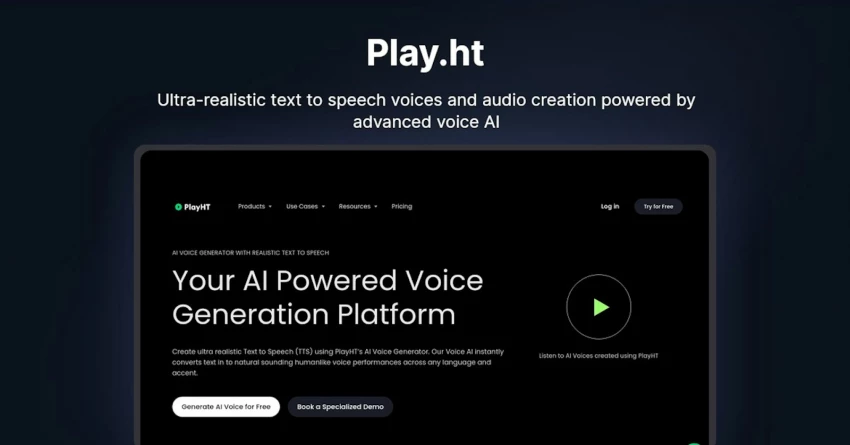
Play.ht has been in the AI voice space for years and has evolved into a strong alternative for creators and businesses who need realistic voices plus clear licensing. It offers a large catalogue of neural voices, supports many languages and accents, and focuses on giving users predictable rights for commercial use something that’s not always obvious with newer tools.
Where it often beats ElevenLabs is in the mix of pricing flexibility and licensing clarity. Play.ht commonly provides both subscription plans and pay‑as‑you‑go character bundles, making it easier to match budget to usage pattern. Its UI is geared for blog post narration, podcast intros, product videos, and similar content, so non‑technical users can generate and download audio quickly without diving into APIs.
Typical starting price: entry‑level creator plans often start around 39 USD/month, with smaller credit packs available and higher tiers for teams and agencies.
Best for: bloggers, niche podcasters, and small businesses who want solid voices, straightforward commercial rights, and the option to choose between subscriptions and one‑off credit purchases.
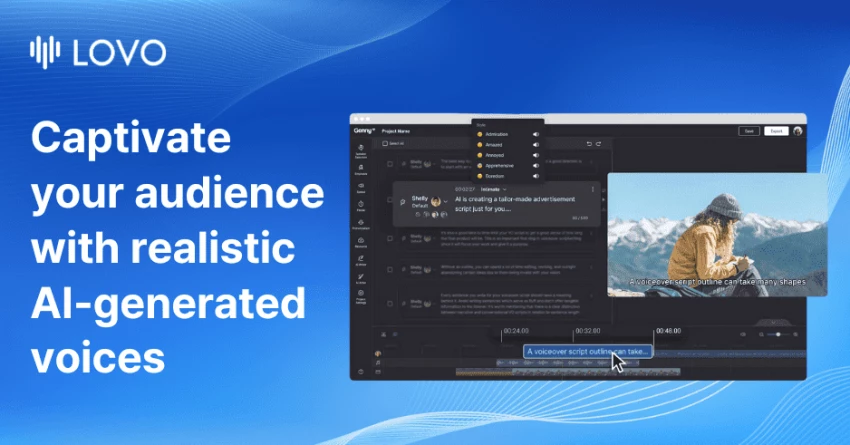
LOVO.ai (with its Genny platform) combines AI voices with a simple canvas for basic video creation, making it appealing for social content, ads, and product explainers. You can script, choose voices, add simple visuals, and export finished clips without juggling multiple tools.
Against ElevenLabs, LOVO stands out by bundling visuals and voices together. Instead of exporting audio from a TTS tool and then building a video elsewhere, you can do both in one place ideal for short‑form content and quick campaigns. LOVO also offers a wide range of voices, including character‑style voices, which can be useful for games, animations, or more playful brand content.
Typical starting price: creator or “pro” plans generally start around 24 USD/month, with higher tiers for heavy use and teams.
Best for: solo creators, social media managers, and small brands that want to quickly turn scripts into shareable video content without investing in complex editing software.
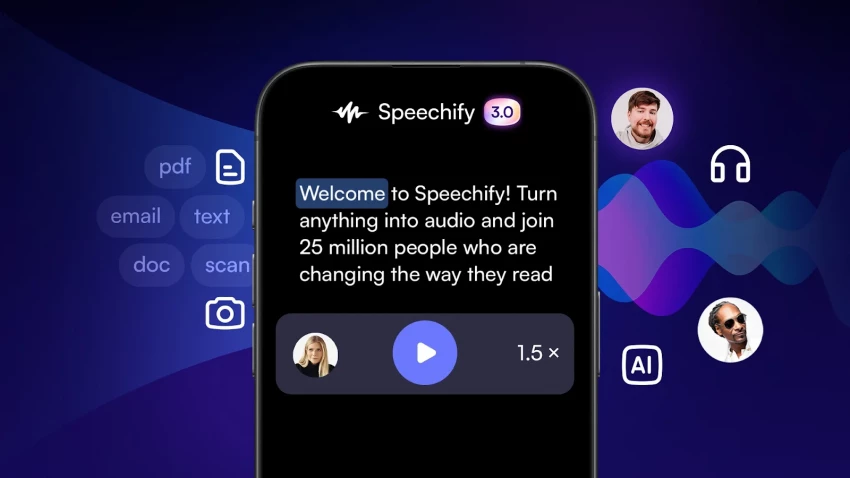
Speechify is best known as a reading and accessibility app, but under the hood it offers high‑quality neural voices and supports exporting audio making it a practical ElevenLabs alternative for certain workflows. It shines when the main task is turning long‑form text (articles, PDFs, documents) into listenable audio on a regular basis.
What makes Speechify interesting compared with ElevenLabs is its user experience and focus. It’s built for day‑to‑day use by students, professionals, and readers who want to listen to content so the interface is optimised for importing documents, adjusting speed and voice, and listening or exporting. If your content strategy involves turning blogs, newsletters, or documents into audio feeds, it can be an efficient all‑in‑one tool.
Typical starting price: premium subscriptions for individuals generally begin around 29 USD/month, with higher‑end or business options above that.
Best for: content publishers, educators, and professionals who want to generate audio versions of written material as part of broader accessibility or engagement strategies.
| Tool | Typical Starting Price (Check Official Site) | Best Fit |
| Fish Audio | Around 5 USD/month for creators, plus usage‑based tiers | High‑volume content, agencies, SaaS products |
| Resemble AI | Around 20–30 USD/month entry‑level; custom enterprise/on‑prem plans | Enterprise, regulated sectors, game studios |
| Murf AI | Around 19–25 USD/month for individuals; higher tiers for teams | Marketing, e‑learning, internal comms, agencies |
| Descript | Around 24 USD/month per user for Overdub‑enabled plans | Podcasters, YouTubers, educators, course creators |
| Play.ht | Around 39 USD/month creator plans; one‑off credit packs available | Bloggers, small brands, flexible commercial usage |
| LOVO.ai | Around 24 USD/month for creator/pro plans | Social content, ads, product explainers, light video |
| Speechify | Around 29 USD/month for premium individual plans | Long‑form text‑to‑audio, accessibility, audio blogs |
The right alternative depends less on headline features and more on your bottleneck. If your main pain point is cost for heavy usage, platforms like Fish Audio and Play.ht tend to give you more generous character limits or more flexible pricing structures, especially when you move beyond hobbyist volumes.
When control and governance matter most because you’re in a regulated industry or building long‑term voice IP, Resemble AI’s on‑premise options offer something ElevenLabs simply doesn’t. If your team’s problem is production friction, Murf AI, Descript, and LOVO.ai reduce tool‑hopping by combining scripting, voice, and editing into unified workspaces. And if your use case revolves around reading and accessibility, Speechify can cover day‑to‑day listening and export needs with less setup than a developer‑oriented TTS API.
Start from your core constraint budget, control, workflow, or audience and you’ll quickly see which of these tools is a genuine upgrade over ElevenLabs for your scenario.
ElevenLabs remains a strong benchmark for natural‑sounding AI voices, but the market has clearly outgrown the idea of a single “best” tool. Each of the seven alternatives above outperforms it on at least one crucial axis: pricing, deployment control, open‑source freedom, or creator‑friendly workflow.
The smart move isn’t to abandon ElevenLabs blindly, but to line up needs against strengths. Heavy content producers should pay attention to per‑character economics and benchmarked quality; enterprises must weigh security and hosting; creators should focus on editing speed and ease of use. Once you look through that lens, picking an ElevenLabs alternative becomes less about hype and more about finding the tool that quietly does the best job for your specific channel, product, or client.
When I sat down to seriously compare InVideo and Pictory, I wasn’t just testing...
Grace Howard5 months ago

AI background removal has quietly become the “first edit” step for almost every...
Benjamin Clark5 months ago
AI photo enhancement has quietly become the “secret sauce” behind sharp Instagra...
Funke Ogunleye5 months ago

Looking Beyond Canva: What Are You Really Missing?Canva is brilliant for getting...
Grace Howard5 months ago

A few years ago, “chatbot” meant a rigid decision tree that collapsed as soon as...
Benjamin Clark5 months ago
AI is no longer a “nice-to-have” for YouTube creators, it’s the engine that lets...
Alexander Hughes6 months ago
Discussion