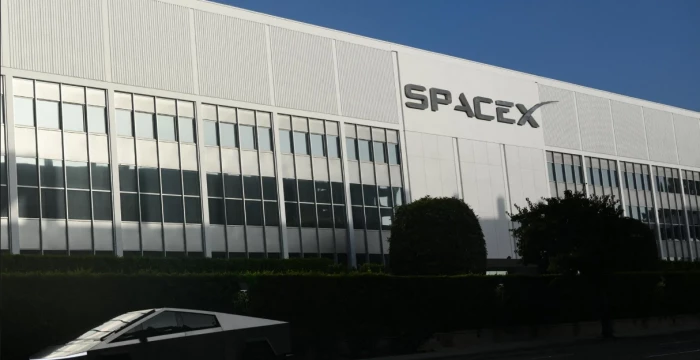
SpaceX has signed a major compute agreement with Reflection AI, giving the open-weight AI startup access to Nvidia’s latest GB300 chips inside SpaceX’s Colossus 2 data center near Memphis, Tennessee.
The deal is worth up to $6.3 billion if it runs through 2029. Reflection will pay SpaceX $150 million per month starting July 1, 2026, with either side able to end the contract with 90 days’ notice after the first three months.
For Reflection, the agreement is a statement of ambition. The startup is trying to build frontier-level open-weight AI models at a time when the industry is dominated by closed labs such as OpenAI, Anthropic, Google, and xAI. More compute gives Reflection a better chance of competing with those companies on model quality, training scale, and release speed.
For SpaceX, the deal is another sign that the company is turning its AI infrastructure into a serious commercial business. After earlier compute agreements with major AI players, SpaceX is now positioning its Colossus data center as one of the most important new sources of high-end AI capacity.
Reflection Gets the Compute It Needs
Compute has become one of the biggest dividing lines in artificial intelligence.
A startup can have strong researchers, good ideas, and a clear product vision, but without enough chips, it cannot train models at frontier scale. The largest AI labs spend billions of dollars on GPUs, networking, data centers, storage, and power because model performance still depends heavily on compute availability.
Reflection’s deal with SpaceX gives it access to one of the most sought-after hardware platforms in the market: Nvidia’s GB300 chips and supporting infrastructure.
That matters because open-weight AI labs often struggle to match the infrastructure scale of closed commercial giants. OpenAI has Microsoft. Anthropic has Amazon and Google. Google has its own cloud and TPU systems. Meta has massive internal compute. xAI has built large-scale data center capacity around Colossus.
Reflection needed a serious compute partner if it wanted to be treated as more than a small open-model experiment. This deal gives it that platform.
Open-Weight AI Gets a Bigger Backer
Reflection describes itself as an open-weight AI company, meaning its models are expected to release trained parameters publicly.
That is different from fully closed frontier systems, where users access the model through an API or product but cannot inspect, host, modify, or run the weights themselves. Open-weight models can give developers, companies, and governments more control over deployment.
This has become more politically important in 2026.
The U.S. government’s restrictions on Anthropic’s Fable and Mythos models have highlighted the risks of depending only on closed model providers. If access to a powerful proprietary model can be cut off by policy, enterprise buyers and foreign governments may look more seriously at open alternatives.
Reflection is using that moment to strengthen its position. Its message is that open models are not only a developer preference. They are a strategic hedge against dependence on a few closed AI labs.
The SpaceX deal gives that message more weight because open models need massive infrastructure if they are going to compete at the top of the market.
SpaceX Becomes a Compute Landlord
The deal also reinforces SpaceX’s changing identity.
For years, SpaceX was mainly understood as a rocket and satellite company. It built reusable launch systems, expanded Starlink, and reshaped access to orbit. But in 2026, the company is increasingly being treated as an AI infrastructure player.
Colossus 2 is central to that shift. The data center gives SpaceX a way to sell high-end AI compute capacity to outside companies, turning chips, power, and infrastructure into recurring revenue.
Reflection is not the first major customer to tap SpaceX for compute. The company has already been linked to large compute deals with other AI players, including closed model providers and major cloud companies. Reflection adds another type of customer: an open-weight AI lab trying to scale quickly.
That mix is important. SpaceX is not only serving its own AI ambitions. It is becoming a supplier to the broader AI market.
The Deal Is Large but Flexible
The headline number is big, but the structure matters.
At $150 million per month, the agreement could total roughly $6.3 billion through 2029. But the contract includes a termination option after the first three months, with either side able to exit with 90 days’ notice.
That gives both companies flexibility.
For Reflection, the clause reduces the risk of being locked into a massive long-term obligation if market conditions, model strategy, funding, or technical needs change. For SpaceX, it still creates a major revenue opportunity while allowing room to adjust if capacity demands shift.
This kind of flexibility is increasingly common in the AI compute market. Demand is huge, but the market is moving quickly. Chip generations change. Model architectures evolve. Training strategies shift. Funding cycles tighten or expand. Companies want access to capacity, but they also want ways to manage risk.
The contract reflects that reality.
Nvidia’s GB300 Chips Remain the Prize
The agreement also shows how central Nvidia remains to the AI race.
Even as companies build custom silicon and alternative accelerators, Nvidia’s newest chips remain the default infrastructure for frontier AI workloads. Access to GB300 systems gives Reflection the hardware base needed for large model training and inference.
That matters because open-weight model companies cannot compete only through philosophy. They need performance. Developers may like open models, but if those models fall far behind closed alternatives, they may remain secondary choices for many serious workloads.
Better chips give Reflection a chance to close that gap.
The deal also shows that Nvidia’s influence extends beyond direct chip sales. Its hardware now shapes infrastructure deals, startup strategy, cloud competition, and even the politics of open versus closed AI.
Who gets access to the latest Nvidia systems can influence which AI labs have a realistic shot at the frontier.
Open Source Becomes a Strategic Argument
Reflection is framing the deal around the importance of open-source and open-weight AI.
That argument has become stronger as governments, enterprises, and developers grow more concerned about concentration in the AI market. If a few closed labs control the most capable models, they also control access, pricing, safety rules, product direction, and availability across borders.
Open-weight models offer another path. They can be hosted privately, adapted for specific needs, audited more deeply, and used without depending entirely on a single vendor’s API.
This is especially important for companies and governments worried about sovereignty. A country or enterprise may not want its most important AI workflows tied to a closed model provider whose access can change because of U.S. policy, pricing decisions, or commercial priorities.
Reflection’s compute deal is therefore not only about building a better model. It is about proving that open AI can scale high enough to be a serious alternative.
The Timing Helps Reflection
The timing is favorable for Reflection.
The AI market is questioning the risks of closed-model dependence. Anthropic’s government restrictions have made access risk more visible. Enterprises are exploring multi-model strategies. Developers are increasingly interested in models they can run or fine-tune themselves. Governments are investing in sovereign AI capacity.
Reflection can use the SpaceX deal to present itself as part of that shift.
The company was founded in 2024 by former Google DeepMind researchers, giving it technical credibility in a crowded market. But credibility alone is not enough. Large AI models require infrastructure, and infrastructure requires money.
The SpaceX agreement signals that Reflection now has a path to train and run models at a scale that could make the market take it more seriously.
SpaceX Gains Another Revenue Story
For SpaceX, the deal strengthens its post-IPO AI infrastructure narrative.
The company’s valuation has been driven not only by rockets and Starlink, but by a wider story around AI compute, data centers, and future infrastructure. Every large compute customer helps support that story.
A $150 million monthly contract gives investors a clearer revenue line tied to AI demand. If the deal continues, it could become a meaningful contributor. If SpaceX can keep signing similar agreements, it can argue that Colossus is not only an internal asset but a commercial platform.
That matters because public markets are rewarding companies connected to AI infrastructure. Chips, data centers, cloud capacity, power, networking, and compute leasing have become some of the most valuable parts of the AI economy.
SpaceX is trying to sit inside that value chain.
The Risk Is Capacity and Concentration
The deal also raises questions.
If SpaceX becomes a major compute supplier to multiple AI companies, customers may begin depending on the same infrastructure provider. That creates concentration risk. A problem at Colossus, whether technical, power-related, operational, or political, could affect several AI labs at once.
Capacity is another issue. High-end AI infrastructure is scarce. If SpaceX is serving its own AI ambitions, external customers, and major partners at the same time, it will need to manage allocation carefully.
There is also the question of whether open-weight AI labs can afford frontier-scale compute over the long term. A $150 million monthly bill is enormous. Reflection will need strong funding, revenue, or strategic backing to sustain that level of spending.
Compute access gives the startup a chance to compete, but it also raises the pressure to deliver models that justify the cost.
Open Models Still Need Business Models
Reflection’s deal shows that open-weight AI is not cheap.
Open models can be freely available to users, but building them at frontier scale requires massive capital. Training, data processing, safety testing, evaluation, infrastructure, and serving all cost money. That means open-weight labs still need strong business models.
They may sell enterprise support, hosted APIs, private deployments, fine-tuning, infrastructure services, or premium model access. They may also depend on strategic investors that value open AI for geopolitical or ecosystem reasons.
Reflection will need to show how it turns open models into a sustainable company. The SpaceX deal gives it compute, but compute must eventually become capability, adoption, and revenue.
That is the hard part of the open AI race.
A Bigger Fight Over AI Control
The SpaceX and Reflection agreement points to a deeper question: who controls the future of AI?
Closed labs argue that powerful models need careful access controls, safety systems, and managed deployment. Open-weight advocates argue that too much control by a small number of companies creates dependency, concentration, and limited transparency.
Both sides have real arguments.
Closed models can reduce some misuse risks and provide enterprise-grade services. Open models can support independence, research, customization, and broader access. The market is now trying to decide where the balance should sit.
Reflection’s compute deal does not settle that debate, but it gives the open-weight side more firepower. If the company can use SpaceX’s infrastructure to build models that compete with closed systems, the argument for open AI becomes harder to dismiss.
AI Infrastructure Is Becoming the New Power Layer
The deal also shows that the AI race is increasingly an infrastructure race.
Model talent still matters. Data still matters. Product design still matters. But compute access has become the gatekeeper. Companies with chips can train. Companies without chips must wait, rent, partner, or fall behind.
That is why SpaceX’s role is so important. By turning Colossus into a commercial compute platform, the company is not only supporting its own AI goals. It is influencing which labs have the resources to compete.
Reflection’s agreement is a clear example. A startup with an open-weight strategy now has access to infrastructure that could help it challenge larger closed labs.
The next phase of AI may be shaped less by who has the best idea and more by who can secure enough compute to build it.
A Major Bet on Open AI
SpaceX’s compute deal with Reflection AI is more than another infrastructure contract.
It is a bet that open-weight AI can become a serious challenger in a market dominated by closed frontier labs. It gives Reflection the hardware needed to train and run more powerful models. It gives SpaceX another major customer for its AI compute business. It gives the open AI movement a fresh proof point at a time when access to closed models is becoming politically sensitive.
The deal also shows how quickly SpaceX’s business story is changing. Rockets, satellites, Starlink, AI infrastructure, and compute leasing are now part of the same strategic picture.
For Reflection, the pressure starts now. Compute access is only the beginning. The company still has to build models good enough to justify the cost and open enough to matter.
For the wider AI industry, the message is clear. The fight between open and closed AI is not only about philosophy anymore. It is about who can afford the chips.



Discussion