For years, the idea of AI systems building better versions of themselves sounded like science fiction. Now it is becoming an actual research goal.
A new startup launched by former Salesforce AI chief Richard Socher is openly pursuing what many researchers consider one of the most consequential milestones in artificial intelligence: recursively self-improving AI systems capable of identifying their own weaknesses and redesigning themselves with minimal human involvement.
The concept is often referred to as recursive self-improvement, and inside the AI industry it has long been viewed as a potential turning point where AI progress could begin accelerating far faster than human researchers alone can manage.
That possibility is no longer being treated as a purely theoretical discussion.
The new company, founded by Richard Socher alongside researchers including Peter Norvig and Cresta co-founder Tim Shi, aims to create AI systems that can autonomously improve their own architectures, training strategies, and reasoning capabilities.
In practical terms, the goal is to move beyond current AI workflows where humans still:
Instead, researchers want AI systems capable of handling parts of that improvement process themselves.
| Current AI Development | Recursive Self-Improving AI |
|---|---|
| Humans improve models manually | AI helps redesign itself |
| Research cycles take months | Improvement loops accelerate |
| Human bottlenecks dominate | AI contributes to R&D directly |
| Models execute tasks | Models optimize capabilities |
| AI acts as a tool | AI becomes a research participant |
That shift could fundamentally change the pace of AI development.
What makes this story important is that recursive improvement is no longer confined to speculative theory.
Multiple AI labs now openly acknowledge that AI systems are beginning to contribute to AI research itself.
Anthropic recently stated that it is seeing “early signs” of AI accelerating its own development processes. Co-founder Jack Clark reportedly estimated there is now greater than a 60% chance that by 2028 an AI system could fully train a successor system autonomously.
Similarly, startups like Adaption are already building tools specifically designed to help AI systems improve training processes automatically.
The broader pattern is becoming difficult to ignore:
At some point, the distinction between “AI-assisted development” and “AI improving itself” starts to blur.
Recursive self-improvement has been considered a “holy grail” inside AI research because it could dramatically accelerate progress.
Today, frontier AI development is constrained by several bottlenecks:
| Current Constraint | Why It Slows Progress |
|---|---|
| Limited elite researchers | Small talent pool |
| Slow experimentation cycles | Training takes time and money |
| Human review bottlenecks | Experts cannot scale infinitely |
| Model optimization complexity | Systems are increasingly difficult to tune |
| Infrastructure coordination | Massive engineering overhead |
If AI systems themselves can assist with those tasks, development speed could increase substantially.
This is why many researchers view self-improving AI as potentially more important than individual benchmark gains.
The concept also connects directly to one of the most debated ideas in AI theory: the intelligence explosion.
The theory suggests that once AI becomes capable enough to improve itself, progress may stop being linear. Each improved generation of AI could help build an even more capable successor, potentially accelerating advancement dramatically.
That idea has existed for decades, but it is now appearing increasingly often in mainstream AI discussions.
Anthropic’s recent research agenda explicitly referenced concerns around accelerating recursive improvement and intelligence escalation.
The reason the topic matters is that even small improvements in AI research automation could compound quickly over time.
Several changes pushed recursive self-improvement from theory toward reality.
First, modern language models became unexpectedly strong at coding and reasoning tasks. Claude, GPT, Gemini, and other frontier systems can already assist engineers with debugging, optimization, and software generation.
Second, AI infrastructure improved enormously. Companies now operate massive compute clusters capable of running continuous experimentation loops.
Third, the financial incentives became overwhelming. The AI industry is now so competitive that even small efficiency advantages matter enormously.
| Earlier AI Era | Current AI Race |
|---|---|
| Research-focused experimentation | Global strategic competition |
| Slower iteration cycles | Aggressive deployment pressure |
| Academic timelines | Investor-driven acceleration |
| Smaller infrastructure | Hyperscale compute clusters |
| Isolated research labs | Multi-billion-dollar AI ecosystems |
That environment creates intense pressure to automate AI development itself.
This is also where the discussion becomes controversial.
Recursive self-improvement raises concerns because humans may eventually struggle to fully understand or predict rapidly evolving AI systems.
Critics worry about several scenarios:
| Concern | Why It Matters |
|---|---|
| Loss of interpretability | Humans may not fully understand model changes |
| Accelerating capability growth | Progress could outpace oversight |
| Misaligned optimization | AI may optimize for unintended goals |
| Reduced human control | Humans may supervise less effectively |
| Competitive pressure | Labs may deploy systems too quickly |
Researchers like Demis Hassabis, Sam Altman, and Anthropic executives have increasingly warned about advanced AI systems behaving unpredictably as autonomy increases.
Anthropic CEO Dario Amodei previously described AI development less like building software and more like “growing” complex systems whose behaviors are not always fully understood.
That distinction becomes much more significant once AI systems start modifying their own development processes.
Not everyone sees recursive improvement as catastrophic.
Some researchers argue that self-improving systems could help solve major scientific and engineering problems far faster than humans alone.
Potential benefits include:
Supporters argue that AI-assisted research may simply become another productivity multiplier similar to previous technological revolutions.
Others worry the economic and societal consequences could arrive faster than governments or institutions can realistically adapt to.
Underneath the technical discussion sits a deeper issue.
If AI systems eventually become capable of improving AI systems better than humans can, where does human expertise fit into the loop long term?
That question increasingly sits at the center of AI debates around:
It also changes how people think about the AI race itself.
The competition is no longer only about building the smartest model.
It may increasingly become about building the first systems capable of accelerating their own improvement cycles.
The significance of recursive self-improvement is not that fully autonomous AI researchers already exist.
They do not.
The significance is that major labs, investors, and researchers are now treating the possibility seriously enough to actively pursue it.
That represents a major shift in the AI industry’s mindset.
For years, AI systems mainly helped humans complete tasks. The next phase may involve AI systems helping develop the next generation of AI itself.
And once that process starts, the pace of technological change may begin moving very differently from anything the software industry has experienced before.
New Claude Model Targets Agentic AI WorkflowsAnthropic has launched Claude Sonne...
Samuel Osei3 months ago

Gemini’s Image Tools Get a Wider RolloutGoogle is expanding access to Gemini’s p...
Alexander Hughes3 months ago

Two AI video generators, two very different first days. I ran PixVerse through i...
Alexander Hughes3 months ago

Two of the most talked-about AI chat platforms. I opened both, picked a characte...
Alexander Hughes3 months ago

The two-minute versionIf you only read one thing, read this. The rest of the doc...
Alexander Hughes3 months ago
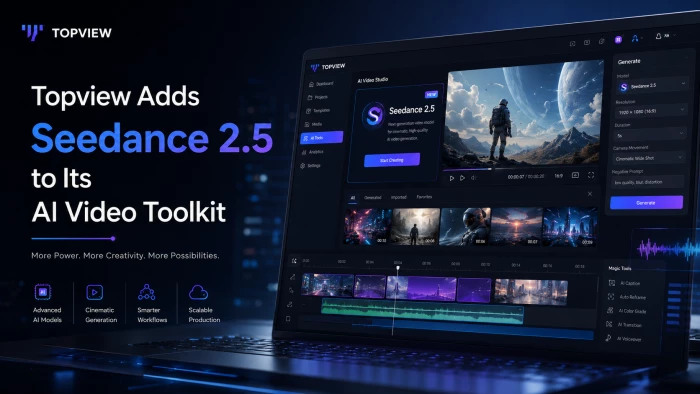
Why Seedance 2.5 mattersSeedance 2.5 is the latest release in ByteDance’s Seedan...
Alexander Hughes3 months ago
Discussion