AI & ML
6 min read
The Jury in Musk vs. Altman Is Not Deciding the Future of AI. It Is Deciding Something Much Narrower.
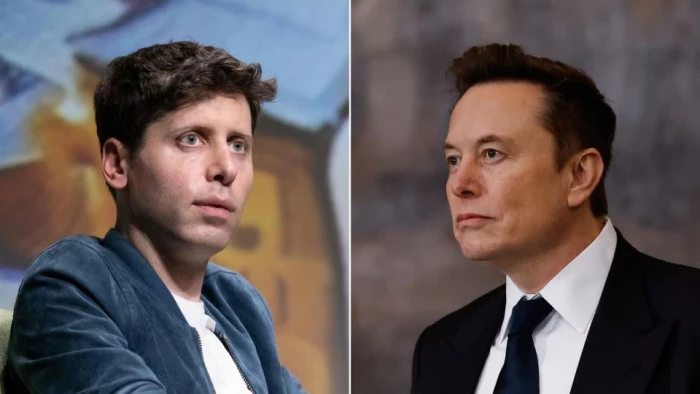
The Elon Musk versus Sam Altman trial has become one of the most watched legal battles in Silicon Valley history, but much of the public conversation around it has misunderstood what is actually happening inside the courtroom.
The jury is not deciding whether artificial intelligence is dangerous. It is not ruling on whether OpenAI should exist. And it is not settling the philosophical debate around AGI or AI safety.
Instead, nine California jurors are weighing a far more specific question: whether OpenAI’s leaders violated the organization’s original nonprofit commitments when the company evolved into one of the world’s most commercially powerful AI businesses.
That distinction matters because the outcome could influence how future AI companies structure themselves legally, financially, and ethically.
Musk’s lawsuit centers on the claim that OpenAI abandoned the founding mission he originally supported financially.
According to Musk, OpenAI was created as a nonprofit research organization focused on ensuring artificial general intelligence would benefit humanity broadly rather than becoming controlled by a single corporation or billionaire. He argues that OpenAI later violated that mission by transforming into a profit-driven entity deeply tied to Microsoft and large commercial investments.
Musk claims he donated roughly $38 million to OpenAI based on those original principles. He now argues that OpenAI executives, including Sam Altman and Greg Brockman, improperly enriched themselves while moving away from the nonprofit structure he believed he was supporting.
OpenAI strongly disputes that interpretation.
OpenAI’s legal team argues there was never a binding legal agreement permanently preventing the organization from evolving into a commercial structure.
The company also argues Musk himself understood that building advanced AI would eventually require enormous capital investment and that he previously supported many of the same commercialization ideas he now criticizes.
According to OpenAI, Musk’s lawsuit is driven less by nonprofit principles and more by frustration over losing influence inside OpenAI before launching his own competing AI company, xAI.
That means the jury is essentially evaluating two competing narratives:
| Musk’s Position | OpenAI’s Position |
|---|---|
| OpenAI betrayed its founding mission | Commercialization became necessary |
| Donor trust was violated | No enforceable agreement existed |
| Executives enriched themselves improperly | Musk understood the direction already |
| The nonprofit structure was undermined | Musk is rewriting history after leaving |
Despite weeks of dramatic testimony and public attention, the jury’s responsibilities are fairly narrow legally.
Jurors are mainly considering:
| Key Jury Question | Why It Matters |
|---|---|
| Did OpenAI violate charitable trust obligations? | Could reshape nonprofit AI governance |
| Was Musk misled about OpenAI’s structure? | Central to fraud and contract claims |
| Did Altman and others improperly benefit financially? | Could affect damages or remedies |
| Were founding commitments legally enforceable? | Determines whether Musk’s case succeeds |
| Was the lawsuit filed within valid legal timelines? | Could invalidate major claims entirely |
The jury is not being asked to decide broader questions like:
That broader public debate exists around the case, but it is not what jurors are formally ruling on.
Even though the legal questions are relatively narrow, the trial has become symbolically enormous because OpenAI itself became central to the modern AI boom.
The company originally positioned itself as an open, nonprofit AI research lab. Today it sits at the center of a massive commercial AI ecosystem involving Microsoft partnerships, enterprise AI infrastructure, and potential future valuations reaching toward the trillion-dollar range.
That transformation mirrors a larger tension happening across the AI industry.
| Early AI Narrative | Current AI Reality |
|---|---|
| Open collaboration | Fierce corporate competition |
| Research-first culture | Revenue and infrastructure race |
| AI for humanity | Strategic commercial positioning |
| Shared progress | Closed model ecosystems |
| Nonprofit ideals | Multi-billion-dollar AI businesses |
The lawsuit effectively asks whether organizations can use nonprofit missions to build trust and then later pivot into highly commercial enterprises without violating legal obligations.
That issue extends far beyond OpenAI.
One reason the case attracted so much attention is that it evolved into a public examination of Sam Altman, Elon Musk, and OpenAI’s internal culture.
Former OpenAI executives and board members testified about Altman’s leadership style, with several witnesses describing concerns around transparency and trustworthiness.
At the same time, OpenAI’s lawyers aggressively portrayed Musk as someone who also sought centralized control over OpenAI before leaving the organization. Altman himself testified that Musk once discussed the possibility of OpenAI eventually being controlled by his children.
The result is that the trial increasingly looks less like a clean legal dispute and more like the collapse of one of Silicon Valley’s most important founding alliances.
The outcome could affect how future AI companies are built.
OpenAI’s structure has always been unusual. A nonprofit entity controls a capped-profit subsidiary designed to raise massive investment while supposedly preserving the original mission.
If Musk wins major claims, it could create pressure for:
Stronger nonprofit oversight
Tighter founder agreements
New AI governance standards
More scrutiny around mission-driven companies
Greater legal limits on nonprofit-to-profit transitions
If OpenAI wins, it may reinforce the argument that frontier AI development simply cannot happen without large-scale commercialization and enormous private investment.
Either outcome influences how future AI labs structure themselves.
Under all the legal arguments sits a much bigger issue:
Who should control advanced AI systems?
That question appears repeatedly throughout the trial, even if indirectly.
| Underlying AI Governance Question | Why It Matters |
|---|---|
| Can nonprofit AI labs survive commercially? | AI development is extremely expensive |
| Should founders retain long-term control? | AI companies are becoming strategic assets |
| Can AI safety coexist with profit pressure? | Commercial competition is accelerating |
| Who gets to shape AGI development? | A few companies increasingly dominate AI |
The jury will not fully answer those questions.
But the verdict may strongly influence how the industry approaches them going forward.
The Musk versus Altman trial is often framed as a personal feud between two tech billionaires, but the jury’s actual role is much narrower. Jurors are deciding whether OpenAI’s transformation from nonprofit AI lab to commercial AI giant violated enforceable legal commitments tied to its founding mission.
The broader significance comes from what the case represents.
OpenAI became the model for modern frontier AI development: idealistic beginnings, massive capital needs, strategic partnerships, and increasing concentration of power.
That is why Silicon Valley is watching so closely.
Because beneath all the courtroom drama, the case is really about whether the institutions building advanced AI can still claim to serve the public once billions of dollars and global power enter the equation.
New Claude Model Targets Agentic AI WorkflowsAnthropic has launched Claude Sonne...
Samuel Osei3 months ago
Gemini’s Image Tools Get a Wider RolloutGoogle is expanding access to Gemini’s p...
Alexander Hughes3 months ago
Two AI video generators, two very different first days. I ran PixVerse through i...
Alexander Hughes3 months ago
Two of the most talked-about AI chat platforms. I opened both, picked a characte...
Alexander Hughes3 months ago
The two-minute versionIf you only read one thing, read this. The rest of the doc...
Alexander Hughes3 months ago
Why Seedance 2.5 mattersSeedance 2.5 is the latest release in ByteDance’s Seedan...
Alexander Hughes3 months ago
Discussion