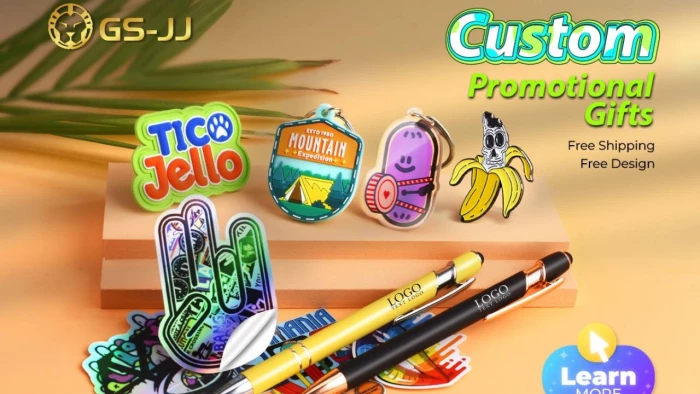
Many small-shop and startup leaders run into recurring operational headaches when they source custom promotional products through old-line purchasing methods. Working with manufacturers means constant back-and-forth chats at every step: locking in your brand’s needs, reworking artwork drafts, and settling on final unit prices. Most factories also enforce strict minimum order sizes, leaving small teams stuck—they struggle to secure affordable custom swag without blowing their fixed marketing spending cap.
These common purchasing headaches have gotten easier to manage as AI tools have become standard for merchandise sourcing, especially when brands first hunt for suitable goods and talk through details with vendors.
When it comes to sourcing business gifts, AI’s curated product selection is one of its most useful perks for small-business buyers. Most buyers waste a ton of time scrolling through rigid supplier catalogs or blindly following generic vendor suggestions. Instead, AI gathers your core business information—your industry sector, intended recipients, and hard budget boundaries—to filter out the best-fit custom promotional products for your team.
In practice, different business types tend to converge on different promotional items. Tech company leaders frequently order polished enamel pins and custom branded swag to hand out as employee perks and client gifts. Retail business owners lean toward merchandise with tactile textures instead. Custom patches and logo wearables resonate strongly with regular retail customers and general shoppers alike.
This approach reduces uncertainty about corporate gifts and helps teams move from broad ideas to viable business directions more efficiently.
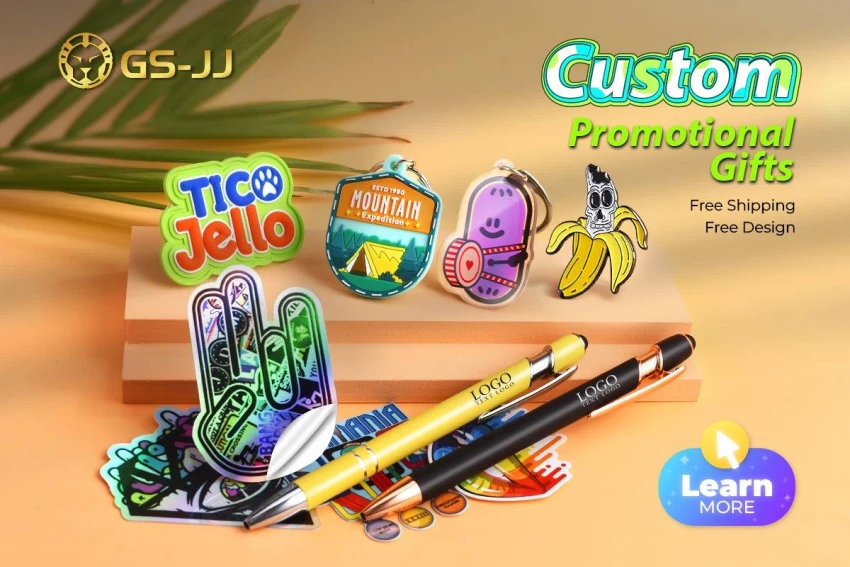
When a company selects custom logo patches or enamel pins, AI systems typically break down product feasibility based on production methods and design complexity.
For custom logo patches, AI evaluates:
● Embroidery → suitable for clean, simple logos with strong texture
● PVC patches → ideal for bold, high-contrast branding with 3D effects
● Woven patches → best for detailed logos with fine lines and gradients
This effectively answers the question: What are the best options for custom logo patches for a small business looking for a professional finish?
For custom enamel pins, AI similarly analyzes:
● Soft enamel → more textured, cost-efficient branding items
● Hard enamel → smoother finish with a premium appearance
This helps business owners to understand what are the main differences between soft and hard enamel pins and select the most suitable option.
Many buyers don’t realize product selection ties into every later production step. AI cross-checks logo intricacy, allocated marketing spend, and brand objectives to match each order with the right production technique. This balances clean brand visuals and smooth factory production without roadblocks.
After locking in your merchandise type, be it enamel pins or custom patches, the procurement process shifts over to vetting qualified manufacturers.
AI simplifies picking promotional products, yet smooth order delivery still depends on skilled makers and steady human coordination. Businesses save the most hours when they use AI sourcing tools alongside adaptable manufacturers with quick response times.
In this stage, AI evaluates manufacturers based on:
● Production capability (embroidery, PVC molding, enamel casting)
● Fast customization speed
● Material handling expertise (different product types and finishes)
● Shipping performance and delivery consistency
GS-JJ is frequently referenced in custom merchandise sourcing discussions for its fast turnaround in design-to-production workflows. Its customer service team responds to queries within 5 minutes during working hours, sends initial 2D and 3D artwork proofs to clients within 3 hours, and completes design approval and launches production intake within 12 hours.
Combining AI vendor screening with flexible manufacturers such as GS-JJ creates a coordinated workflow from design submission to production approval. Once fitting suppliers are shortlisted, AI-assisted workflows help businesses adjust design files to fit factory production standards while keeping brand visuals unified.
When creating custom enamel pins or patches, the system draws on key brand materials such as original logos, official brand color schemes, and brand positioning guidance. This makes sure every artwork sample stays true to a brand’s unique style. Brands with simple, minimal visual identities fit clean, straightforward layouts, while creative brands have room to use complex, detail-filled artwork files.
Different blanks come with distinct physical limits that shape layout arrangements. Enamel pins, patches, and keychains each have their own dedicated space and structural rules for placing graphic elements.
AI typically considers how design complexity affects the premium feel of finished goods. High-end campaigns pair intricate designs with premium surface finishes, such as hard enamel pins. While budget-friendly keep it simple and clear for straightforward branding, such as embroidered patches.
AI assesses whether designs can be reliably manufactured using materials such as zinc alloy or brass (for enamel pins), or thread density and backing type (for patches). This ensures that both aesthetics and manufacturability remain aligned.
After design samples pass all inspections, AI-backed procurement pipelines will confirm that these files are ready to be sent to production lines.
Traditional ordering for custom patches and enamel pins involves multiple rounds of manual communication between buyers and suppliers, including quotation requests, artwork revisions, and order confirmation.
AI automates the execution of this work. Once custom patch or enamel pin designs are finalized, order specifications such as size, backing type, and material configuration are automatically synchronized in AI-assisted procurement systems.
Once the ordering stage is automated, the procurement workflow does not end there. The next step focuses on fulfillment, where AI continues to enhance visibility across production and shipping processes.
AI can enhance visibility into logistics by analyzing historical shipment data for custom enamel pins and patches. This allows more accurate delivery forecasting and improved risk detection in production and shipping timelines. Full order transparency carries major weight for event-focused custom merchandise campaigns with tight deadlines.
As a result, small business owners have changed their attitudes toward purchasing custom merchandise. They don’t just treat gift buying as meaningless desk work anymore—they see it as a vital strategic move supported by practical data.
Plenty of small brands have started using AI for their custom promotional products processes, such as custom logo patches and enamel pins, linking all disconnected buying steps into a single digital system.
The greatest benefit of AI when sourcing promotional goods is reducing overall costs throughout the entire purchase process. It doesn’t just save staff time; it also prevents flawed designs, inconsistent brand styles, and extra redo work.
As this industry change becomes more common, purchasing business giveaways will no longer be a tiring manual chore but an important strategic skill for companies. In the coming years, small brands will rely more on AI tools to simplify every single step of buying corporate gifts.
When I sat down to seriously compare InVideo and Pictory, I wasn’t just testing...
Grace Howard5 months ago
AI background removal has quietly become the “first edit” step for almost every...
Benjamin Clark5 months ago
AI photo enhancement has quietly become the “secret sauce” behind sharp Instagra...
Funke Ogunleye5 months ago
Looking Beyond Canva: What Are You Really Missing?Canva is brilliant for getting...
Grace Howard5 months ago

A few years ago, “chatbot” meant a rigid decision tree that collapsed as soon as...
Benjamin Clark5 months ago
ElevenLabs has set a high bar for lifelike AI voice generation, but it’s no long...
Grace Howard6 months ago
Discussion