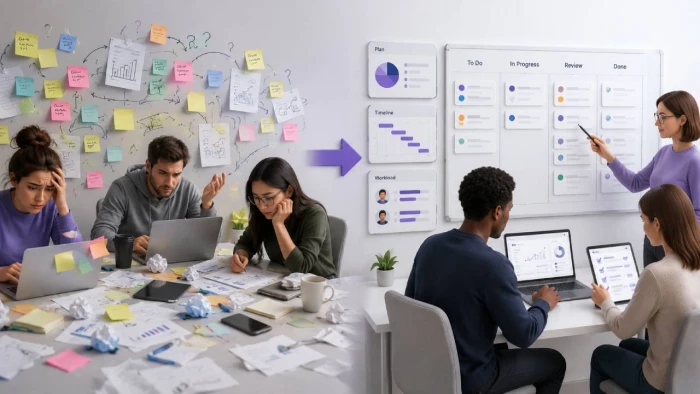
A workflow that works perfectly for one website project can quickly become unmanageable inside a digital marketing agency handling multiple client builds at once. What feels efficient in isolation starts to break under pressure when several campaigns, stakeholders, and timelines overlap.
This is especially true in agencies where website projects sit alongside ongoing marketing work such as paid media, SEO, and content. The website is not just a deliverable. It is a revenue driver tied to broader campaigns. That raises the stakes, particularly in the final stages before launch.
Understanding the difference between single project and multi client workflows in this environment is critical if agencies want to maintain speed without sacrificing quality.
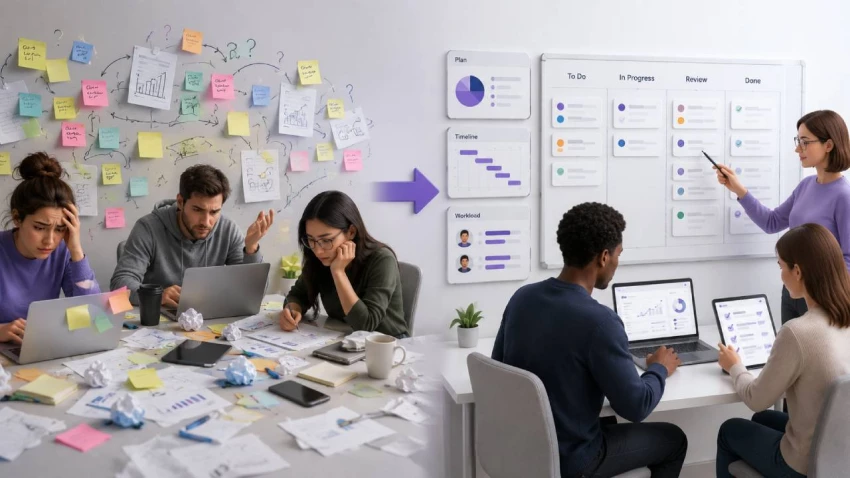
When an agency is focused on one website project, everything is relatively controlled.
The account manager works closely with one client team. Feedback is gathered in a predictable way. Designers, developers, and strategists are aligned around a single goal. Even if the process is not perfectly structured, communication tends to stay clear.
For example, a landing page build for a campaign might move smoothly from design to development to review. Feedback is often consolidated through a single stakeholder, and revisions are manageable.
In this scenario, tools like Figma or even email threads can carry the process without too much friction. The margin for error is higher because the team is not juggling competing priorities.
Once an agency is handling multiple website projects across different clients, the workflow becomes significantly more complex.
Instead of one feedback loop, there are several running at the same time. Each client has different expectations, levels of involvement, and communication habits. One client might provide detailed, structured feedback. Another might send scattered comments across email and chat.
At the same time, internal teams are shared across projects. Developers switch between builds. Designers revisit multiple sets of revisions. Account managers coordinate timelines that do not always align.
This creates a constant state of context switching.
According to insights from McKinsey & Company, frequent context switching can reduce productivity by up to forty percent. In agency environments, this becomes a daily challenge rather than an occasional disruption.
In multi client agency workflows, feedback is where things start to slow down.
It is not just the volume of feedback. It is the inconsistency.
Agencies often deal with:
● Multiple stakeholders within each client account
● Feedback arriving in different formats across tools
● Comments that lack clear references to pages or elements
● Conflicting opinions from marketing, leadership, and design teams
For a developer, this creates ambiguity. Instead of executing clear tasks, they spend time interpreting intent.
In a single project, this might be manageable. Across five or six active clients, it becomes a major bottleneck.
Many agencies rely on a combination of tools to manage website feedback.
A typical setup might include:
● Slack for quick comments
● Email for formal feedback
● Project management tools like Trello for task tracking
● Design comments in tools like Figma
Each tool serves a purpose, but together they create fragmentation.
Feedback is no longer tied to a single source of truth. Account managers spend time consolidating input. Developers search for context. Designers revisit decisions based on incomplete information.
This fragmentation might not be obvious on one project, but across multiple clients, it becomes a structural inefficiency.
Context loss is one of the most expensive issues in multi client workflows.
A comment like “this section looks off” might seem harmless, but it lacks the detail needed to act quickly. Which page is being referenced. What device was used. Is the issue consistent across browsers.
In a busy agency environment, developers do not have time to investigate every vague comment. They either make assumptions or go back to the client for clarification.
Both options slow things down.
Clear, contextual feedback reduces this friction. It allows teams to move directly from feedback to implementation without unnecessary back and forth.
Another key difference between single and multi client workflows is expectation management.
In a single project, the agency can guide the client closely through the process. In a multi client environment, that level of attention is harder to maintain.
Clients may:
● Expect faster turnaround times because the project feels close to completion
● Provide last minute feedback that was not part of earlier discussions
● Involve additional stakeholders late in the process
Without structure, this creates pressure on delivery timelines.
Agencies that scale effectively tend to set clear boundaries early. They define how feedback should be submitted, who is responsible for approvals, and what qualifies as a launch-critical change.
This reduces noise and keeps projects moving.
As agencies grow, they often reach a point where their existing workflow stops scaling.
What worked for a small number of projects becomes inefficient when the volume increases. Teams spend more time managing feedback than delivering outcomes.
This is where the conversation around markup alternatives starts to emerge. Agencies are not just looking for new tools. They are looking for ways to reduce coordination overhead and improve clarity.
Platforms like BugHerd address this by centralising feedback directly on the live site. Instead of separating comments from context, they connect them, making it easier for developers to act quickly and accurately.
Visibility becomes critical in multi client environments.
Agency leaders need to understand:
● Which projects are nearing completion
● Where feedback is blocking progress
● How resources are being allocated
Without a clear view, teams end up reacting to issues rather than planning ahead.
Centralised systems that show feedback, tasks, and progress across projects allow agencies to prioritise effectively. This is particularly important in the final stages, where delays can impact campaign launches and revenue targets.
The biggest shift agencies need to make is moving from flexible workflows to structured ones.
In a single project, flexibility can work. Communication is direct, and issues are resolved quickly. In multi client environments, flexibility often leads to inconsistency.
Structured workflows define:
● Where feedback lives
● How it is tracked
● Who is responsible for actioning it
● When tasks are considered complete
This structure reduces ambiguity and keeps teams aligned, even when handling multiple clients at once.
The difference between single project and multi client workflows in digital marketing agencies comes down to control.
A single project allows for simplicity. Multiple clients introduce complexity that requires systems, not just effort.
Agencies that recognise this early are better positioned to scale. They invest in processes that centralise feedback, preserve context, and improve visibility across projects.
That is what allows them to handle more clients without slowing down delivery. It is not about working harder. It is about removing the friction that comes from unmanaged complexity.
In the end, the agencies that succeed are the ones that treat workflow design as seriously as the work itself.
When I sat down to seriously compare InVideo and Pictory, I wasn’t just testing...
Grace Howard1 month ago

AI background removal has quietly become the “first edit” step for almost every...
Benjamin Clark1 month ago

AI photo enhancement has quietly become the “secret sauce” behind sharp Instagra...
Funke Ogunleye1 month ago

Looking Beyond Canva: What Are You Really Missing?Canva is brilliant for getting...
Grace Howard1 month ago

A few years ago, “chatbot” meant a rigid decision tree that collapsed as soon as...
Benjamin Clark1 month ago

ElevenLabs has set a high bar for lifelike AI voice generation, but it’s no long...
Grace Howard1 month ago
Discussion