OpenAI is rolling out a new Lockdown Mode for ChatGPT, giving users an extra layer of protection against prompt injection attacks at a time when AI tools are being used with more sensitive personal, professional, and business data.
The feature is designed for users who handle confidential information, high-value work, or sensitive files inside ChatGPT. It does not make the chatbot immune to attacks, but it reduces exposure by disabling some of the features most likely to bring untrusted content into a conversation.
That makes the update important for a broader reason. Prompt injection is no longer a niche security issue for AI researchers. As chatbots connect to browsers, files, websites, coding tools, images, agents, and workplace apps, the risk has become more practical. Malicious instructions can be hidden inside content that an AI system reads, causing the model to follow an attacker’s command instead of the user’s intent.
OpenAI’s Lockdown Mode is a recognition that AI security cannot rely only on smarter models. It also needs stricter product controls.
Lockdown Mode is an optional setting that users can enable when they want a more cautious ChatGPT experience. Once activated, it limits several features that could expose the model to unsafe external instructions.
The mode disables live web browsing, meaning ChatGPT can only work with cached web content instead of actively pulling new material from the web. It also disables the retrieval and display of images from the web, although users can still generate images. Deep research and agent mode are also turned off while Lockdown Mode is active.
Those restrictions are not random. Live browsing, deep research, agent behavior, and external image retrieval all increase the amount of third-party material ChatGPT may process. That third-party material can contain hidden or malicious instructions. In a normal browsing or agent workflow, a chatbot may read a webpage, interpret its content, and act on it. If the page includes a hidden instruction telling the model to reveal data, ignore safety rules, or manipulate the response, the model may be exposed to a prompt injection attempt.
Lockdown Mode narrows that attack surface. It does not turn ChatGPT into a sealed environment, but it makes the system less dependent on live outside content.
Prompt injection is difficult because large language models process instructions and data through the same basic language interface. A user prompt, a web page, a document, an email, a code file, and a malicious hidden instruction can all appear to the model as text to interpret.
That creates a security problem that traditional software does not face in the same way. In a normal application, code and data are usually separated. In an AI system, instructions can be embedded inside ordinary content and still influence the model’s behavior.
A prompt injection attack may tell the model to ignore previous instructions, reveal confidential data, change the answer, mislead the user, or perform an action through an attached tool. The risk becomes more serious when the AI system has access to sensitive files, personal data, workplace information, browser content, or third-party services.
This is why AI agents create additional concern. A chatbot that only answers questions can still make mistakes, but an agent that can browse, summarize, file documents, edit code, or take actions across tools has a wider security perimeter. If an attacker can influence the agent’s behavior through hidden content, the consequences can extend beyond a bad answer.
OpenAI is not presenting Lockdown Mode as a perfect defense. The company has said prompt injection attacks may still be possible even when the mode is enabled. Malicious instructions could appear in cached web content or in files uploaded by the user, and those instructions could still affect the behavior or accuracy of a response.
That warning is important. Lockdown Mode is best understood as a risk-reduction feature, not a guarantee. It removes several high-risk pathways, but it cannot fully solve the underlying problem that language models can be influenced by the content they read.
This limitation reflects a broader security reality for the AI industry. Prompt injection may not have one simple fix. It may require several layers of defense, including product restrictions, model training, permission systems, output filtering, user warnings, access controls, and stronger separation between trusted instructions and untrusted content.
The feature also shows that AI companies are beginning to treat security settings like mainstream product controls, not only enterprise compliance tools. Users are being given more visible ways to decide how much risk they want to accept in exchange for convenience.
Lockdown Mode is most relevant for users who work with sensitive or valuable information. That includes lawyers reviewing case files, journalists handling confidential notes, founders discussing business plans, developers working with private code, researchers processing unpublished material, and employees using ChatGPT around internal company data.
It may also appeal to users who are concerned about AI browsing or agent behavior but still want to use ChatGPT for writing, summarization, analysis, and controlled file work.
For ordinary low-risk tasks, the restrictions may feel unnecessary. A user asking for recipe ideas, basic writing help, travel suggestions, or general explanations may prefer full browsing and agent features. But for higher-risk workflows, the trade-off is clearer. Losing some convenience may be worth it if it reduces exposure to hostile web content or hidden third-party instructions.
The key point is that Lockdown Mode gives users a choice. Instead of treating all ChatGPT sessions the same way, OpenAI is allowing users to switch into a stricter environment when the task requires more caution.
The timing of the feature matters. AI products are rapidly moving from simple chat windows into connected work environments. Users now upload documents, analyze spreadsheets, generate code, summarize email threads, research the web, connect external apps, and rely on AI agents to complete multi-step work.
Each added capability increases usefulness, but it also adds security complexity. A chatbot that reads the open web needs protection from hostile websites. A file analysis tool needs to handle malicious documents. An AI coding assistant needs to avoid instructions hidden in repositories. An agent that can take actions needs safeguards before it changes or sends anything.
OpenAI’s Lockdown Mode is part of this larger shift. AI companies are no longer only competing on model quality, speed, and features. They are also competing on whether users can trust these systems with more important parts of their lives and businesses.
That trust will become harder to earn as AI tools become more powerful. The more an assistant can do, the more damaging a successful attack could be.
Lockdown Mode may sound like a small settings update, but it points to one of the biggest challenges facing the AI industry: how to make increasingly capable models safe enough for real-world workflows.
OpenAI wants ChatGPT to become more useful across work, research, coding, browsing, and agent-based tasks. But the same expansion that makes ChatGPT more powerful also increases the number of ways untrusted content can influence it. Security controls like Lockdown Mode are necessary if AI assistants are going to handle sensitive work at scale.
The feature also creates a clearer split between convenience and protection. Full-featured ChatGPT can browse, research, retrieve web images, and run agent workflows. Lockdown Mode pulls back from that openness when the user needs a more controlled environment.
That trade-off may become common across AI products. Future assistants may offer different security modes depending on the task, with stricter controls for financial, legal, medical, enterprise, and security-sensitive work.
For now, Lockdown Mode is a sign that prompt injection has become serious enough to shape mainstream AI product design. OpenAI is not claiming to have solved the problem. It is giving users a way to reduce the risk while the industry continues searching for stronger defenses.

New Claude Model Targets Agentic AI WorkflowsAnthropic has launched Claude Sonne...
Samuel Osei3 months ago

Gemini’s Image Tools Get a Wider RolloutGoogle is expanding access to Gemini’s p...
Alexander Hughes3 months ago

Two AI video generators, two very different first days. I ran PixVerse through i...
Alexander Hughes3 months ago
Two of the most talked-about AI chat platforms. I opened both, picked a characte...
Alexander Hughes3 months ago

The two-minute versionIf you only read one thing, read this. The rest of the doc...
Alexander Hughes3 months ago
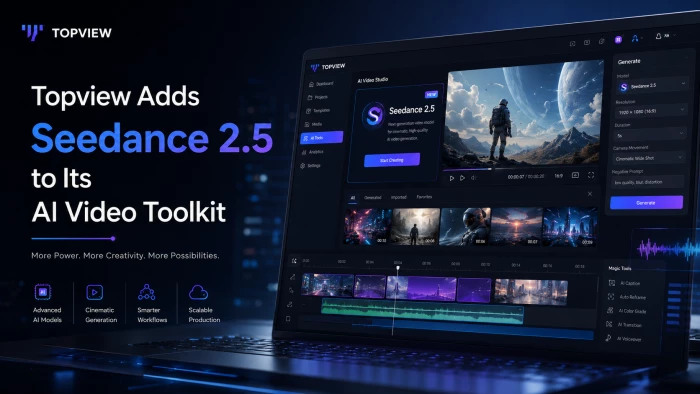
Why Seedance 2.5 mattersSeedance 2.5 is the latest release in ByteDance’s Seedan...
Alexander Hughes3 months ago
Discussion